
Short answer: the most common mistake when buying a men’s silver bracelet is choosing from appearance alone. A reliable decision checks the metal description, wrist measurement, wearable length, opening or clasp, width, thickness, weight, finish, construction and return policy. Those details determine whether the bracelet can actually be worn safely and comfortably.
Mistake 1: Treating Every Silver Color as Sterling Silver
“Silver tone,” “silver plated,” “silver” and “sterling silver” can describe different things. Do not infer composition from color or photography. The U.S. Federal Trade Commission’s guide to buying precious-metal jewelry explains why sellers’ metal and fineness representations matter.
If a bracelet is presented as 925 sterling silver, look for a consistent material statement and any available marking information. For mixed-material designs, ask which parts use which metal. Clasps, springs, pins or decorative inlays may have different functional requirements, so clarity is more useful than assuming every component is identical.
Mistake 2: Using a Generic Bracelet Size
“Small,” “medium” and “large” are not measurements. Measure the wrist at the point where the bracelet will sit, then compare that number with the product’s wearable length or inside circumference. Total length can include clasp components that do not add wearable space.
Fit preference varies by design. A flexible chain bracelet needs enough ease to articulate, while a heavy cuff should not rotate constantly. A wide bracelet can feel tighter than a narrow bracelet with the same inside circumference. Compare width, thickness and weight along with length when browsing men’s bracelets.
Mistake 3: Ignoring the Hand and Opening
A closed bangle must pass over the widest part of the hand, not merely fit the wrist. A cuff must have an opening suitable for the narrow side of the wrist. A hinged bangle depends on its hinge and closure. These are separate measurements, and a correct wrist circumference does not guarantee that every bracelet form can be put on.
Do not repeatedly spread a rigid cuff wider unless the maker specifically describes it as adjustable. Metal can fatigue when bent back and forth. A well-fitted cuff is applied through the side of the wrist with minimal deformation.
Mistake 4: Overlooking the Clasp
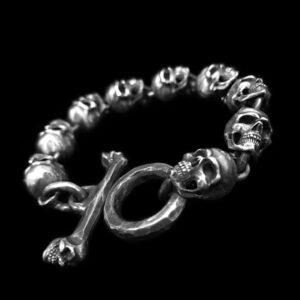
The clasp is a working component, not a decorative afterthought. Check whether it can be operated with one hand, whether a safety catch is present on a heavy bracelet and whether connecting rings are closed securely. Lobster clasps, box clasps, hooks and toggles each have different handling and security characteristics.
A closure should align without forcing. Product photos should show both open and closed positions when the mechanism is complex. If a bracelet is heavy or valuable, ask how the closure is serviced and whether replacement parts are available.
Mistake 5: Judging Weight From Photos
Close-up photography can make a hollow bracelet appear as substantial as a solid one. Ask for weight in grams and read the construction description. Hollow construction is not automatically poor; it can make a broad design comfortable. It does, however, behave differently under impact and may require more careful handling.
Weight must also be read with dimensions. Twenty grams spread across a narrow chain feels different from the same mass concentrated in a rigid centerpiece. Consider how long the bracelet will be worn and whether it will share the wrist with a watch.
Mistake 6: Ignoring Edges, Links and Articulation
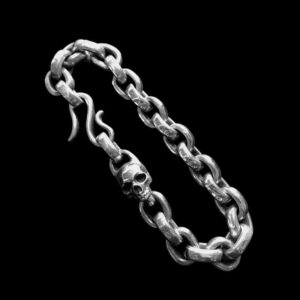
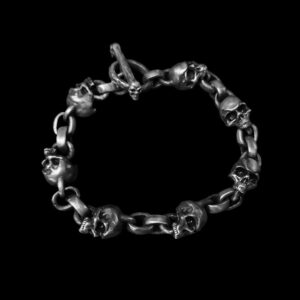
Inspect the surfaces that contact skin and clothing. Links should articulate without pinching, raised motifs should not create unfinished hooks, and the bracelet should bend where intended rather than at solder joins. On sculptural pieces, look for a smooth transition between decorative and functional areas.
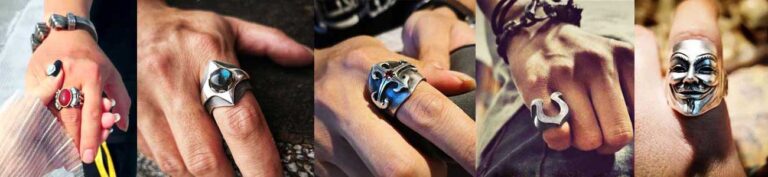
If the bracelet combines animal, skull or geometric motifs, make sure the relief remains readable at actual size. Larger is not always better. A balanced design preserves detail without creating sharp projections or unnecessary bulk. Compare the styling role with the skull jewelry collection before repeating several heavy motifs in one outfit.
Mistake 7: Assuming Finish Never Changes
Polished silver shows light and fine surface wear. Brushed silver appears quieter, while oxidized recesses create dark contrast. Contact with skin, fabric and nearby accessories can change those surfaces over time. This is normal wear, but the buyer should understand how the finish is intended to age.
Avoid placing a silver bracelet directly beside a hard watch case if the pieces strike each other. Store bracelets separately and wipe them after wear. GIA’s jewelry-care guidance recommends matching the cleaning method to all materials and treatments present rather than relying on one aggressive household solution.
Mistake 8: Buying for a Lifestyle the Bracelet Cannot Support
Consider work, exercise, tools, gloves and frequent hand washing. A heavy bracelet can catch on equipment; a loose chain can move into unsafe positions; an oxidized sculptural surface may need more careful cleaning. Jewelry should be removed for activities where impact, chemicals or machinery create risk.
For daily wear, prioritize a secure closure, controlled movement and surfaces that will not snag. For occasional wear, a larger statement piece may be practical because it is used in a more controlled setting.
Mistake 9: Skipping the Product and Return Details
Before payment, confirm what is included, how size is measured, whether the piece can be resized, the expected processing estimate and the return conditions for worn, adjusted or personalized items. Screenshots of the specifications can help if a listing changes later.
Marketing phrases do not replace measurements. A useful product page should state material, size, weight, construction, finish and selectable options. When comparing different forms, the sterling silver care guide can also help identify the maintenance commitment before purchase.
A Practical Pre-Purchase Checklist
- Record wrist circumference and preferred ease.
- Confirm wearable length, inside circumference or cuff opening.
- Read the complete metal and construction description.
- Check width, thickness, weight and closure type.
- Inspect inside surfaces, edges, links and connection points.
- Review care, adjustment and return conditions.
FAQ About Buying Men’s Silver Bracelets
How much extra room should a bracelet have?
It depends on the design and preferred movement. Start with an accurate wrist measurement, then follow the product’s wearable-size guidance. Wide, rigid and heavy bracelets often need different ease from fine flexible chains.
Is a 925 stamp enough to verify a bracelet?
A stamp is one useful signal, but buyers should also review the seller’s material disclosure, component description and policies. Color and a stamp alone do not communicate construction or workmanship.
Is a heavier silver bracelet always better?
No. Weight reflects scale and construction, not automatic quality. The right weight is one that matches the bracelet’s dimensions, intended use, closure and wearer comfort.
Can an open cuff be adjusted repeatedly?
Repeated bending can fatigue metal. Choose the correct opening and inside size, make only careful adjustments allowed by the maker, and avoid flexing the cuff every time it is worn.
What should I check when a bracelet includes stones?
Confirm the stone identity, treatment disclosure, setting method and care restrictions. Cleaning methods suitable for plain metal may not be suitable for porous, treated or adhesively set materials.

MENSSKULL Journal Notes
Leave a field note
Share fit notes, styling ideas, care questions, or your experience with MENSSKULL silver jewelry.
Comments are checked before publication so buyers can read useful fit, symbolism, care, and style notes without spam noise.
The simple plus/minus challenge below helps block automated spam while keeping the experience lightweight.
Continue exploring
More MENSSKULL stories
Handcrafted silver
Shop the pieces behind the stories