
Direct answer: Coordinate men’s jewelry by choosing one piece to lead, keeping the others quieter, relating metal finishes and checking how every item interacts with the neckline, sleeve, hand and daily routine. The strongest combination is not necessarily the newest or the most expensive. It is the one with clear visual hierarchy, practical fit and accurate material information.
Trends change quickly, so a useful accessory wardrobe should be built around repeatable decisions rather than a list of supposedly hottest items.
Choose One Visual Anchor
The anchor can be a sculptural ring, pendant, heavy bracelet, earring or wallet chain. Its size, texture or movement attracts attention first. Supporting pieces should echo one element, such as finish or line, without competing at the same scale.
If every item is large, bright and highly detailed, the eye has no clear starting point.
Use Scale as a Relationship
Scale depends on the wearer’s frame, garment, placement and neighboring accessories. A large pendant may suit a plain shirt, while the same pendant can feel crowded beside a patterned jacket and several chains. Small pieces can still have impact when placed against uncluttered clothing.
Compare millimeter dimensions and weight rather than relying on labels such as bold or minimal.
Coordinate Finish Before Motif
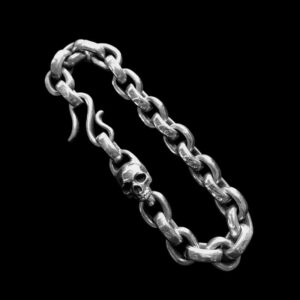
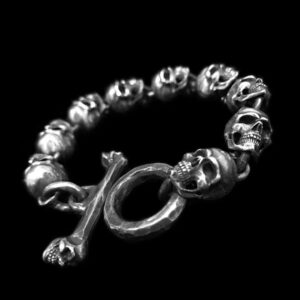
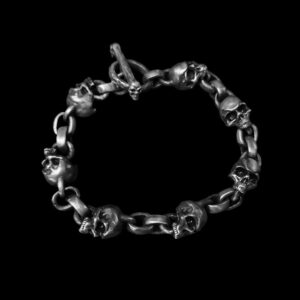
Polished silver reflects strongly, brushed silver is softer and oxidized silver emphasizes carved recesses. Two different motifs can look connected when their finish and visual temperature relate. Repeating skulls on every accessory is not required.
Use the men’s rings and bracelet collection to compare polished, textured and darkened surfaces.
Balance Rings Across the Hands
One large ring can stand alone. Two compact rings may be distributed between hands, or a plain band can support a signet. Check whether adjacent faces touch and whether the hand can close comfortably.
Remove rings before machinery, electrical work or heavy lifting. A coordinated look should never interfere with safe hand use.
Place Chains According to the Neckline
Short chains sit near the collar, medium lengths work with many open collars and T-shirts, and long chains create a lower focal point. A pendant should not disappear into the neckline or collide repeatedly with buttons and zippers.
Browse the men’s necklace collection, then confirm chain length, pendant drop, bail clearance and included components on the product page.
Fit Bracelets to the Sleeve and Watch
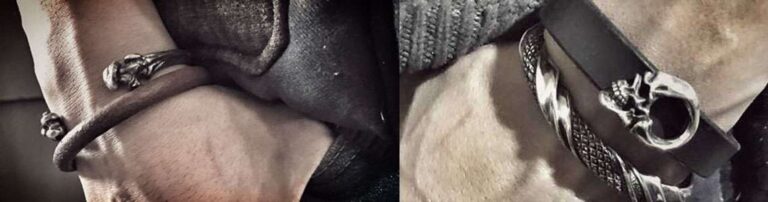
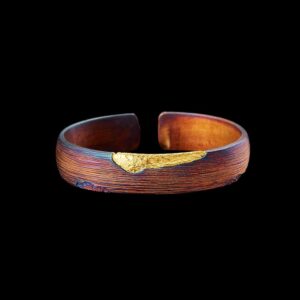
A heavy bracelet can lead a bare wrist. Beside a watch, use enough space to prevent constant metal contact and scratching. Dense links require interior room, while a cuff depends on opening and shape.
Do not stack until circulation is restricted. The wrist should move normally and the clasp should remain accessible.
Use Earrings as Near-Face Detail
Studs provide a compact accent; hoops create an outline; drops add movement. Their closeness to the face makes even a small design noticeable. Coordinate their finish with a necklace or ring without requiring an identical motif.
For new or healing piercings, professional piercing guidance and appropriate initial jewelry take priority over styling.
Let Clothing Provide Negative Space
Plain cotton, denim, leather and knit surfaces give detailed metal room to read. Patterns, bright hardware and embellished jackets already create visual activity. Reduce jewelry density when clothing contains several competing focal points.
A restrained combination is not less expressive; it simply allows each chosen detail to remain legible.
Mix Metals Deliberately
Silver, gold tone and dark steel can be combined when one metal dominates and another appears as an accent. Repeating the secondary tone once can make the choice look intentional. Exact color matching is difficult because polish, plating and lighting change appearance.
Verify materials before treating color as composition. The FTC’s precious-metal buying guide distinguishes sterling silver, plating and related terms.
Build Combinations for Real Settings
An office combination may use a low-profile ring and a chain under the shirt. A social outfit may allow one larger pendant or bracelet. Travel favors secure closures and pieces that are easy to store. Workshops, exercise and machinery may require removing jewelry entirely.
There is no universal formal-to-casual chart; workplace policy and garment construction matter. Pack each piece separately and count the items before leaving accommodation.
Create a Small Rotation
Start with one everyday ring, one chain and one bracelet that can be worn separately. Add a statement object only after understanding what the base pieces already do. This creates more combinations than buying several near-duplicates.
The current jewelry catalog can be filtered by category, while each live listing provides the exact specifications.
Use History for Inspiration, Not Rules
Jewelry has served decoration, status, remembrance, identity and practical functions across periods and cultures. The V&A’s history of jewellery shows how materials and uses change.
A historical reference can inform a modern combination, but it does not establish a single correct way for every man to wear jewelry.
Maintain the Whole Rotation
Separate storage reduces tangling and scratches. Wipe pieces after wear and inspect clasps, posts, links and settings. GIA’s care guidance recommends suitable storage and attention to damage.
Clean according to the most sensitive component, especially when stones, enamel, plating or darkened finish are present.
FAQ
Do all men’s jewelry pieces need to match?
No. Relating finish, scale or line is usually enough; identical motifs can become repetitive.
Can silver and gold-tone jewelry be worn together?
Yes. Let one tone dominate and repeat the accent deliberately while verifying actual materials.
Should a watch and bracelet touch?
Constant contact can scratch surfaces, so leave comfortable space or wear them on separate wrists.
How many statement pieces should be worn?
One clear anchor is the easiest starting point, though personal style can vary.
Are annual accessory trends important?
They can provide ideas, but fit, material, routine and long-term use are more reliable buying criteria.

MENSSKULL Journal Notes
Leave a field note
Share fit notes, styling ideas, care questions, or your experience with MENSSKULL silver jewelry.
Comments are checked before publication so buyers can read useful fit, symbolism, care, and style notes without spam noise.
The simple plus/minus challenge below helps block automated spam while keeping the experience lightweight.
Continue exploring
More MENSSKULL stories
Handcrafted silver
Shop the pieces behind the stories