
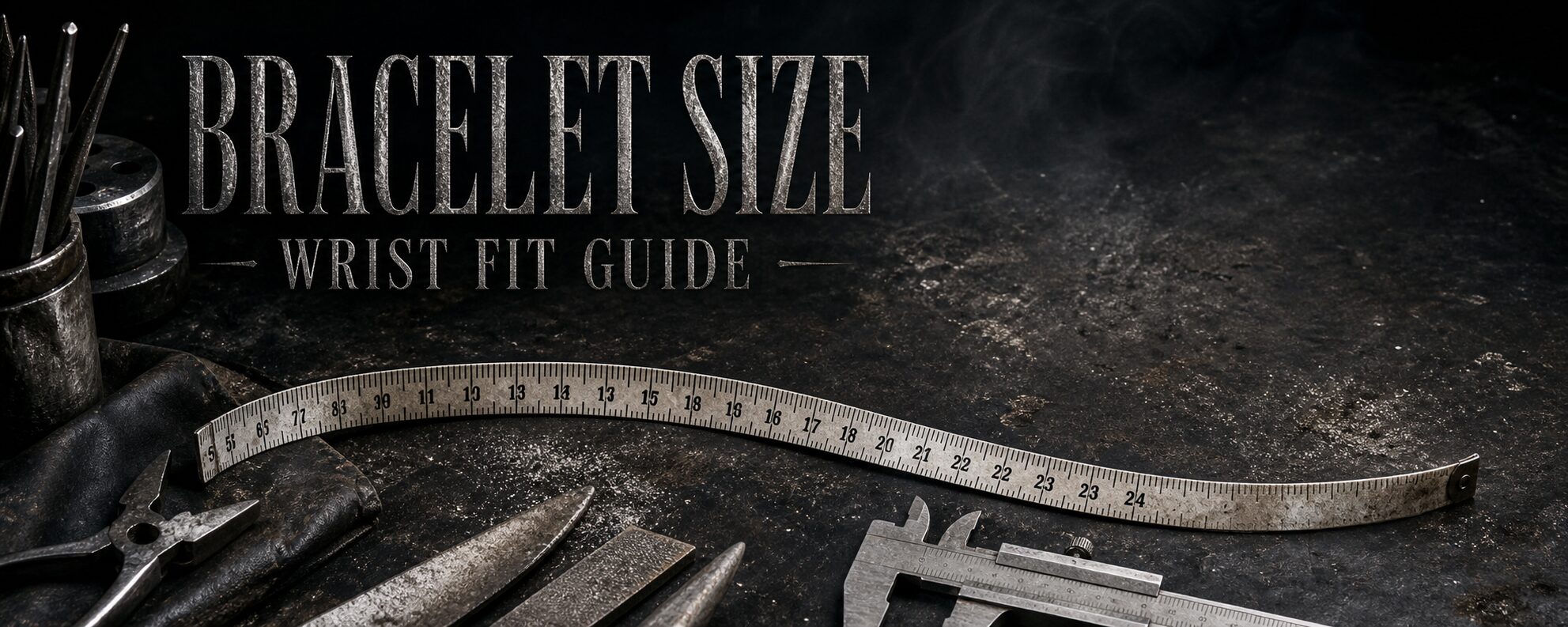
Direct answer: Measure the wrist at the exact wearing position with a flexible tape, without compressing the skin. Keep that body measurement separate from the bracelet’s listed length. Then use the seller’s fit method for the specific construction because chains, cuffs, bangles and wrap bracelets do not convert wrist size in the same way.
Why Wrist Measurement and Bracelet Size Differ
Wrist circumference describes the body. Bracelet length may include a clasp, end fittings or links that do not all contribute equally to internal space. Thick links consume more length when curved, while rigid bracelets are defined by internal geometry.
That is why adding one universal number to every wrist is unreliable. Construction, width, weight and desired movement all affect usable fit.
Measure the Intended Wrist Correctly
Place a flexible tape around the wrist where the bracelet will sit. Keep it level and comfortably against the skin. Record the measurement in millimeters and inches if the seller uses both systems.
If no soft tape is available, mark a non-stretch string at the overlap and measure it against a rigid ruler. Do not use an existing loose bracelet as a substitute for body measurement unless its internal fit is already understood.
Repeat the Measurement Before Ordering
Measure at least twice and use the same wrist. The dominant and non-dominant wrist can differ, and a watch may change the intended placement. Do not average measurements from different locations.
If swelling, injury or a medical condition changes wrist size, obtain appropriate advice instead of relying on a general jewelry guide.
Chain Bracelets Need Curved Internal Space
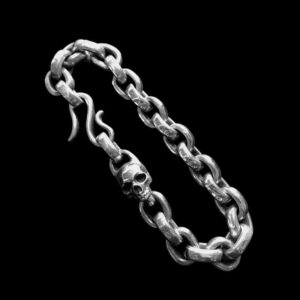
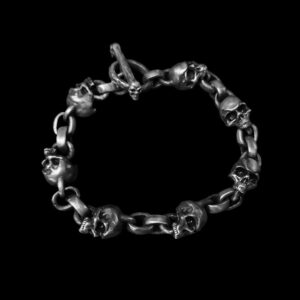
A flexible chain should close without pinching and remain controlled during movement. Heavy or thick links reduce internal circumference more than a flat tape suggests. Ask for the seller’s recommended wrist range or actual internal measurement.
The MENSSKULL silver chain bracelet guide explains link scale, clasp and weight alongside fit.
Cuffs Depend on Diameter, Gap and Metal Stiffness
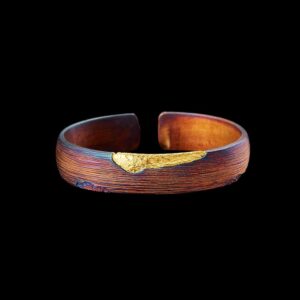
An open cuff is usually placed through the narrower side of the wrist and rotated into position, but instructions vary. Internal width, depth, opening gap and material stiffness matter more than total end-to-end length.
Do not repeatedly bend a cuff unless the maker explicitly permits adjustment. Repeated flexing can weaken metal or distort decoration.
Bangles Must Pass the Hand
A closed bangle must clear the widest part of the hand, so wrist circumference alone is insufficient. Use the seller’s hand-measurement method and internal diameter. Hinged bangles create a different path and rely on closure security.
Do not classify a hinged bangle, open cuff and continuous bangle as equivalent simply because their outside widths look similar.
Width, Weight and Profile Refine Comfort
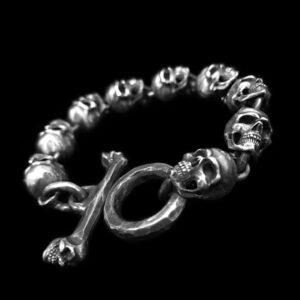
A broad bracelet covers more skin and may restrict wrist flexion. A heavy piece can slide toward the hand or rotate under the wrist if too loose. Sculptural links can contact sleeves, desks and neighboring jewelry.
Use written width, thickness and weight. Product photography can clarify style but cannot establish scale on your wrist.
Fit Preferences Need Functional Definitions
| Fit goal | Functional result | Watch for |
|---|---|---|
| Controlled | Minimal rotation and hand travel | Pinching during flexion |
| Comfort movement | Small amount of drape | Clasp or links contacting hand |
| Loose styling | Visible movement | Snagging and impact |
| Heavy silver | Stable weight distribution | Excess rotation or pressure points |
These are outcomes, not universal allowances. Follow the product’s own sizing chart and construction notes.
Verify Material and Finish Claims
The FTC precious-metal guide explains sterling and other silver terminology. A 925 mark concerns alloy content; it does not guarantee dimensions, comfort, handmade production or durability.
Check every component, including clasp, springs, wire, leather and stones. Deliberate oxidation and plating also affect care.
Account for Watches and Stacking
Measure the bracelet at the position it will actually occupy. A bracelet worn beside a watch may need controlled movement to avoid repeated contact. Stacks require enough space for wrist flexion without trapping skin between pieces.
Use fewer, better-spaced elements when a heavy silver bracelet is the focal point. The MENSSKULL bracelet style guide compares visual scale without replacing measurement.
Check the Product Listing Before Purchase
Record the seller’s size label, actual internal dimensions, total length, width, thickness, weight, clasp and adjustment policy. Confirm whether link removal or resizing is offered and whether that service affects returns.
Use the complete MENSSKULL bracelet size guide when translating a product-specific chart.
Care and Delivery Verification
GIA jewelry-care guidance supports separate storage and protection from damaging chemicals. Follow stricter product instructions for oxidation, plating, stones, leather or elastic.
On arrival, compare internal size, material, finish, clasp and weight with the saved listing. Test movement briefly over a clear surface. Resolve discrepancies before bending, polishing, removing links or engraving.
Check Units and Rounding Before Conversion
Do not treat centimeters and inches as interchangeable labels. Convert carefully, retain the original seller measurement and allow for normal rounding. A product listed to the nearest whole unit may provide less precision than a millimeter-based internal dimension.
If a sizing chart conflicts with written product dimensions, ask the seller which measurement controls. Saving the answer with the order provides a clearer reference during delivery inspection.
Photograph or note the tape position used for your body measurement so a later recheck follows the same method.
FAQ
How much should I add to my wrist measurement?
Use the seller’s method for that bracelet type; no single allowance works for every construction.
Can chain length equal internal circumference?
Not always. Thick links, clasps and curvature can reduce usable space.
Can an open cuff fit every wrist?
No. Internal geometry, gap and stiffness define its usable range.
Which wrist should I measure?
Measure the exact wrist and position where the bracelet will be worn.
What confirms the right fit?
Controlled movement, no pinching, no hand interference and agreement with the product’s sizing method.


MENSSKULL Journal Notes
Leave a field note
Share fit notes, styling ideas, care questions, or your experience with MENSSKULL silver jewelry.
Comments are checked before publication so buyers can read useful fit, symbolism, care, and style notes without spam noise.
The simple plus/minus challenge below helps block automated spam while keeping the experience lightweight.
Continue exploring
More MENSSKULL stories
Handcrafted silver
Shop the pieces behind the stories