
Treat the suspenders as two fixed rails, then test the neckline, wrist and hands as three separate jewelry zones. Record strap width, spacing, visible adjusters or clips, shirt placket and sleeve state before the first comparison. Score each zone only in that unchanged frame. This turns a vague matching question into a repeatable visibility decision without claiming that one accessory is universally correct.
This guide stays with observable spacing, outline and visual density. It does not advise on fastening, support, trouser fit, body shape, comfort, movement, fabric damage, safe wear, formality, history, culture, material, durability or performance.
Freeze the two-rail frame
Start with one repeatable shirt-and-suspender state. Keep the straps at the width and spacing you plan to show. Leave the same adjusters, clips or buttons visible, keep the shirt placket unchanged and set the sleeves in their intended position. Only then add jewelry.
Use a front view and a relaxed three-quarter view. A close crop of a ring, bracelet or necklace removes the two vertical strap lines from the decision. Step back until both straps, the central placket and the proposed jewelry zone appear together. That is the frame in which the focal point has to remain legible.
Keep the camera distance and arm position consistent between comparisons. If one photograph shows the hands prominently while another cuts them off, a ring cannot be judged against a necklace on equal terms. Use the same crop, let both wrists and hands occupy the same amount of space, and compare the first shapes that register. This turns the exercise into a repeatable layout check rather than a conclusion based on two different pictures.
Score the strap-and-hardware field
| Visible outfit feature | What to observe | First jewelry comparison |
|---|---|---|
| Narrow, widely spaced straps | More open shirt area between and beside the straps | Neckline detail versus one hand detail |
| Broad or closely spaced straps | Two stronger vertical blocks near the center | Wrist or hand focal zone away from the center |
| Visible adjusters or clips | Number and brightness of small hardware shapes | One quiet jewelry silhouette before another metal detail |
| Strong shirt placket | A third central vertical line | Compact neckline point versus an off-center zone |
| Rolled or raised sleeves | How much wrist area is exposed | Bracelet or ring zone, one at a time |
Use the matrix as a density ledger, not a garment rule. Count the two strap edges as one repeated system, the placket as a separate center line, and all visible adjusters or clips as one hardware cluster. Then add exactly one jewelry zone. If the new zone cannot be named within three seconds from the full view, either move the focus off-center or remove another competing detail.
Test zone one: the neckline
Begin without jewelry and identify the two strap edges and the placket. Add one necklace or pendant silhouette, then ask whether it creates a readable third point or simply becomes another vertical line. Keep the shirt opening unchanged while you compare. Moving the collar at the same time makes it impossible to know which change produced the result.
If a tie, knot and lapels are also present, use the necklace with suit and tie guide for that narrower collar-frame decision. If a vest covers part of the straps or creates a V-shaped opening, the necklace with waistcoat guide owns that separate frame.
Test zone two: the wrist
A wrist detail sits away from the two vertical strap lines. Observe it with both arms relaxed and then in the ordinary pose in which it will be seen. The question is whether the wrist forms one clear endpoint or whether watches, cuff edges and suspender hardware create several equally strong small shapes.
Keep sleeve-edge placement separate from the suspender decision. The bracelet and shirt-cuff placement guide covers the visible relationship between a bracelet and cuff. Here, the wrist matters only as one possible focal zone relative to the straps.
Test zone three: the hands
Rings can move the jewelry focus farther from the central straps. Compare the complete front view with the hands resting naturally inside the frame. One ring silhouette may create a quiet endpoint while allowing the straps and placket to remain the main structure. Several hand details can instead become a second cluster, so add them one at a time.
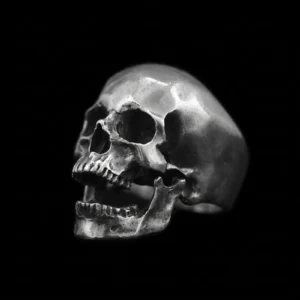
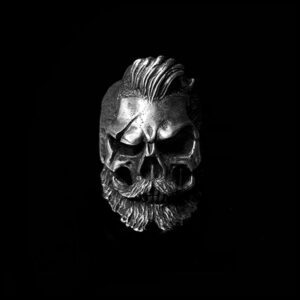
The men’s silver rings category can be used to compare catalog-visible ring forms. It does not prove suspender compatibility, fit, comfort, safety or a particular on-body result.
Separate hardware rhythm from jewelry emphasis
Visible adjusters, clips, a watch and a buckle can all read as small hard-edged shapes. Before adding another reflective detail, count how many of those shapes appear in the same view. Decide whether the jewelry should repeat that rhythm or stay quieter. This is a visual inventory, not a requirement that every metal look identical.
For the broader question of coordinating a watch and belt hardware, use the watch, belt buckle and jewelry guide. It owns that hardware comparison; this page keeps the two suspender straps and one focal zone as the central decision.
Run a three-pass zone comparison
- Fix strap width, spacing, visible hardware, shirt placket and sleeves.
- Observe the complete front and three-quarter views without jewelry.
- Add one neckline, wrist or hand detail.
- Name the first three visible lines or shapes.
- Remove that detail and test one different zone without changing the garment.
- Keep the version with the intended priority, or leave the frame without jewelry.
Complete three passes with the same crop: neckline only, wrist only, then hands only. Write down the first three shapes noticed in each pass. The pass that introduces one clear new endpoint without obscuring the strap frame is the strongest candidate. If every pass increases competition, record “no added focal point” rather than forcing a fourth combination.
Reduce density instead of adding a second focal point
If the neckline, wrist and hands all compete, remove one jewelry zone before changing the garment. Recheck the same full view. A single quiet detail can support the strap frame; two or three equally strong zones can make the intended priority harder to identify.
When the real question is whether jewelry should be added to the outfit at all, the jewelry with every outfit guide owns that broader add-or-skip decision.
Final one-focal-zone check
Finish with a full-frame audit. Identify the two-rail strap system, the placket and the selected jewelry zone in that order. If the jewelry cannot be named without zooming in, it is functioning as a quiet support detail rather than the focal zone. Accept that role, test another zone, or leave the frame without added jewelry; do not change several garment variables to rescue the result.
The finished answer can be a quiet neckline point, one wrist endpoint, one hand detail or no added jewelry. What matters is that the choice remains distinct beside the two visible straps and their hardware in the complete frame you actually plan to show.






MENSSKULL Journal Notes
Leave a field note
Share fit notes, styling ideas, care questions, or your experience with MENSSKULL silver jewelry.
Comments are checked before publication so buyers can read useful fit, symbolism, care, and style notes without spam noise.
The simple plus/minus challenge below helps block automated spam while keeping the experience lightweight.
Continue exploring
More MENSSKULL stories