
Should a man wear a bracelet above or below a shirt cuff? For most button-down shirts, start with the bracelet on the bare wrist, just behind or beside the cuff edge, so the sleeve can move without being trapped under the jewelry. Show more of the bracelet by rolling or pushing the sleeve back. Wearing a bracelet over fabric can work as an intentional casual styling choice with a smooth, close-fitting sleeve, but it should be treated as a separate look rather than a universal rule.
This is original MENSSKULL editorial guidance about visual placement. It does not promise comfort, prevent fabric wear, or establish that one position suits every bracelet, sleeve, wrist, or activity. Use the measurements of the piece you own, the actual shirt, and a short movement check before deciding. For the measurement question itself, use the men’s bracelet size guide.
Quick answer: choose among three visible positions
A bracelet and a long sleeve can share the wrist in three clear ways. The bracelet can sit on skin behind the cuff, appear beside an opened or rolled cuff, or sit over a fitted sleeve. The first option is the most restrained. The second gives the jewelry a deliberate window. The third turns the bracelet into an outer-layer detail and therefore asks more of both the garment and the composition.
| Placement | What the viewer sees | Useful starting context |
|---|---|---|
| On skin, behind the cuff | The bracelet appears briefly as the arm moves | Dress shirts, jackets, or a quiet accessory role |
| On skin, beside a rolled or open cuff | The bracelet remains clearly visible with some wrist space | Casual button-downs, overshirts, and workwear-inspired outfits |
| Over a fitted sleeve | The bracelet becomes a strong surface detail | Smooth knits or deliberately styled casual layers |
These are comparison positions, not status rules. A chain bracelet that moves freely, a rigid cuff, and a large sculptural bracelet do not occupy the sleeve opening in the same way. Start from the bracelet’s actual form, then choose how much of it you want the shirt to reveal.
Start behind the cuff for the most adaptable arrangement
Placing the bracelet on the bare wrist behind the shirt cuff keeps the garment’s normal line intact. With your arm relaxed, the piece may be mostly covered. When you bend your elbow, reach forward, or raise your hand, a section can appear. That intermittent visibility is useful when the bracelet should support the outfit rather than dominate it.
Do not force the cuff closed around a bracelet that clearly needs more room. Compare the closed cuff, an open cuff, and a lightly rolled sleeve. If the shirt changes shape around the jewelry or the bracelet cannot return to its normal position after ordinary movement, change the arrangement instead of treating the visual problem as a fit requirement.
Bracelet fit remains a separate decision. A sleeve cannot correct a bracelet that is too loose or too tight, and this page does not create a new sizing formula. The men’s bracelet selection guide compares fit, material, clasp, and style questions before outfit placement.
Use a rolled cuff when you want the bracelet to read clearly
A rolled or pushed-back sleeve creates a clean strip of visible wrist. This is often the easiest way to make a bracelet look intentional without placing it over fabric. Keep a small visual gap between the cuff edge and the jewelry, then view the result with the arm both straight and bent. The gap does not need to remain mathematically identical; it only needs to keep the two shapes from merging into one crowded band.
One or two simple folds usually create a calmer line than a large bundle of fabric at the forearm. If the rolled cuff already has strong texture, contrast stitching, buttons, or tabs, let either the cuff or the bracelet lead. The broader men’s jewelry styling guide explains how proportion and restraint work across rings, chains, and bracelets.
This arrangement can also separate the decision from a watch. If you wear both on one wrist, the relationship among watch, bracelet, and cuff becomes a different layout problem. Use the dedicated bracelet-and-watch same-wrist guide before adding the sleeve as a third element.
Wear a bracelet over a sleeve only as a deliberate outer-layer look
A bracelet over fabric is visually assertive because it interrupts the sleeve. It works best when the sleeve is smooth, close to the wrist, and simple enough to act as a background. Fine knits and fitted jersey create a different result from a loose shirt cuff, heavy ribbing, or layered outerwear. Compare the silhouette from the front and side rather than judging only a close-up of the bracelet.
Do not assume that an over-sleeve placement is appropriate because the bracelet can physically close. Fabric changes the circumference beneath the piece, and folds can change as the arm moves. This article does not recommend stretching, bending, or altering a bracelet to make it fit over a garment. Return to the listed dimensions and the applicable fit owner if the normal wearing position changes.
For workwear-inspired styling, an exposed cuff can be one option among several rather than an automatic trend requirement. The workwear chain-or-cuff guide compares where a chain and a silver cuff place visual weight in an outfit.
Match bracelet scale to the sleeve opening
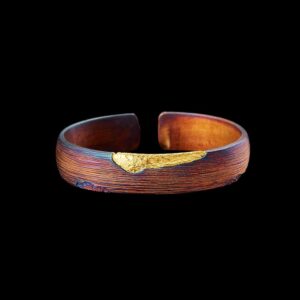
A slim chain bracelet can disappear beneath a deep or structured cuff. A broad cuff bracelet can compete with a narrow shirt opening. Neither result is inherently wrong, but each changes what the accessory contributes. Ask whether the jewelry should be a glimpse, a visible line, or the main wrist-level focal point.
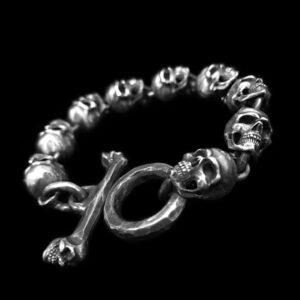
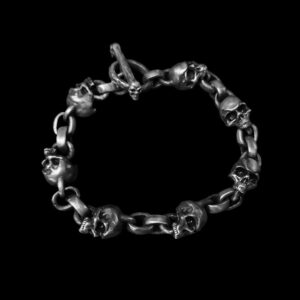
Use the bracelet’s width, profile, closure, and movement as observable facts. Avoid translating those features into unsupported claims about comfort, durability, or suitability for every activity. The updated men’s silver bracelet guide separates material, fit, construction, and styling checks so one visual impression does not stand in for all four.
| Bracelet or sleeve feature | What to observe | Placement to test first |
|---|---|---|
| Slim chain and structured cuff | Whether the bracelet is visible at all during normal movement | On skin behind the cuff, then beside one opened button |
| Broad cuff and casual shirt | Whether the two wide bands visually compete | Beside a rolled sleeve with a small visible gap |
| Sculptural bracelet and detailed cuff | Whether buttons, seams, and metal create too many focal points | Simplify one element or expose more wrist |
| Smooth fitted knit | Whether the sleeve remains visually flat beneath the bracelet | Compare on-skin and intentional over-sleeve positions |
| Loose or heavily textured sleeve | Whether fabric gathers around the jewelry | On skin with the sleeve pulled or rolled clear |
Use a controlled mirror and photo test
Put on the shirt and bracelet you intend to wear. Make one front photograph with the arm relaxed and one with the elbow bent. Repeat with the bracelet behind the cuff, beside a rolled cuff, and over the sleeve only if that option is realistic for the garment. Keep the camera distance, light, and posture as consistent as possible.
Compare five things: how much metal remains visible, whether the cuff line stays clear, whether the bracelet becomes the intended focal point, whether the placement changes when the arm bends, and whether you keep adjusting the arrangement. A photograph answers the composition question; it does not verify metal purity, construction, care needs, or performance.
If you are choosing between a bracelet and a necklace for the same outfit, do not solve both decisions by adding both automatically. The workwear guide linked above and the broader style owner can help decide where the outfit needs visual weight. One clear focal point often gives you a better comparison than several accessories introduced at once.
Keep shirt hardware and bracelet hardware visually separate
Buttons, cufflinks, snaps, watch cases, and bracelet clasps can all occupy a small area. You do not need to make every piece identical, but you should be able to identify the role of each one. If a decorative cuff already carries the detail, place the bracelet farther back, expose more wrist, or omit it for that outfit.
The clasp is not merely decoration. Check how it sits in the actual wearing position and whether the product listing explains the closure. The silver bracelet buying guide covers clasp construction and fit as purchase questions. A clean photograph of a cuff arrangement cannot replace those checks.
Separate styling observations from silver facts
A cool-toned bracelet may contrast clearly against a black, navy, or brown sleeve, but visible color does not establish what the piece is made from. If a listing says 925 sterling silver, verify the claim and its limits through the 925 sterling silver guide. That Research owner covers composition and marking boundaries; this page only applies visible form to a shirt-cuff decision.
Finish also changes the impression. Polished surfaces can appear brighter under direct light, while oxidized recesses can make relief easier to read. Those are appearance observations, not promises about scratch resistance, tarnish behavior, or durability. Use the sterling silver quality guide for evidence-based buying checks and the sterling silver care guide for care boundaries.
A practical decision sequence
First, decide whether the bracelet should be hidden, glimpsed, or fully visible. Second, identify the sleeve type: structured cuff, casual roll, fitted knit, or loose layer. Third, place the bracelet on skin and test normal arm positions. Fourth, expose more wrist if the jewelry disappears or the cuff line becomes crowded. Fifth, try an over-sleeve arrangement only when it is an intentional look and the real garment permits a stable visual comparison without altering the bracelet.
For a dress shirt, begin behind the cuff. For a casual button-down, begin beside a lightly rolled sleeve. For a smooth fitted knit, compare on-skin and over-sleeve positions. For bulky or highly detailed sleeves, simplify the wrist rather than forcing the bracelet into the same visual space. These are starting points, not universal dress rules.
Bracelet and shirt cuff questions
Should a bracelet show below a suit sleeve?
It can appear briefly as the arm moves, but it does not need to remain fully visible. Start with the bracelet on skin behind the shirt cuff and jacket sleeve. Judge the combined sleeve line before deciding whether to expose more wrist.
Can I wear a cuff bracelet over a shirt?
You can treat it as a deliberate casual styling option when the sleeve is smooth and fitted. Do not alter the bracelet or assume the same fit over fabric. Compare the actual garment and piece from several arm positions.
Should I roll my sleeve above the bracelet?
Rolling the sleeve so the bracelet sits on visible skin is a clear, adaptable arrangement. Leave enough visual separation that the cuff edge and jewelry do not merge into one band, then check the result with the arm straight and bent.
Does the bracelet need to match shirt buttons or cufflinks?
No exact match is required. Coordinate by deciding which detail leads and keeping the wrist from becoming crowded. Material identity and quality still need evidence from the product listing and the relevant Research owner.


MENSSKULL Journal Notes
Leave a field note
Share fit notes, styling ideas, care questions, or your experience with MENSSKULL silver jewelry.
Comments are checked before publication so buyers can read useful fit, symbolism, care, and style notes without spam noise.
The simple plus/minus challenge below helps block automated spam while keeping the experience lightweight.
Continue exploring
More MENSSKULL stories
Handcrafted silver
Shop the pieces behind the stories