
The practical benefits of a men’s silver bracelet come from choice, not from the metal color alone. Silver can support a restrained chain, a sculptural link pattern or an open cuff, so the same wardrobe category can cover very different levels of visual weight. The useful question is therefore not simply “Is a silver bracelet worth buying?” It is “Which form, scale, fit and verified specification will give me the result I want?”
This guide is a decision framework for that question. It does not rank products by quality, strength or comfort, and it does not treat weight, a 925 label or a workshop-style photograph as proof of craftsmanship. For the broad choice between chains and cuffs, start with the men’s bracelet selection guide. Use the sections below to decide what benefit you expect from silver and what evidence should support it before you order.
What benefits can a silver bracelet actually provide?
A silver bracelet can create a clear metal accent without requiring the size of a necklace or the fixed position of a ring. It is visible when your hands move, yet it can sit under a sleeve when the setting calls for less emphasis. That makes a bracelet useful for buyers who want an accessory that can shift between supporting detail and focal point.
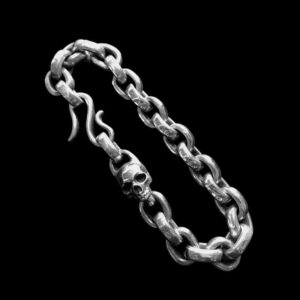
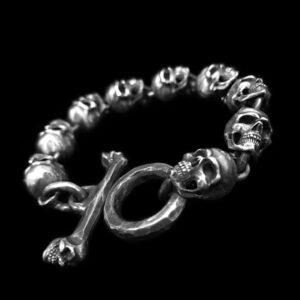
Its design range is another benefit. A plain or lightly detailed chain distributes its outline around the wrist. A bracelet with repeated skull or cross links turns the entire circumference into the motif. A hook closure can concentrate the design at one point, while a cuff creates a cleaner continuous arc. None is automatically more refined or more masculine; each solves a different visual problem.
Silver also gives buyers a familiar reference point for comparing products, provided that the listing is specific. The phrase “silver color” is not the same as a documented silver material. A 925 description can help identify the listed material, but it does not answer how the bracelet is built, whether every component uses the same alloy, how the size selector works or how the piece will sit on your wrist. The 925 sterling silver research guide owns the detailed material explanation; this page applies that distinction to bracelet shopping.
Choose the bracelet form that delivers the benefit you want
Begin with the outline rather than the motif. A flexible link bracelet follows wrist movement and usually closes with a clasp, hook or toggle. An open cuff keeps a more stable arc and may leave more uninterrupted metal visible. A centerpiece bracelet places most of its detail on the top of the wrist, while an all-around link design remains visually active from several angles.
The form changes what you need to verify. With a chain, inspect the connection points, closure and the way bulky links affect usable circumference. With a cuff, identify the listed opening and wrist options rather than assuming the metal should be repeatedly bent to fit. With a sculptural link bracelet, check whether the specification describes the complete bracelet or only one link or ornament.
| Form | Main visual benefit | Evidence to check | Common uncertainty |
|---|---|---|---|
| Plain or motif-led chain | Flexible outline with adjustable visual emphasis | Link reference, closure views and size-option meaning | Whether the published width applies to the link or the whole profile |
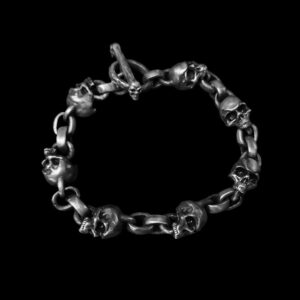
| Repeated sculptural links | Motif remains visible around more of the wrist | Full-circle views, listed weight and connection details | How much the links reduce usable inside space |
| Hook or toggle centerpiece | The closure becomes a deliberate focal point | Open and fastened views plus the receiving point | Whether the decorative hardware is also the working closure |
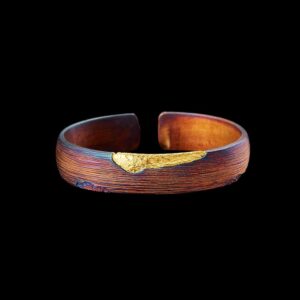
| Open cuff | Continuous metal arc with a clean side profile | Opening, wrist options and product-specific adjustment guidance | Whether the cuff is intended to be adjusted after purchase |
If you have not yet decided which form fits your use, compare the form first and the artwork second. That prevents an appealing skull, cross, snake or eagle detail from hiding an unresolved closure or sizing question.
Fit turns a visual benefit into a wearable choice
A bracelet can look balanced in a product photograph and still sit differently on another wrist. The most useful starting measurement is the wrist position where you intend to wear it. Then identify what the seller’s selector represents. Some listings label wrist circumference directly; others may list bracelet length or use grouped wrist ranges. Those values are not interchangeable.
Use the men’s bracelet size guide for the measurement process and fit terminology. This article does not create a universal allowance because link size, closure construction and cuff shape can change how a nominal measurement behaves. When a product page labels its options as wrist circumference, follow that defined axis instead of silently adding extra length.
Also decide where the bracelet should stop. If you plan to wear it beside a watch, measure the remaining wrist position rather than reusing a measurement taken closer to the hand. A broad chain and a watch may compete for the same space. A cuff may sit higher on the wrist. These are styling and placement decisions, not guarantees about comfort or protection from contact.
Use scale and weight to control visual presence
Weight is often presented as if it were a quality score. It is not. A listed gram figure tells you how much the product is reported to weigh; it does not prove durability, solid construction, ideal balance or suitability for every activity. It is still useful when combined with width, motif density and the number of moving parts.
A lighter bracelet can provide a quieter accent. A heavier or broader bracelet can become the only wrist accessory you need. Repeated sculptural links usually create more visual density than a chain with one decorated closure, even when both use a similar metal tone. If a listing gives a weight range without mapping each value to a size, keep it as a range rather than guessing which wrist option receives which weight.
Gallery images should help you understand scale, not replace the written specification. Look for a full bracelet view, a closure close-up and at least one angle that shows profile depth. Hand and wrist photographs can provide context, but camera distance and perspective can exaggerate or reduce apparent size.
Compare current bracelet examples without turning them into guarantees
The following MENSSKULL products illustrate different routes through the decision. Their listed attributes were checked during this update, but they remain commercial examples rather than independent tests. Recheck the live product page and selected option before ordering because availability and product data can change.
| Example | Published design route | Listed scale or weight | Buyer decision it illustrates |
|---|---|---|---|
| Skull clasp chain bracelet | Rounded links with the skull concentrated at a hook closure | 10 mm reference; 70–90+ g range | Choose one focal closure instead of an all-around motif |
| Heavy skull link bracelet | Repeated three-dimensional skull links with a visible toggle | 7.6 mm listed diameter reference; 120 g listed weight | Compare an all-around sculptural outline and grouped wrist ranges |
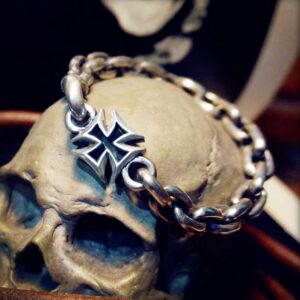
| Iron cross chain bracelet | Cross detail concentrated at the hook-and-ring closure | Listed size 19 × 15 mm; 36 g | Compare a closure-led motif with less listed weight than the heavy skull examples |
| Snake hook chain bracelet | Snake head-and-tail detail concentrated around the hook | Listed size 96 × 14 mm; 30 g | Compare an elongated closure motif with a quieter chain body |
| Eagle claw cuff bracelet | Open cuff with eagle-claw and red-stone detail | 14 mm reference; 34 g | Compare a cuff silhouette with chain and toggle forms |
These numbers describe different fields and should not be forced into one ranking. For example, a listed “size” may describe a link, ornament or another product reference rather than total bracelet dimensions. When an axis is not defined, keep the label as published and use the gallery to understand the visible relationship.
Quality is a chain of checks, not one impressive word
“Luxury,” “premium” and “heavy” are not substitutes for verifiable product information. A useful listing should let you identify the material description, size-option meaning, closure, visible construction, finish, and any limits that affect use or care. The sterling silver quality research guide explains the broader evidence boundaries. On a bracelet page, apply them by looking for agreement between the title, attributes, gallery and purchase selector.
Inspect the closure from both sides when the gallery allows it. Check whether connection rings appear closed, whether a toggle bar has a clearly visible receiving ring, and whether a hook is shown seated as well as open. These observations help you understand the product shown; they do not certify manufacturing quality or predict service life.
Finish is another design decision. Polished surfaces reflect more light. Darkened recesses can increase contrast around carved detail. A mixed finish can separate raised edges from lower textures. Do not infer historical age, handmade provenance or a universal meaning from a dark finish. If care is a deciding factor, use the sterling silver care research guide and the exact instructions attached to the product.
Match the bracelet to the rest of the outfit
A silver bracelet does not need every other accessory to match perfectly. Repeating one element is usually enough: a cool metal tone, a dark recessed finish, a geometric edge or a shared level of visual weight. If the bracelet has a dense all-around motif, let it lead the wrist. If it uses one decorated closure, that detail can echo a ring or pendant without turning the outfit into a full matching set.
When wearing a watch, decide which item should dominate. A broad bracelet next to a broad watch creates a dense block of metal. A narrower chain can act as a supporting line. Wearing the pieces on opposite wrists separates them completely. The best route depends on spacing and movement, so evaluate the actual combination rather than relying on a rule that every bracelet belongs on a particular side.
For browsing after you have chosen a form and scale, use the men’s silver bracelets collection. Category pages are for comparing available products; they do not replace the fit, material or quality owners linked above.
A final evidence checklist before ordering
Save the product page or record the selected option before checkout so you can compare the delivered bracelet with what was offered. Verify the points that actually affect your decision:
- Form: chain, sculptural links, centerpiece closure or cuff.
- Material: the exact published material description, without assuming every component is identical.
- Fit: what the selector measures and which wrist position you measured.
- Scale: listed width or size reference, with the axis kept as published when undefined.
- Weight: an exact value or honest range, without converting it into a quality promise.
- Closure: clear open and fastened views plus the way it is operated.
- Finish: polished, darkened, textured or mixed, together with product-specific care limits.
- Context: whether the bracelet will be the focal point, support a watch or sit alone.
The strongest benefit of a men’s silver bracelet is not a vague promise of status. It is the ability to select a defined form, scale and design language that fits your own use, then verify that the listing supports the choice. When the evidence is incomplete, ask for the missing detail before treating an attractive image as a buying answer.


MENSSKULL Journal Notes
Leave a field note
Share fit notes, styling ideas, care questions, or your experience with MENSSKULL silver jewelry.
Comments are checked before publication so buyers can read useful fit, symbolism, care, and style notes without spam noise.
The simple plus/minus challenge below helps block automated spam while keeping the experience lightweight.
Continue exploring
More MENSSKULL stories
Handcrafted silver
Shop the pieces behind the stories