Men’s Earrings With Long Hair: Keep One Clear Earring Outline
Set the hair position first, read actual ear exposure and earring outline, then choose one primary visible zone and at most one supporting zone.
Set the hair position first, read actual ear exposure and earring outline, then choose one primary visible zone and at most one supporting zone.
Read the zipper corridor, ribbed collar, cuffs, visible base layer, ears and hands, then choose one primary jewelry zone and at most one supporting zone.
Set the blazer open or buttoned first, read the lapels, shirt neckline, cuffs, and hands, then choose one primary jewelry zone and at most one supporting zone.
Set the beanie cuff first, read actual ear, neckline, and hand visibility, then choose one primary jewelry zone and at most one supporting zone.
Set the overshirt open or buttoned first, read the collar, placket, pocket and base-layer frame, then choose one plain chain, one pendant shape, or no visible necklace.
Set the cardigan open or buttoned first, read the visible base-layer frame, then choose one plain chain, one pendant shape, or no visible necklace.
Arrange the scarf first, identify one stable visible zone, then decide whether that zone needs a plain chain line, one pendant shape, or no visible necklace.
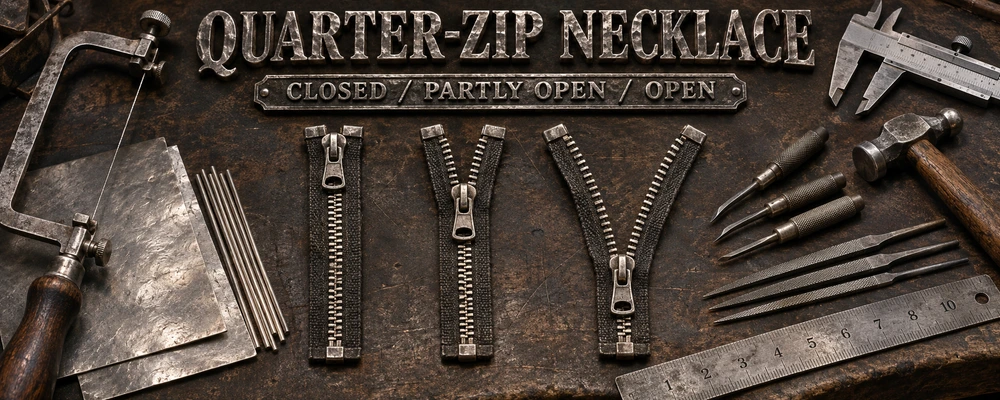
Choose a men’s quarter-zip necklace by setting the zipper first, reading the opening, and checking whether a plain chain or pendant remains clear of the collar and pull.

Choose men’s jewelry with an overcoat by setting the coat open, partly buttoned, or closed, then checking the neckline, wrists, and hands that remain visible.
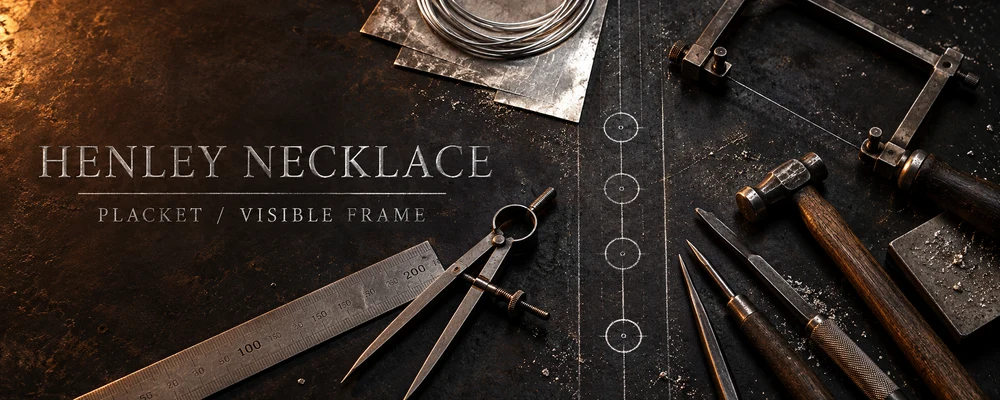
Choose a men’s Henley necklace by reading the button placket, visible chest frame, shirt detail, and the chain or pendant silhouette that remains clear.
MENSSKULL support