
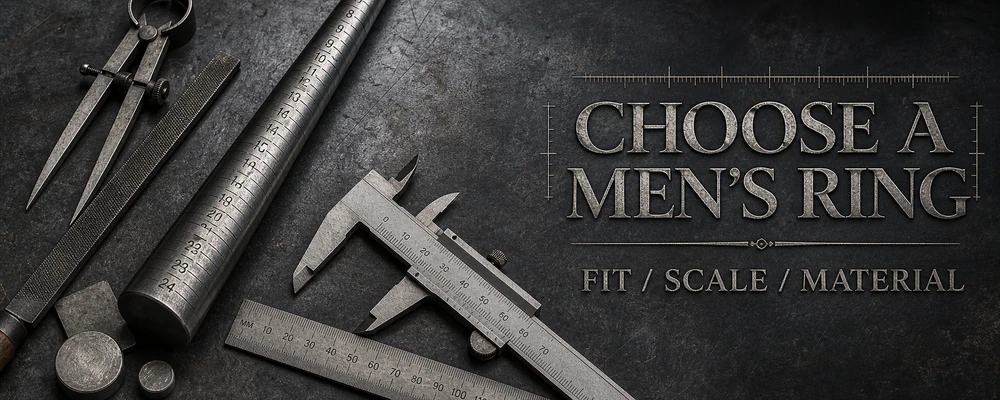
To choose a men’s ring, decide which finger will wear it, measure for that finger, then compare band width, face dimensions, profile height, material, finish, and daily-use demands. Style matters, but comfort and verified specifications determine whether the ring will actually work on the hand.
Start With the Finger and Purpose
A ring worn alone on the index finger serves a different visual purpose from a compact pinky signet or a low-profile band worn beside other rings. Choose the finger before deciding scale. Note whether the ring is intended for daily wear, occasional styling, a symbolic role, or a specific outfit. This prevents a dramatic product photograph from making the decision by itself.
Finger meanings are not universal rules. Traditions vary by time, place, family, and personal practice. Use placement as a styling and fit decision unless a documented commitment or cultural convention applies.
Measure the Actual Wearing Finger
Finger circumference changes with temperature, time of day, activity, and swelling. Measure the intended finger more than once under ordinary conditions. A ring that fits the opposite hand may not fit the same finger on the other hand. When possible, compare the result with a ring that already fits and uses a similar band width.
Use the men’s ring size guide for measurement methods, then follow the sizing system shown on the product page. If the design is especially wide, rigid, or top-heavy, ask whether the maker recommends a sizing adjustment rather than guessing.
Match Ring Scale to the Hand
| Feature | Visual effect | Fit question |
|---|---|---|
| Face width | Controls how much of the finger is covered | Will it touch neighboring fingers? |
| Face height | Changes presence along the finger | Does it cross a knuckle crease? |
| Profile height | Creates projection above the hand | Will it catch pockets, gloves, or equipment? |
| Band width | Changes visual weight around the finger | Does it need extra fit allowance? |
| Weight | Affects rotation and long-wear comfort | Is the weight stated for the selected size? |
Hand size does not impose a strict style rule. A smaller hand can wear a large ring, and a broad hand can wear a narrow band. The useful question is whether the scale is intentional and comfortable. Product dimensions are more reliable than labels such as small, bold, or oversized.
Choose the Ring Type by Function
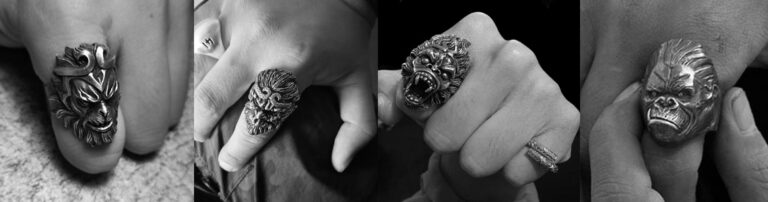
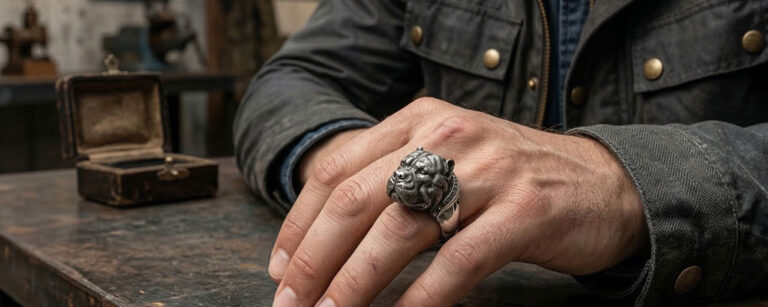
A signet ring concentrates attention on a flat or sculpted face. A fully sculpted ring uses depth around the band and may contact neighboring fingers. A plain or patterned band is often lower in profile. An open-ended ring may offer limited adjustment, but it should not be repeatedly bent unless the maker specifically allows it.
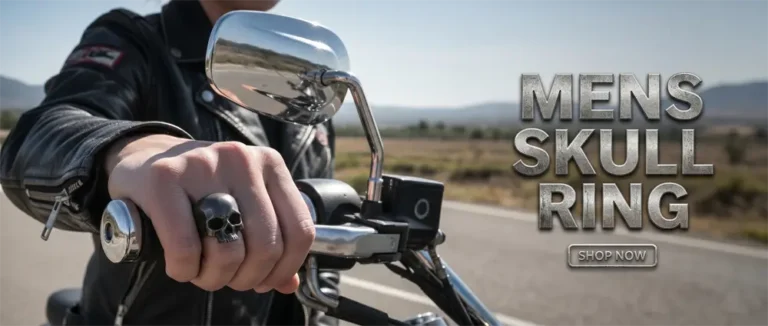
For a dark statement direction, compare the men’s skull ring guide. For a broader overview, use the men’s ring collection and filter by the specifications that matter rather than by motif alone.
Read Material Descriptions Precisely
Sterling silver is an alloy containing 92.5 percent silver. The FTC silver jewelry guide explains common precious-metal descriptions. A 925 mark concerns alloy representation; it does not prove finish quality, handmade production, country of origin, or resistance to every type of wear.
Distinguish sterling silver from silver plate, silver tone, stainless steel, brass, and mixed-material construction. Stones, enamel, copper accents, plating, solder, and interior components may require separate verification. Browse men’s silver rings for material-led options, then confirm the exact listing.
Select a Finish You Can Maintain
High polish reflects light and makes scratches easier to notice. Brushed surfaces diffuse reflection but can develop smoother contact areas over time. Oxidized recesses increase contrast around carving, while raised areas may brighten through handling. Mixed finishes often need selective cleaning instead of one aggressive polishing method.
Choose a finish based on the appearance you want after regular wear, not only on a fresh studio photograph. Review care instructions before ordering if preserving darkened detail is important.
Test the Ring Against Daily Life
Think through pockets, gloves, steering wheels, keyboards, tools, gym equipment, helmets, and workplace safety requirements. Tall crowns, projecting claws, long teeth, or sharp-looking ornament can catch clothing even when the ring fits correctly. A lower profile may be more practical for frequent wear.
Remove rings when machinery, chemicals, impact, or hygiene rules make jewelry unsafe. No style choice should override workplace or activity-specific guidance.
Use Symbolism Without Inventing Certainty
Animals, skulls, crosses, heraldic forms, fictional characters, and inscriptions may have historical, cultural, personal, or purely visual meanings. Do not infer a wearer’s beliefs or identity from one motif. If symbolism matters, identify the exact design and consult sources relevant to that symbol rather than relying on a generic product label.
Balance One Ring or Several
With one ring, choose whether it should lead from the index finger, sit as a compact pinky accent, or remain visually quiet on another finger. With several rings, distribute scale instead of placing every large face beside another large face. Leaving one finger open can create more clarity than filling the entire hand.
Check neighboring-finger contact while making a fist, holding a phone, and reaching into a pocket. Two rings that look balanced in a photograph may strike each other during movement, especially when both have wide faces or projecting sides. Coordinate finish or shape rather than forcing an exact matching set.
Make a Product Evidence Check
- Selected ring size and sizing system
- Band width and interior shape
- Face height, width, and profile
- Listed weight and whether it varies by size
- Material for the band, accents, stones, and plating
- Finish and care instructions
- Selectable variations and included components
- Return, exchange, and resizing terms
Save the exact variation before checkout. A photograph may show another size, finish, or stone option. If the listing omits a specification that changes fit or wearability, ask before ordering.
Care for the Chosen Ring
Store the ring away from harder pieces, wipe it after wear, and avoid exposing it to chemicals or impact beyond its documented use. The GIA jewelry care guidance recommends protecting jewelry from physical damage and damaging substances. Use methods suited to the ring’s actual material, stones, adhesives, plating, and finish.
Frequently Asked Questions
Which finger should a man wear a ring on?
There is no single required finger for a fashion ring. Choose based on fit, intended symbolism, comfort, and how the ring balances with other jewelry.
Should a wide ring fit differently?
Wide bands can feel tighter because they contact more skin. Measure carefully and follow any sizing guidance provided for the exact design.
Does a large hand require a large ring?
No. Scale is a visual choice. Use written face and band dimensions to decide whether the proportion and neighboring-finger clearance suit your preference.
Does 925 prove that a ring is high quality?
No. It relates to sterling silver alloy representation. Construction, finish, fit, stone setting, documentation, and seller terms need separate evaluation.
What should I verify immediately before ordering?
Confirm the selected size, dimensions, material, weight basis, finish, variation, care needs, and return or resizing terms.






MENSSKULL Journal Notes
Leave a field note
Share fit notes, styling ideas, care questions, or your experience with MENSSKULL silver jewelry.
Comments are checked before publication so buyers can read useful fit, symbolism, care, and style notes without spam noise.
The simple plus/minus challenge below helps block automated spam while keeping the experience lightweight.
Continue exploring
More MENSSKULL stories
Handcrafted silver
Shop the pieces behind the stories