
Direct answer: The most reliable way to measure ring size is to use calibrated finger gauges that match the intended band width or have a jeweler measure the exact finger. A compatible existing ring can be measured on a ring stick when it is round and worn on the same finger. Paper, string and screen charts are rough estimates because tension, printing and material thickness can distort the result.
Ring size is a fit decision, not a test of craftsmanship or intuition.
Measure the Exact Finger and Hand
Finger sizes differ between hands and between neighboring fingers. A ring worn on the right index finger does not reliably predict the left ring finger. Record which finger and hand are intended before measuring.
Do not borrow the size of an unrelated ring unless its placement and interior profile match.
Use Professional Finger Gauges
A finger-gauge set provides rigid rings in defined sizes. The correct gauge should pass over the knuckle without force and rest securely where the ring will be worn. Try neighboring sizes rather than stopping at the first one that passes.
GIA’s finger and ring sizing benchmark explains gauge selection and fit.
Match Gauge Width to Band Width
Wide bands contact more skin and often feel tighter than narrow bands at the same nominal size. GIA recommends wide-finger sizing gauges for bands wider than 4 mm. A narrow sample cannot fully reproduce a broad ring.
Ask for the product’s palm-side band width, not only the decorative face width.
Check the Knuckle and Finger Base
A ring must pass the knuckle yet remain stable at the finger base. When the knuckle is much larger, a size that passes easily may rotate below it. A jeweler can discuss sizing beads or other appropriate solutions for a specific construction.
Do not force a tight gauge over the joint or accept pain as a secure fit.
Measure Under Normal Conditions
Cold can make fingers smaller, while heat, exercise, travel and fluid retention can make them larger. Measure more than once under ordinary indoor conditions and avoid immediately after strenuous activity.
If measurements vary substantially or swelling is persistent, delay the purchase and seek appropriate advice rather than guessing.
Measure an Existing Ring Correctly
A ring stick or mandrel can read a ring that already fits the intended finger. The ring should be round and should not have a stone projecting into the opening. Tapered and convex interiors require the correct reading point.
ISO’s ISO 8653 ring-size standard defines measurement and designation using ring sticks and corresponding finger gauges.
Use Inner Diameter Only With a Round Ring
Measure the inside diameter across the center without including metal. A distorted, oval or open ring cannot be converted accurately from one diameter. Small reading errors can change the resulting size.
Calipers can scratch a finish when used carelessly; let a jeweler measure valuable or stone-set pieces.
Understand International Size Systems
Countries use different labels, including numbers, letters and circumference-based designations. Never assume that the same printed number means the same diameter in every system.
Use a chart that identifies inside diameter or circumference in millimeters and the exact regional system. Keep the original measurement with the converted size.
Avoid Stretchable Paper and String as Final Proof
String can compress skin or stretch, and paper can loosen or overlap at an angle. Printer scaling can alter downloadable guides. These methods may narrow a range but should not authorize a non-returnable custom ring.
A reusable plastic sizer should still match the intended band width and be read according to its instructions.
Account for Interior Shape
Flat interiors, comfort-fit curves, open space above the finger and tapered bands can fit differently. A top-heavy face may need a stable fit to resist rotation. Product descriptions should state these features when they affect selection.
Compare profiles in the men’s ring collection and verify each individual listing.
Plan for Stones and Continuous Patterns
Some rings are difficult to resize because stones, enamel, hollow sections, interior engraving or patterns continue around the band. Determining size before purchase is especially important for these designs.
The skull ring size guide covers scale and top-heavy profiles.
Decide What to Do Between Sizes
Do not automatically choose the larger or smaller size. Consider band width, knuckle, interior shape, seasonal variation and seller exchange terms. Ask whether half or quarter sizes are available.
A secure fit should pass the joint and remain in place without numbness, pain or deep pressure.
Record the Measurement Method
Save the finger, hand, date, gauge width, regional size system and measured result. This prevents a converted value from losing its context and helps when ordering another ring later.
Browse the current catalog only after confirming the size range offered by the exact design.
Measure Again Before a Final-Sale or Custom Order
Repeat the measurement on another ordinary day before approving engraving, made-to-size work or a ring with restricted returns. Two consistent readings are more useful than a single rushed result. If the second reading differs, identify whether temperature, gauge width, hand selection or technique changed before choosing a size.
For a surprise gift, borrowing a ring is useful only when it is worn on the intended finger. Otherwise, choose a design with a practical exchange policy rather than presenting an uncertain measurement as exact.
Test Fit With Everyday Hand Movement
A correctly sized sample should remain comfortable when the hand opens, closes and makes a gentle fist. Check for spinning, pinching at the web between fingers and pressure at the knuckle. A ring that feels acceptable with a relaxed hand may become uncomfortable during normal movement.
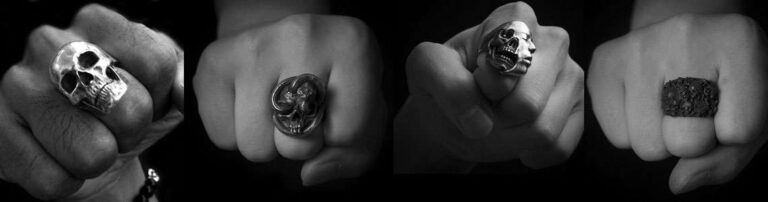
Fit is also affected by the ring’s weight distribution. A broad decorative top can rotate even when a lightweight plain band in the same nominal size stays centered, so assess the actual style whenever possible.
FAQ
What is the most accurate way to measure ring size?
Use calibrated gauges matched to band width or have the exact finger measured by a jeweler.
Why do wide rings feel tighter?
They contact more skin and may require a wider gauge or adjusted size.
Can string provide a final ring size?
It is only an estimate because stretch and tension can change the result.
Can an existing ring be measured?
Yes, when it fits the intended finger, is round and is measured with an appropriate ring stick.
Should I size up when between sizes?
Not automatically; consider width, knuckle, interior shape, swelling and exchange options.






MENSSKULL Journal Notes
Leave a field note
Share fit notes, styling ideas, care questions, or your experience with MENSSKULL silver jewelry.
Comments are checked before publication so buyers can read useful fit, symbolism, care, and style notes without spam noise.
The simple plus/minus challenge below helps block automated spam while keeping the experience lightweight.
Continue exploring
More MENSSKULL stories
Handcrafted silver
Shop the pieces behind the stories