
Quick answer: read the stated dress code and the complete outfit before choosing jewelry. Count the visible details already created by the tie, lapels, pocket square, cufflinks, shirt opening, and watch. Then choose one open zone at the neckline, wrist, or hand for a single focal accessory. If every zone is already occupied, skipping jewelry is a complete visual decision.
Start with the invitation’s stated dress code
Use the wording supplied by the hosts as the starting label for the outfit. Black tie, cocktail, semi-formal, and casual describe different garment structures, but the label alone does not choose jewelry. It tells you which jacket, collar, tie, and shirt details are likely to appear in the frame.
This article does not replace instructions from the invitation or venue. It only helps organize visible accessory shapes after the clothing is selected. When the invitation gives specific directions, keep those separate from this visual comparison.
Map the neckline, wrist, and hand zones
Divide the dressed outfit into three zones. The neckline includes the collar, tie or bow tie, shirt opening, lapels, and any necklace line. The wrist includes cuffs, watch, cufflinks, and bracelet. The hand includes rings and any nearby wrist detail. Mark each zone as open, detailed, or partly concealed.
An open zone is not an instruction to fill it. It is simply a place where another shape could remain visually separate. Choose one zone for the first comparison and leave the other two unchanged.
Use this dress-code visibility matrix
| Stated dress-code category | Visible garment structure to inspect | First jewelry zone to compare | Decision cue |
|---|---|---|---|
| Black tie | Bow tie, shirt front, lapels, cuffs | Hand or one wrist | Keep the central shirt-and-lapel frame readable |
| Cocktail | Jacket opening, tie or open collar, pocket detail | One open neckline, wrist, or hand zone | Select the zone with the least existing detail |
| Semi-formal | Suit separates, shirt pattern, tie, watch | Hand or neckline | Compare one accessory against the complete outfit |
| Casual | Open collar, knit or textured layer, sleeves | Whichever zone stays distinct | Use separation rather than filling every open area |
The matrix describes visibility, not universal rules. Jacket position, shirt contrast, sleeve length, weather layers, lighting, and camera crop can change which zone remains apparent.
Build a no-jewelry baseline
Put on the complete guest outfit and view it from full-outfit distance. Include the shoes, jacket, tie, pocket square, boutonniere if supplied, watch, and bag or outer layer you expect to carry. Take one neutral photograph without jewelry. This baseline reveals where the outfit already concentrates detail.
If the baseline has a clear focal order, you may not need another element. The broader add-or-skip jewelry guide owns that general question. Here, continue only when one guest-outfit zone remains visibly open.
Account for the tie and lapel frame
A tie, bow tie, shirt placket, and lapels create several lines through the center of the torso. A chain or pendant in the same channel adds another line or shape. Compare the neckline with the jacket both open and closed, because the visible opening changes.
For the specific concealed-versus-visible necklace question, use the necklace with suit and tie guide. This page decides whether the wedding-guest neckline should lead at all, not which exact necklace placement works with every collar.
Account for pocket squares and lapel details
A pocket square, lapel pin, boutonniere, contrast stitching, or patterned tie can make the upper torso the most detailed part of the outfit. When those elements already form a clear cluster, move the first jewelry comparison to a hand or wrist rather than placing another shape beside them.
Judge the whole silhouette. A small detail near the face can appear prominent because of its position even when its physical size is modest. Avoid assigning importance by size alone.
Compare one ring in the hand zone
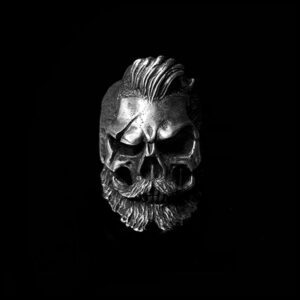
A ring creates a compact endpoint away from the tie and lapels. Compare one ring outline with the visible watch, cuff, and bracelet details. A broad face, raised outline, or narrow band contributes a different amount of visual mass, but distance, angle, and hand position determine what a guest photograph actually shows.
The men’s ring collection is the current commercial browsing destination. Use it only after choosing the hand zone. Category names and photographs do not prove dress-code suitability, fit, comfort, material quality, or social meaning.
Compare one bracelet in the wrist zone
A bracelet can form a separate edge below a jacket cuff, or it can merge with a watch and cufflink cluster. Start by keeping one wrist unchanged. Add the bracelet to the other wrist, then compare whether the outfit gains a clear endpoint or a second competing cluster.
Browse the men’s bracelet collection only after deciding that the wrist should carry the focal accessory. This guide does not infer safe wear, compatibility, skin response, material, care, durability, or performance.
Compare one chain or pendant at the neckline
A plain chain contributes a line. A pendant contributes a line plus a separate shape. If the tie, shirt opening, and lapels already occupy the central axis, test the outfit with the neckline empty first. If the collar leaves clear negative space, compare one necklace format without changing the rest of the outfit.
The plain chain or pendant guide owns the format choice. The pendant collection provides current commercial navigation after that choice. Neither destination establishes wedding etiquette or venue acceptance.
Choose one focal zone
Use this one-focal-zone sequence:
- Name the stated dress-code category from the invitation.
- Put on the complete outfit, including tie, jacket, pocket detail, watch, and cuffs.
- Mark neckline, wrist, and hand as open, detailed, or concealed.
- Choose the least occupied visible zone for the first accessory test.
- Add one ring, bracelet, plain chain, or pendant without changing the clothing.
- Stop when the garment structure and accessory can be read separately, or return to the baseline.
The sequence compares composition only. It does not claim that any result is required, respectful, approved, or appropriate for every wedding.
Check standing, seated, and portrait views
A full-length standing view can show the entire jacket and both hands. A seated view may emphasize cuffs and hands. A portrait crop may show only the neckline and upper torso. Compare the chosen accessory in all three views if photographs are part of the day.
Visibility can change with movement. A bracelet may appear only when the forearm rises. A ring may become noticeable when holding a glass or program. A necklace may remain continuously centered. These observations describe placement, not predicted reactions.
Keep broad party styling separate
A wedding guest outfit is not the same intent as a general party look. The party and event skull-ring guide owns broader event styling. Link outward when that is the actual question rather than importing its advice into a guest-specific dress-code decision.
This separation keeps the wedding page bounded to the invitation label, suit details, visible zones, and one focal accessory. It does not interpret motifs or assign cultural or relationship meaning.
Use an add-one, remove-one comparison
Keep the outfit, pose, light, and camera distance fixed. Photograph the baseline. Add one accessory to the selected zone and photograph again. Remove it before testing a second zone. Compare images at the same size instead of zooming into the metal.
The clearest arrangement is the one whose visual order you can describe quickly: jacket and tie lead, with one hand accent; open collar leads, with one neckline line; or clothing details lead with no jewelry. This is a design description, not an etiquette verdict.
Wedding-guest focal-zone decision table
| What you observe | First test | Second test | Stop condition |
|---|---|---|---|
| Tie, lapels, and pocket detail fill the torso | Leave neckline empty | Test one hand-zone shape | Upper frame remains clear |
| Watch and cufflink already occupy one wrist | Keep that wrist unchanged | Test the opposite hand or wrist | Only one outer cluster leads |
| Open collar leaves clear fabric space | Test one plain necklace line | Compare with one ring instead | One zone is visibly simpler |
| Patterned shirt and accessories compete | Return to no-jewelry baseline | Remove one garment detail if optional | Focal priority becomes easy to name |
Common wedding-guest jewelry comparison mistakes
- Choosing jewelry before reading the invitation’s stated dress-code category.
- Judging the accessory without the jacket, tie, pocket square, watch, and cuffs.
- Filling neckline, wrist, and hand because all three are visible.
- Changing several garment and accessory variables in one comparison.
- Treating a product photograph as proof of exact scale or garment compatibility.
- Turning a visual choice into a universal claim about etiquette, culture, or respect.
Correct the process by returning to the baseline and testing one zone at a time.
Final wedding-guest balance check
Complete one sentence: “The tie and jacket lead, with jewelry on the hand,” “the open collar leads, with one neckline line,” “the cuff leads, with one wrist accent,” or “the outfit needs no jewelry.” If the sentence requires several focal zones, remove one element and compare again.
This guide can compare stated dress-code category, garment structure, visible zones, silhouette scale, separation, and focal priority. It cannot determine wedding etiquette, venue approval, respect, culture, religion, symbolism, relationship meaning, identity, attraction, status, social outcome, fit, comfort, skin response, safe wear, material identity, care, durability, compatibility, value, or performance.




MENSSKULL Journal Notes
Leave a field note
Share fit notes, styling ideas, care questions, or your experience with MENSSKULL silver jewelry.
Comments are checked before publication so buyers can read useful fit, symbolism, care, and style notes without spam noise.
The simple plus/minus challenge below helps block automated spam while keeping the experience lightweight.
Continue exploring
More MENSSKULL stories
Handcrafted silver
Shop the pieces behind the stories