

Choosing jewelry for a man becomes easier when you begin with the type of item he already understands: a ring for the hand, a bracelet for the wrist, or a pendant at the neckline. The goal is not to guess his personality or find a universally perfect gift. It is to match an observable placement, visual scale, and motif direction to habits he already shows.
This guide does not use a price promise or rank products by value. Prices and availability can change, and the current examples do not share one price threshold. It also avoids claims about fit, comfort, materials, care, durability, symbolism, status, or guaranteed gifting outcomes.
Quick answer: start with the jewelry type he already wears
If he already wears rings, a ring keeps the gift in a familiar placement zone. If he wears a watch or bracelet, a wrist piece may fit his existing accessory routine. If he wears necklaces or often leaves the neckline open, a pendant may be easier to imagine within his wardrobe. Familiarity is evidence of an existing habit, not proof that he will prefer every item in that category.
When no category is familiar, choose collaboratively or use a simple visual comparison. Do not turn uncertainty into claims about what men generally want.
Use placement as the first decision
Rings, bracelets, and pendants occupy different parts of an outfit. A ring appears with hand movement and sits near other rings or a watch. A bracelet shares the wrist area with sleeves and watch hardware. A pendant creates a focal point around the neckline and upper torso.
| Gift type | Visible placement | Evidence to check |
|---|---|---|
| Ring | Hand and finger area | He already wears rings or has discussed a specific ring profile |
| Bracelet | Wrist beside a watch or sleeve | He already uses wrist accessories or visible watch hardware |
| Pendant | Neckline and upper torso | He already wears necklaces or favors a clear central motif |
Placement is a visual choice only. It does not establish size, fit, comfort, safety, chain compatibility, or material performance.
Observe what he repeats, not what a gift guide labels him
Look for repeated choices in recent photos or the items he reaches for most often. Does he wear one accessory at a time or combine several? Are his metal details narrow and quiet, or broad and highly visible? Does he choose figurative motifs, geometric shapes, or plain links?
- Repeated placement: hand, wrist, or neckline.
- Repeated scale: compact details or larger focal shapes.
- Repeated motif: figurative, graphic, geometric, or plain.
- Repeated context: everyday outfits, dressier occasions, or selected events.
These observations describe a wardrobe pattern. They do not diagnose masculinity, confidence, status, identity, or personality.
When a ring is the clearest route
A ring is a coherent gift direction when the recipient already wears rings, has named a preferred profile, or wants a visible hand accessory. Compare the outer silhouette and the amount of raised detail rather than assuming a motif has a fixed meaning.
Browse the men’s silver ring collection for current options. If exact size is unknown, do not estimate from a photograph or another person’s hand. Route measurements and fit decisions to the men’s ring size and fit research guide.
When a bracelet makes visual sense
A bracelet can make sense when the wrist is already an active accessory zone. Check whether he wears a watch, stacked bands, or visible sleeve hardware. Then decide whether the bracelet should lead the wrist composition or remain secondary to the watch.
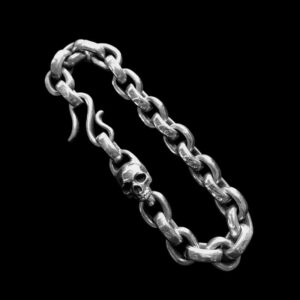
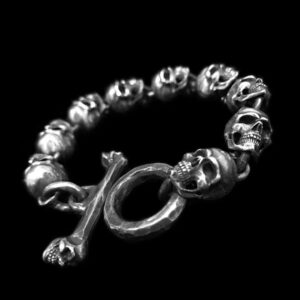
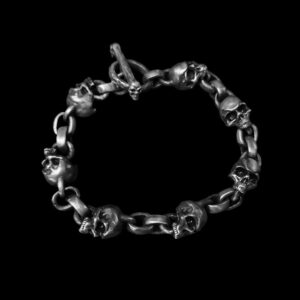
The men’s silver bracelet collection provides commercial navigation. A product image can show link pattern, clasp prominence, and surface detail, but it cannot prove fit, comfort, safe wear, durability, or performance.
When a pendant is the better focal point
A pendant can become the central jewelry detail when the recipient already wears necklaces, leaves the neckline visible, or has clearly chosen a familiar motif. Compare the pendant’s outline, frame shape, relief, and contrast against the clothing he usually wears.
Use the silver pendant collection to compare current focal forms. If the underlying question is whether to give a plain chain or a central motif, use the separate plain-chain versus pendant guide. This page does not decide chain length or compatibility.
Compare visual prominence across categories
A compact ring, a broad chain bracelet, and a rectangular pendant can each be visually prominent in different ways. Do not compare them only by product close-ups, because close-up photography makes every item occupy a large frame. Compare how each type would sit within the recipient’s full outfit.
| Current example | Observable role | Question to ask |
|---|---|---|
| Handlebar Mustache Skull Ring | Hand placement with a sculptural skull profile | Does he already choose figurative rings or visible hand accessories? |
| Skull Clasp Chain Bracelet | Wrist placement with a chain-link profile and visible clasp | Would the bracelet lead or support the watch and sleeve details he already wears? |
| Brass Skull Inlay Dog Tag Pendant | Neckline placement with a rectangular frame and inset motif | Does a framed central motif match necklaces or graphics he has already selected? |
These examples confirm current listing identities and observable forms only. They are not a shared price list and do not prove recipient preference, fit, comfort, material performance, value, durability, symbolism, or gift success.
Use motif familiarity without assigning symbolism
A familiar motif can reduce guesswork when the recipient has already worn or requested it. That does not make the motif universally meaningful. A skull, animal, geometric form, cross, or initial can carry different personal associations, and this guide does not assign historical, cultural, religious, or identity claims.
If the motif has not appeared in his choices, treat it as an open question. Ask directly, show a few options, or choose a design with less figurative detail.
Match the gift to wardrobe context
Place the proposed item beside the clothing and accessories he actually wears. A ring may echo watch hardware. A bracelet may compete with a patterned cuff. A pendant may stand out against a plain shirt or share attention with a graphic print. The right visual role depends on the complete composition.
Wardrobe context does not guarantee appropriateness for every setting or a positive social response. It simply helps you decide whether the jewelry should lead, support, or stay quiet within the outfit.
Use occasion as context, not a promise
An everyday gift should work with the recipient’s ordinary rotation. A birthday, holiday, anniversary, or selected event may justify a more specific motif or presentation, but the occasion does not prove that one category is inherently more meaningful.
A useful question is: where is he most likely to choose this item himself? The answer narrows the visual context without predicting his reaction or relationship outcome.
Keep material and price questions separate
This guide intentionally makes no price threshold or value claim. Product prices, discounts, and availability can change, so verify the current listing when you shop. Do not assume that every ring, bracelet, and pendant shown here belongs to the same budget.
For evidence about sterling silver terminology and markings, use the 925 sterling silver research guide. This gift-type page does not establish alloy composition, quality, care, durability, or performance from appearance or category labels.
A six-step gift-type decision
- List the jewelry types he already wears repeatedly.
- Choose the most familiar placement zone: hand, wrist, or neckline.
- Compare the visual scale of his existing accessories.
- Use a motif only when it is already familiar or explicitly requested.
- Check the item against his usual wardrobe and occasion.
- Route size, fit, material, and current commercial details to their proper sources.
If the evidence remains evenly divided, a collaborative choice is more honest than inventing certainty. A gift can still be thoughtful when the recipient helps select its final form.
Common mistakes to avoid
Do not assume that all men prefer rings, that bracelets are more casual, or that pendants are automatically more personal. Do not infer personality, status, masculinity, symbolism, or social approval from a category. Avoid rankings based on popularity unless current evidence genuinely supports them.
Do not promise that an item will fit, feel comfortable, last a particular length of time, retain a finish, or produce a desired reaction. Product names and photographs are not substitutes for current specifications and recipient input.
Final check before choosing
Explain the choice in one evidence-based sentence: “I chose a ring because he already wears rings,” “I chose a bracelet because his wrist accessories are part of his daily outfits,” or “I chose a pendant because he already uses a central necklace motif.” If the sentence relies on a visible habit rather than a stereotype, the category decision is coherent.
The framework can narrow a ring, bracelet, or pendant gift by placement, motif familiarity, visual prominence, wardrobe context, and occasion. It cannot promise a price, fit, comfort, safety, material quality, care result, durability, value, symbolism, status, personality, popularity, recipient approval, or gifting outcome.






MENSSKULL Journal Notes
Leave a field note
Share fit notes, styling ideas, care questions, or your experience with MENSSKULL silver jewelry.
Comments are checked before publication so buyers can read useful fit, symbolism, care, and style notes without spam noise.
The simple plus/minus challenge below helps block automated spam while keeping the experience lightweight.
Continue exploring
More MENSSKULL stories
Handcrafted silver
Shop the pieces behind the stories