
Prom jewelry works best when it stays visible in the way the suit will actually be worn and photographed. Start with the jacket frame, tie or open collar, pocket details, and wrist exposure. Then choose one lead accessory location instead of trying to make every piece equally noticeable.
Quick answer: with a tie or bow tie, place the main jewelry detail at the hand or wrist. With an open collar and a plain shirt, a chain or pendant can occupy the chest opening. If a boutonniere, pocket square, watch, or patterned shirt already carries strong detail, remove one competing accessory before adding another.
Do the check with the boutonniere pinned, the pocket square folded, and the jacket in the position you expect to wear most often. Those details change the available space more than an isolated jewelry photo can show.
Begin with the suit frame, not a jewelry list
A prom outfit creates a series of frames. The jacket lapels frame the shirt. A tie or bow tie fills the center. An open collar leaves a vertical area at the chest. Jacket cuffs determine whether a bracelet remains visible, while the hands stay visible in most standing and seated photographs.
Put on the complete outfit before choosing the lead accessory. A necklace that looks clear with the shirt alone may disappear under lapels or collide with a tie. A bracelet may vanish when the sleeves settle. The useful question is not how many pieces the outfit can hold. It is which location remains open after the suit details are in place.
Use the portrait crop as a practical test
Many prom photographs are framed from the chest upward or from the waist upward. That crop gives different accessories different jobs. Earrings, a tie bar, a chain at an open collar, and a boutonniere remain close to the face. Rings and bracelets may appear only when the hands are raised, linked, or placed in front of the jacket.
Choose the frame that matters first. For a chest-up portrait, a tie, bow tie, lapel pin, and boutonniere already occupy most of the visible center. Put the jewelry decision at the hand or wrist instead. For a full-outfit frame, confirm that the chosen piece remains visible when the arms rest naturally and the jacket is closed.
With a tie or bow tie, move jewelry away from the center
A tie creates a strong vertical line. A bow tie creates a compact horizontal shape near the face. Both already give the shirt opening a clear focal object, so a pendant in the same area often has little room to read independently. A plain chain may remain mostly hidden, but it should not be expected to organize the outfit.
Use the hand or wrist for the lead jewelry detail when the neck is occupied. One ring can remain distinct beside a dark jacket sleeve. A bracelet can work when the cuff exposes it consistently. For broader formal-collar placement questions, use the separate guide to wearing a men’s necklace with a suit and tie; this page stays focused on the prom outfit as a complete visual frame.
An open collar can support a chain or pendant
An open collar creates a visible strip of shirt or skin between the lapels. If that strip is plain and uninterrupted, one chain line or one pendant shape can become the lead detail. Keep the decision specific: a plain chain adds a line, while a pendant adds both a line and a central object.
If the shirt has a strong pattern, contrast stitching, or an open placket with several buttons, the same area already contains visual information. Compare the roles in the plain chain versus pendant guide, then return to the actual shirt opening. The necklace should clarify that opening, not create a second design on top of it.
Account for the boutonniere, pocket square, and watch
Prom outfits often include details that ordinary suit styling does not combine in the same way. A boutonniere adds color and shape to one lapel. A pocket square adds another shape on the chest. A watch creates a bright point at one wrist. Count those visible objects before choosing jewelry.
If the boutonniere is the main chest detail, keep the necklace out of the same portrait area. If the pocket square is bold, use a simpler hand detail. If a watch already leads at the wrist, place a ring on the opposite hand only when the two locations remain visually separate. The goal is a readable route through the outfit, not mechanical matching.
Choose by visibility in the outfit you will actually wear
| Prom outfit setup | Area already occupied | Clear first jewelry move | Check before adding more |
|---|---|---|---|
| Tie or bow tie, jacket closed | Center chest and collar | One ring or visible bracelet | Whether the watch or cuff already leads |
| Tie, jacket open | Shirt center and lapels | One hand detail | Whether a boutonniere or pocket square fills the portrait |
| Open collar, plain shirt | Lapels with open chest frame | One chain or pendant | Whether the necklace remains visible between the lapels |
| Open collar, patterned shirt | Shirt opening and pattern | One ring or restrained wrist detail | Whether another chest detail competes in close photos |
Compare verified product geometry after choosing the location
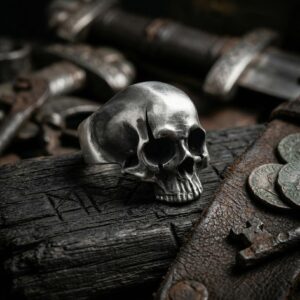
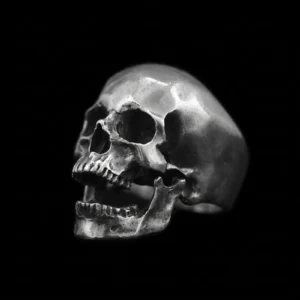
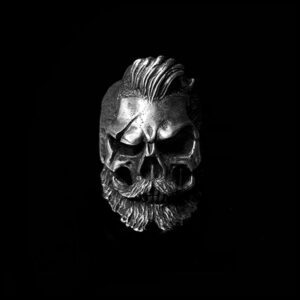
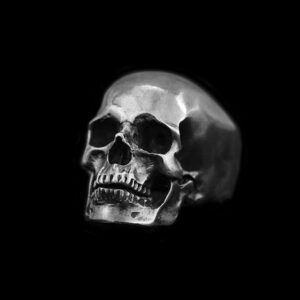
When a tie or bow tie occupies the center, the hand is the cleaner location for a prominent object. The Moving Jaw Skull Ring, SKU SSJ22, has a listed 21mm*20mm face, an articulated jaw, and an approximate weight of 24-35 g across its ring-size range. Use those verified dimensions to judge how much of the hand the skull motif will occupy beside a dark jacket cuff; choose it only when that pronounced shape is the intended lead detail.
For an open collar and plain shirt, the Fleur-de-Lis Gothic Key Necklace, SKU SSP218, offers the opposite geometry: a listed 63mm*24mm key-shaped pendant weighing 32 g, with Silver Chain or Steel Chain options. The long outline needs an uninterrupted vertical field between the lapels. If the pendant overlaps a patterned placket, boutonniere, or pocket-square edge in the chest-up photo, move the lead detail away from the neck.
If neither example matches the open location, use the broader men’s silver rings, men’s silver bracelets, or silver pendant necklace categories as navigation. Category links are not proof that every item suits every prom outfit.
Run a two-frame check before the event
Check the outfit twice. First, look at it from conversational distance with the jacket in its normal position. Confirm that one accessory location reads clearly and that the necklace, lapels, tie, and pocket details do not collapse into one dense center. Second, take a simple chest-up phone photo under ordinary indoor light. The photo is useful because it compresses the same details that will share a portrait frame.
If the close frame looks busy, remove one item rather than replacing everything. If the necklace disappears, decide whether it can remain a private detail or whether the hand should become the visible jewelry location. If a bracelet stays hidden under the sleeve, do not rely on it as the lead accessory.
Keep the prom decision distinct from other event guides
Prom has its own combination of suit details, portrait expectations, and optional accessories, but the basic decision should remain narrow. For broad party styling, use the party and event ring guide. For the general question of whether an outfit needs jewelry at all, use the guide to adding or skipping jewelry with an outfit.
Make the final decision from the dressed frame, not from a product page: tie or open collar first, lapel and pocket details second, then the jewelry location that is still visible. If two pieces compete in the same chest-up crop, remove one. If the hand or wrist is the only open area, let that location carry the outfit.


MENSSKULL Journal Notes
Leave a field note
Share fit notes, styling ideas, care questions, or your experience with MENSSKULL silver jewelry.
Comments are checked before publication so buyers can read useful fit, symbolism, care, and style notes without spam noise.
The simple plus/minus challenge below helps block automated spam while keeping the experience lightweight.
Continue exploring
More MENSSKULL stories
Handcrafted silver
Shop the pieces behind the stories