
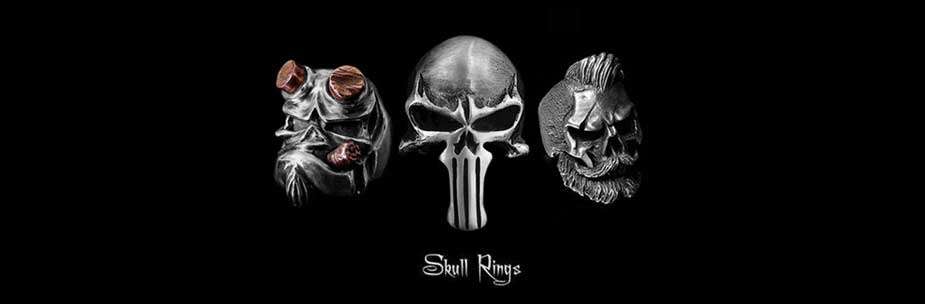
Direct answer: Plan a personalized skull ring by defining exactly what will change, such as initials, date, inscription, finish, stone or original motif. Confirm ring size, engraving area, artwork rights, metal, proofing process, production limits and return terms before approving the order. Personalization makes a ring specific; it does not automatically improve taste, status or construction quality.
A successful custom order turns a clear brief into a wearable object without sacrificing fit or structural integrity.
Define the Personalization Route
Engraving adds information to an existing design. Finish selection changes surface contrast. Stone choice changes color and setting needs. A fully original skull may require concept drawing, model making, casting and hand finishing.
Start with the custom silver ring collection and identify which changes are actually offered.
Write a Precise Design Brief
State the intended finger, size, preferred skull profile, text, symbols, finish, budget and deadline. Include reference images only to explain proportion or mood, not to request unauthorized copying.
Separate required elements from optional ideas so the maker can explain practical tradeoffs.
Use Original or Authorized Artwork
Logos, club insignia, characters and another artist’s design may be protected or restricted. Provide artwork you own or have permission to reproduce. Generic reference does not establish authorization.
For a family crest or organizational emblem, keep records that support the claim and permitted use.
Choose Engraving Placement
Possible locations include the interior band, signet face, shoulder or rear surface. Interior text competes with ring size and may be difficult on a narrow band. Exterior engraving experiences more wear.
Confirm spelling, capitalization, punctuation, orientation, font and maximum characters in writing.
Measure the Intended Finger
Custom rings can have restricted exchange options, so sizing deserves extra care. Wide bands often feel tighter than narrow bands, and a heavy face needs stability to resist spinning.
GIA’s ring-sizing benchmark explains appropriate gauges and wider-band considerations. The skull ring size guide adds product-profile context.
Check Face Dimensions and Projection
Face height follows the finger, width approaches neighboring fingers and projection determines how far the skull rises. Adding a crown, horns or stone can increase snag risk and change weight distribution.
Request front, side, rear and interior drawings with millimeter dimensions rather than approving a dramatic perspective alone.
Verify Metal and Mixed Components
Sterling silver contains 92.5 percent pure silver. Plating, stainless steel and silver tone are different descriptions. Stones, enamel, springs and pins may use separate materials.
The FTC’s precious-metal buying guide explains terminology. A 925 mark does not prove a custom process or origin.
Select Finish With Future Wear in Mind
Oxidized recesses emphasize teeth and eye sockets, polished high points create contrast and brushed surfaces reduce glare. Finish can change during wear and may be affected by resizing or repair.
Ask whether refinishing is available and which cleaning methods preserve intentional darkening.
Review a Proof Before Production
A proof should show exact text, placement, dimensions and major design elements. Check it at realistic ring scale, not only enlarged on a screen. Correct errors before approving permanent work.
Save the approved version, order details and communication in case the delivered piece needs comparison.
Protect Structure During Customization
Deep engraving can remove material from a thin band. Added sculpture can create exposed projections, and a stone may require enough surrounding metal for a secure setting. The maker should explain structural limits.
A responsible process may reject a request that would weaken a shoulder, setting or closure.
Confirm Price, Timeline and Revisions
Ask what the quoted price includes, how many design revisions are allowed and what triggers extra charges. Production estimates should separate design approval from making and shipping time.
Do not rely on an event deadline until the seller confirms the complete schedule in writing.
Understand Returns and Resizing
Personalized work often cannot be returned for preference changes. Continuous patterns, stones, hollow construction and interior text can limit resizing. Confirm correction terms for maker errors separately from change-of-mind requests.
A standard ring from the skull ring collection may be a safer option when size or style is uncertain.
Inspect the Delivered Ring
Compare the ring with the approved proof, spelling, dimensions and finish. Inspect shoulders, interior edges, settings and thin projections over a soft surface. Photograph any discrepancy before wearing or modifying it.
Store the proof and material description with care records for future repair.
Understand the Production Route
A custom ring may be fabricated directly from metal, carved in wax and cast, modeled digitally and cast, or assembled from cast and hand-finished components. Ask which route will be used and which stages are completed by hand. No route automatically guarantees a better result.
Production method affects revision timing. A drawing can be changed easily, while altering a finished casting may require rebuilding the model or removing material from the ring.
Approve Texture at Realistic Scale
Deep scratches, cracks and pores that look dramatic in an enlarged rendering may feel rough or collect residue on a wearable object. Request a scale reference and specify which surfaces should remain smooth. Interior edges and the palm-side band should prioritize comfort.
Intentional tool marks can add character, but burrs and uncontrolled seams are defects rather than proof of handmade work.
Plan for Delivery and Final Acceptance
Ask how the ring will be protected in transit and whether signature delivery is available for a high-value order. On arrival, compare the package, ring, proof and invoice before discarding materials.
Do not resize, polish or wear a disputed piece before contacting the seller. Alteration can make it difficult to determine whether a difference existed at delivery.
FAQ
What can be personalized on a skull ring?
Options may include text, initials, date, finish, stone, motif details or a fully original design.
Can any logo be engraved?
No. Use original or authorized artwork and follow organizational restrictions.
Why is sizing important before engraving?
Personalized rings may have limited returns, and resizing can disturb text, patterns, stones or finish.
What should a custom proof include?
It should show exact text, placement, dimensions, major forms and the approved finish direction.
Does personalization guarantee higher quality?
No. Quality still depends on material, construction, fit, finish and execution.



MENSSKULL Journal Notes
Leave a field note
Share fit notes, styling ideas, care questions, or your experience with MENSSKULL silver jewelry.
Comments are checked before publication so buyers can read useful fit, symbolism, care, and style notes without spam noise.
The simple plus/minus challenge below helps block automated spam while keeping the experience lightweight.
Continue exploring
More MENSSKULL stories
Handcrafted silver
Shop the pieces behind the stories