
Direct answer: A durable biker ring combines verified material, adequate band and shoulder construction, controlled relief, secure settings, suitable fit and care appropriate to its finish. Weight, price and a rugged photograph do not prove durability. Motorcycle identity is also separate from construction: a retail ring can express taste, but it does not establish riding experience or club membership.
For riding, protective equipment and control of the motorcycle take priority over jewelry.
Define Durability for the Intended Use
Resistance to ordinary scratches is different from resistance to bending, impact, chemical exposure or snagging. A ring designed for social and everyday wear may not be suitable for mechanical work, lifting or riding under tight gloves.
Decide where the ring will actually be worn before comparing materials or thickness.
Verify the Metal Instead of Judging Color
Sterling silver contains 92.5 percent pure silver. Stainless steel, silver plate and silver tone are different descriptions. Sterling can tarnish and develop wear; those changes do not automatically mean the metal is defective.
The FTC’s precious-metal buying guide explains common terms. Ask whether springs, pins or settings use another material.
Inspect Band Thickness and Continuity
A very thin palm-side band can deform more easily than a proportionate band, but apparent mass in the product face does not reveal the rear construction. Check interior, side and underside photographs.
Openwork and hollow designs can be well made when edges and transitions are controlled. Solid-looking language should not replace actual dimensions and weight.
Check the Shoulders
The shoulders connect a large face to the band and distribute load. Abrupt thin transitions, pits or unfinished seams can become stress points. A sculptural ring should flow into the band without sharp interior edges.
Compare live examples in the biker ring collection through side and rear views, not only the front motif.
Evaluate Relief and Projecting Details
Deep skull eyes and carved textures can be durable when supported by sufficient metal. Long horns, wings, claws or thin decorative tips are more exposed to impact and snagging. Dark oxidation may improve contrast while hiding little about the actual profile.
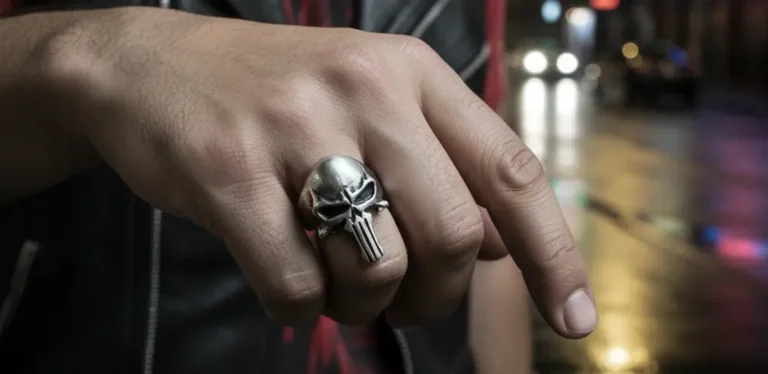
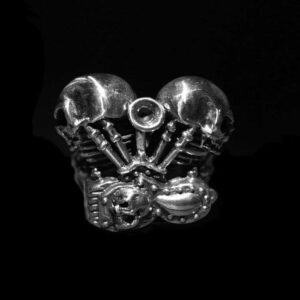
Use face height, width and projection to estimate how the ring will behave around pockets, straps and gloves. For an engine-themed example, compare the paired skulls and projecting pipework of the skull engine ring in its side and worn views; the motif is not a durability rating.
Inspect Stones and Added Components
Stone durability depends on the stone, setting and exposure. Prongs should be even and secure; bezels should hold the edge without visible gaps. Enamel, coatings and glued decoration have different care limits.
Ask whether replacement or repair is possible before treating a stone-set ring as maintenance-free.
Measure for Stability
A top-heavy ring can rotate when the size is loose. A very tight ring can become difficult to remove as the hand swells. Wide bands often need a different sizing approach than narrow bands.
GIA’s ring-sizing benchmark explains why the appropriate gauge matters for wider designs.
Test Riding-Glove Compatibility
A tall face can create pressure under a glove, catch the liner or make removal difficult. NHTSA’s motorcycle safety guidance emphasizes protective gear, including gloves. Do not alter protective equipment to accommodate a ring.
Test the exact glove without forcing it. When pressure or interference occurs, store the ring and ride without it.
Remove Rings for Maintenance and Machinery
Jewelry can catch tools, moving parts and sharp edges or create electrical and compression hazards. Remove rings before motorcycle maintenance, workshop machinery, battery work, heavy lifting and similar tasks.
A ring’s durability does not make these activities safe while wearing it.
Use Finish as a Wear Strategy
Polished high points show fine scratches readily. Brushed and hammered textures can make ordinary wear less obvious, while oxidized recesses emphasize carving. Aggressive polishing can flatten detail and remove intentional darkening.
Ask how the finish was applied and whether refinishing is available.
Compare Specifications Before Marketing Language
Record ring size, face dimensions, band width, weight, metal, finish, stone information and return or resizing terms. Words such as heavy-duty, indestructible and lifetime should be treated cautiously unless supported by defined testing and warranty terms.
The related biker ring fit and motorcycle-wear guide covers glove pressure and riding context in more detail.
Inspect the Ring Over Time
Check settings, thin projections, shoulders and interior seams regularly. Store the ring separately and clean according to its least tolerant component. The sterling silver care guide provides routine maintenance steps.
Compare detailed current designs such as the sterling silver biker ring through their live specifications rather than assuming every product shares the same construction.
Perform an Arrival Inspection
Inspect a new ring over a soft surface in good light before wearing it. Compare the size and dimensions with the order, check both shoulders, look through any open back, and examine settings and projecting details. Run a fingertip carefully along the interior to find burrs without applying force.
If a seam is open, a stone moves or the ring differs materially from the listing, photograph the condition and contact the seller before attempting repair or polishing.
Consider Repairability Before Purchase
Ask whether the selected size can be resized and whether stones, enamel, darkened finish or hollow construction limit the process. Confirm whether replacement parts or refinishing are available. A repairable ring can remain useful longer, but no design should be described as permanently maintenance-free.
Keep material records and care instructions. They help a qualified jeweler avoid removing intentional oxidation or applying heat near components that cannot tolerate it.
FAQ
What metal makes the most durable biker ring?
No metal is best for every use; compare alloy, construction, thickness, finish and the wearer’s activities.
Does a heavy ring mean it is solid and durable?
Not necessarily. Weight alone does not reveal internal construction, stress points or setting quality.
Can a biker ring be worn under motorcycle gloves?
Only when it does not create pressure or interfere with glove fit; protective gear takes priority.
Should a biker ring be worn during motorcycle repairs?
No. Remove rings before tools, moving parts, electricity or heavy components.
How often should a biker ring be inspected?
Inspect it regularly and immediately after an impact, snag or noticeable change in fit or setting security.






MENSSKULL Journal Notes
Leave a field note
Share fit notes, styling ideas, care questions, or your experience with MENSSKULL silver jewelry.
Comments are checked before publication so buyers can read useful fit, symbolism, care, and style notes without spam noise.
The simple plus/minus challenge below helps block automated spam while keeping the experience lightweight.
Continue exploring
More MENSSKULL stories
Handcrafted silver
Shop the pieces behind the stories