

Direct answer: Silver is not permanently the “second most precious metal after gold.” Precious-metal prices change, and rarity, market price, jewelry suitability and cultural value are different questions. In jewelry, sterling silver is valued for workability, appearance and affordability, but those qualities do not create a fixed ranking.
Why a Permanent Precious-Metal Ranking Is Misleading
Gold, silver, platinum-group metals and other materials trade in different markets and at changing prices. Price per weight varies over time and does not by itself measure rarity, durability, labor, design quality or suitability for a particular piece.
A ring can cost more because of workmanship, stones, brand, complexity or documentation even when its metal has a lower commodity value. Conversely, high raw-material value does not guarantee good construction or comfort.
What Sterling Silver and 925 Mean
Sterling silver is an alloy containing 92.5 percent silver, with the balance made from other metal. Pure silver is softer, so alloying improves practical characteristics for many jewelry forms. The term describes composition, not an automatic quality grade for the finished object.
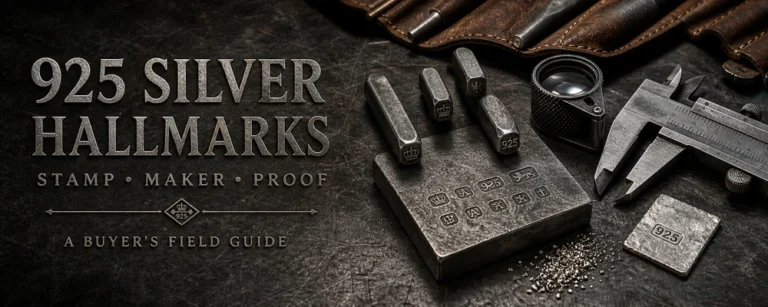
A 925 mark can support identification but does not prove origin, handmade production, ethical sourcing, durability or every component. Solder, stones, findings, coatings and mixed materials may require separate disclosure. The FTC jewelry guide explains precious-metal terminology for consumers.
Silver, Gold and Platinum Serve Different Design Needs
Silver offers a bright surface, responds well to polishing and oxidation, and can support detailed carving. Gold is used in different purities and colors, each with its own alloy composition. Platinum is dense and has different working and wear characteristics. No material is universally best for every design or wearer.
Compare the exact alloy, dimensions, construction, finish, listed weight, stones, care and intended use. A broad category label cannot predict comfort, scratch behavior, maintenance or repair options for a specific product.
Finish Changes Appearance but Not Alloy Identity
Polished silver creates sharp highlights, brushing softens reflection, and oxidation darkens recesses to clarify engraving or sculpture. Plating adds a surface layer with its own wear and care requirements. A dark finish does not prove antiquity, and a bright finish does not prove purity.
Aggressive polishing can remove intentional oxidation or damage plating. Follow product-specific instructions and use GIA jewelry care guidance as general context, not as proof about one item.
Tarnish Is a Surface Change, Not a Value Verdict
Sterling silver can tarnish through normal environmental exposure. Tarnish does not automatically mean the item is fake, ruined or poorly made. The appropriate response depends on finish, stones, plating and maker instructions.
Store silver dry and separately to reduce scratching. Remove jewelry when chemicals, impact, machinery or repeated abrasion create risk. Do not apply one home remedy to every construction.
Metal Sensitivity Requires Component-Level Information
A general sterling statement may not identify solder, plating, earring posts, clasps or decorative components. Buyers with known sensitivities should request complete disclosure and seek appropriate professional guidance when needed. A guide cannot diagnose or guarantee a reaction-free experience.
Words such as hypoallergenic require context and evidence. Individual response varies, and material language should not be upgraded from a color photograph or informal seller claim.
How to Evaluate Silver Jewelry Beyond Price
Inspect silhouette, proportions, edge finishing, joins, settings, clasp or band construction, interior surfaces and documentation. For rings, verify exact size and band width; for bracelets, usable inside fit and clasp; for pendants, dimensions and bail compatibility; for earrings, closure and listed weight.
The MENSSKULL 925 sterling silver guide, men’s sterling silver styling guide and ring size guide provide category-specific next steps.
Sustainability Claims Need Traceable Evidence
Silver can be recycled, but a finished product should not be called recycled, sustainable, ethical or low-impact without documentation about material source, production, labor and lifecycle. Recyclability is not the same as verified recycled content.
Durability, repairability and long use can reduce replacement, but they also require product-specific evidence. Avoid turning one material property into a complete environmental claim.
A Better Buying Question
Instead of asking whether silver ranks second, ask whether the disclosed material, construction, design, fit, care and price suit the intended use. This produces a useful decision even when commodity prices change.
Retain the selected specifications and compare the delivered jewelry before regular wear. Documentation is more durable than a promotional ranking.
Commodity Price and Finished Jewelry Value Are Different
Commodity quotations normally describe standardized market units, while a finished ring or pendant includes fabrication, design, finishing, stones, distribution and service. Dividing a retail price by weight does not isolate craftsmanship or prove that the asking price is fair.
Likewise, resale offers can differ from retail prices because buyers consider condition, verification, demand, recovery costs and whether the object can be resold as jewelry rather than scrap. A guide should not promise investment performance or use a temporary spot-price relationship as an enduring hierarchy.
For current metal prices, consult a suitable market source at the time the information is needed and note its date, unit and currency. For a jewelry purchase, prioritize the exact product documentation and intended use instead of trying to predict future metal value.
Hallmarks also require context. Their form and legal meaning can vary by market, and a stamp can be copied or misunderstood. Treat a mark as one evidence point alongside seller disclosure, receipt, construction and, when necessary, qualified testing. Do not identify an alloy solely from color, tarnish or magnet response.
FAQ
Is silver always less valuable than gold?
Market prices change, and finished jewelry value includes more than raw metal.
What does 925 mean?
It indicates an alloy containing 92.5 percent silver.
Does tarnish mean silver is fake?
No. Sterling silver can tarnish; care depends on the finish and construction.
Is all sterling silver hypoallergenic?
No universal guarantee is possible. Review every disclosed component and individual sensitivity.
Is recycled silver automatically sustainable?
No. Recycled-content and broader sustainability claims require traceable evidence.





MENSSKULL Journal Notes
Leave a field note
Share fit notes, styling ideas, care questions, or your experience with MENSSKULL silver jewelry.
Comments are checked before publication so buyers can read useful fit, symbolism, care, and style notes without spam noise.
The simple plus/minus challenge below helps block automated spam while keeping the experience lightweight.
Continue exploring
More MENSSKULL stories
Handcrafted silver
Shop the pieces behind the stories