
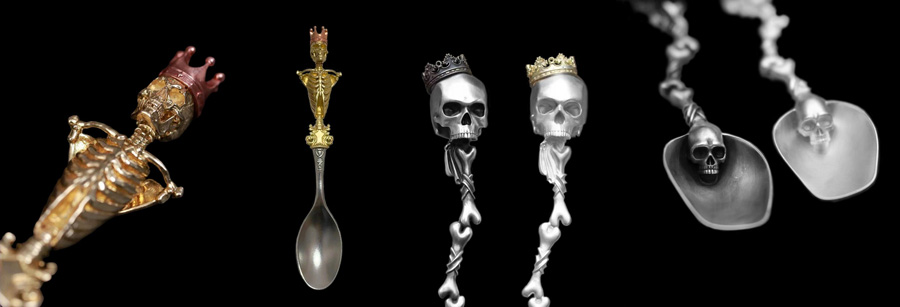
A skull spoon combines a functional or decorative spoon form with skull imagery. Verify whether it is sterling silver, plated, silver-tone, or another material and confirm its intended use before purchase. Browse related functional and decorative designs in the skull accessories collection.
Sterling Silver Skull Spoon: Quick Answer
A skull spoon combines a functional or decorative spoon form with skull imagery. Verify whether it is sterling silver, plated, silver-tone, or another material and confirm its intended use before purchase.
Confirm Intended Use Before Treating It as Tableware
A product called a skull spoon may be a usable utensil, a serving accessory, a collectible, or a decorative object. Product photographs cannot establish food-contact suitability. The listing should identify material, dimensions, finish, care, and intended use.
Sterling silver contains 92.5 percent silver and may be marked 925. Silver plate and silver-tone wording are different. A hallmark can support identification but does not verify every component, origin, or manufacturing method.
Skull decoration changes surface detail and cleaning access. Deep eye sockets, teeth, handles, and recessed ornament can retain residue, so care must follow the maker’s instructions. Avoid abrasive or chemical methods that could damage intentional oxidation or plating.
Do not describe a silver object as ethical or sustainable without traceable sourcing, labor, production, and lifecycle evidence. Material alone cannot prove those claims. Likewise, decorative symbolism does not create health or culinary benefits.
For a gift or collection, compare scale, weight when listed, edge finishing, storage, packaging only when confirmed, and return terms. If the intended use is unclear, ask the seller rather than inferring safety from appearance.
Food Contact Cannot Be Assumed From Appearance
A spoon-shaped object may be photographed beside food without documentation that it was manufactured, finished, and sold for food contact. Buyers should look for an explicit intended-use statement and follow local requirements where relevant. A jewelry or gift retailer’s decorative description is not a substitute for technical food-safety documentation.
Material Terms Need Exact Meaning
Sterling silver, silver plate, silver-tone metal, stainless steel, and other alloys can all produce a silver-colored object. The FTC explains sterling terminology, but an individual seller must still describe the actual piece. A 925 stamp is supporting evidence and does not identify every solder, coating, handle insert, or decorative component.
Design Details Affect Cleaning
Skull eye sockets, teeth, textured handles, and recessed patterns can collect residue. Cleaning must reach those areas without leaving abrasive damage or stripping an intended dark finish. If the maker provides no cleaning method for the intended use, ask before treating the object as functional tableware.
Decorative and Collectible Value
A skull spoon can be chosen for a gothic table setting, photography, display, or a personal collection. Value in those contexts comes from coherent design, finish, scale, documentation, and condition. Do not claim antique status, rarity, ethical production, or investment value without evidence.
Gift Checks
Confirm dimensions, weight when listed, material, intended use, care, storage, included packaging, and return terms. Packaging and engraving should be mentioned only when the exact listing offers them. For a recipient who expects functional tableware, intended-use documentation is more important than decorative language.
Responsible Claim Boundaries
Silver material does not create health benefits, improve flavor, or make an object environmentally responsible by itself. Sustainability claims require evidence about sourcing, production, labor, durability, and end of life. A trustworthy guide states these limits rather than turning a design story into a technical promise.
Inspect Dimensions, Edges, and Balance
A functional spoon needs dimensions suited to its intended task, a bowl and handle that balance in the hand, and edges that are appropriately finished. A decorative collectible may prioritize sculpture instead. Compare written measurements and weight when listed rather than estimating from a close crop.
Raised skull details should not create uncomfortable grip points. Recesses and handle junctions should be visible in more than one photograph so the buyer can judge cleaning access and condition.
Recognize Normal Surface Change
Sterling silver can tarnish and scratch during normal handling. That surface change is not the same as corrosion of every silver-colored alloy, and it does not prove authenticity by itself. Plated objects need particular care because aggressive polishing can remove the surface layer.
Store the object dry and separately. Follow maker instructions for any food-contact cleaning and stop using it if damage, looseness, coating loss, sharp edges, or contamination makes the intended use uncertain.
Maintain a Useful Collecting Record
For a collectible, retain the product description, receipt, dimensions, material statement, maker information, and care instructions. Those records are more useful than an unsupported claim of rarity. Photograph condition at acquisition if later comparison matters.
A contemporary skull spoon should not be described as antique, heirloom quality, or investment grade unless evidence supports those terms. Design appeal and documented condition are sufficient reasons to collect without exaggeration.
Continue the MENSSKULL Buying Path
Compare gothic jewelry guide, men’s silver rings, silver pendant necklaces for related fit, material, and style decisions. Use the individual product page for exact specifications.
Verified Silver and Care Sources
The FTC jewelry guide explains sterling silver terminology. GIA care guidance supports careful storage and protection from damaging chemicals. Neither source verifies an individual product.
FAQ
What should a buyer verify first?
Verify material, dimensions, selectable size or intended use, construction, finish, care, included components, and return terms on the exact product page.
Can photographs confirm material and scale?
No. Photographs illustrate form, but written specifications are needed for alloy and measurements.
Is the symbolic meaning universal?
No. Historical sources support particular contexts, while modern meaning depends on the design and wearer.
Does 925 prove overall quality?
No. It describes sterling alloy content, not craftsmanship, origin, fit, or finish.
How should the final choice be made?
Use this guide to narrow the category, then decide from the exact specifications and intended use.






MENSSKULL Journal Notes
Leave a field note
Share fit notes, styling ideas, care questions, or your experience with MENSSKULL silver jewelry.
Comments are checked before publication so buyers can read useful fit, symbolism, care, and style notes without spam noise.
The simple plus/minus challenge below helps block automated spam while keeping the experience lightweight.
Continue exploring
More MENSSKULL stories
Handcrafted silver
Shop the pieces behind the stories