
Direct answer: A skull ring does not have one universal meaning. In documented historical jewelry, skulls can appear in memento mori and mourning contexts, while modern designs may express mortality, remembrance, rebellion, craft, music culture or personal style. Additional motifs such as crowns, wings, snakes and crosses change the visual story, but their meaning must be supported by context rather than assumed.
The safest interpretation begins with what is visibly present, then separates documented history, designer intent and the wearer’s own explanation.
Begin With the Skull Itself
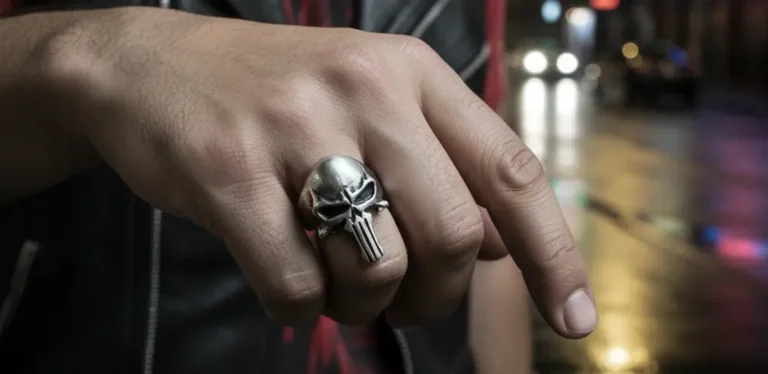
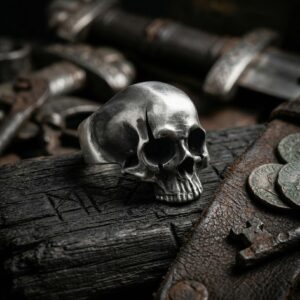
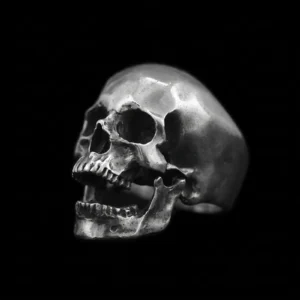
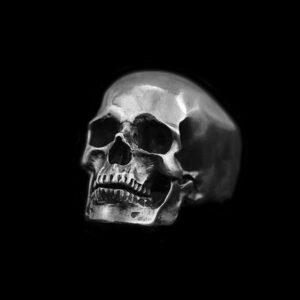
A plain skull focuses attention on human mortality and anatomy. It may look reflective, severe, theatrical or rebellious depending on modeling, finish and clothing. The motif alone does not reveal the wearer’s beliefs or behavior.
Use the skull ring meaning guide for a broader discussion of personal and historical context.
Memento Mori Has Documented Historical Evidence
The phrase memento mori is commonly translated as a reminder of death. The Metropolitan Museum of Art explains that memento mori jewelry emerged in the Renaissance with imagery contrasting life, beauty, death and decay.
This evidence supports a historical category; it does not make every modern skull ring an antique-style devotional object.
Mourning Jewelry Is Related but Not Identical
Mourning jewelry commemorates a specific deceased person or loss, often through inscriptions, dates, hair or recognizable memorial imagery. The Met documents an American mourning ring from 1757 with a skeleton image and memorial inscription.
A mass-produced skull ring without personal memorial evidence should not automatically be called mourning jewelry.
Skull and Crossbones Need Context
Crossed bones can create a warning-like, maritime or emblematic composition. Popular culture often connects the device with piracy, danger or poison, but exact historical use varies. Do not claim a specific pirate crew, military unit or secret society without documentation.
Describe the visible arrangement first: skull above crossed bones, bones behind the skull or a separate side motif.
Crowned Skulls Combine Mortality and Authority
A crown above a skull creates tension between status and death. It can be read as power made temporary, triumph over fear, theatrical royalty or simply a bold design. None of these readings is compulsory.
Look at whether the crown is regal, broken, thorn-like or integrated into the skull before describing the visual effect.
Winged Skulls Suggest Motion or Release
Wings can introduce speed, ascent, freedom, remembrance or a heraldic silhouette. Feather shape and direction matter: spread wings create width, while folded wings form a more compact signet.
A winged skull should not be assigned a religious meaning unless the design or maker provides evidence.
Skulls With Snakes Create a Life-and-Death Contrast
A snake passing through or around a skull can suggest renewal, danger, knowledge, medicine or transformation in different traditions. Because snake symbolism varies widely, one fixed explanation is especially unreliable.
Describe the physical relationship between motifs and let the wearer decide which interpretation is personal.
Flames Change the Sense of Movement
Flames make a static skull appear faster, hotter or more aggressive. They are common in motorcycle, tattoo and music-related visual languages, but a flame motif does not prove club membership or a particular lifestyle.
Raised flame edges also affect snag risk and should be considered as construction, not symbolism alone.
Crosses Require Specific Identification
Cross shapes vary by period, faith, institution and decorative tradition. A generic cross-like element should not be labeled with a precise religious or military name without supporting characteristics.
When belief matters, use the designer’s documented description or ask the wearer rather than inferring from a small detail.
Animal-Skull Designs Are Anatomically Different
Ram, bull, bird and other animal skulls change silhouette through horns, beaks and jaw structure. These forms can reference nature, regional art, hunting imagery or fantasy. Identify the species cautiously when the anatomy is highly stylized.
Compare animal motifs with the skull jewelry collection by visible design rather than invented mythology.
Gemstones Add Color, Not Automatic Meaning
Red, black, green or clear stones may be used as eyes, accents or central elements. Color associations vary, and a synthetic stone is not less visually intentional than a natural one. Product descriptions should state the stone accurately when known.
Do not identify a gemstone from color in a photograph alone.
Finish Changes How the Motif Reads
High polish emphasizes reflection and smooth surfaces. Brushing reduces glare, while oxidation darkens recesses and increases contrast around teeth, eyes and engraving. A deliberately dark finish is not evidence of age.
Browse the skull ring collection to compare finish, scale and sculptural depth.
Construction Carries Meaning Through Craft
Cast relief, hand engraving, pierced openings and assembled parts produce different depth and shadow. A heavy-looking face may be hollowed underneath, so appearance alone does not establish weight or durability.
Check band thickness, interior, joins and listed dimensions alongside the motif.
Avoid Reading Identity From One Ring
A skull ring does not prove that someone belongs to a motorcycle club, follows a religion, holds a political belief or embraces violence. Symbols are worn for many reasons, including design preference and private memory.
Ask respectfully when interpretation matters and accept that the answer may be personal.
Choose a Motif That Can Be Explained Honestly
Identify what attracts you: mortality, remembrance, anatomy, dark art, craftsmanship or visual strength. Then choose a design whose visible details support that reason. The skull ring selection guide covers practical buying factors.
A clear personal explanation is more credible than repeating an unsupported universal meaning.
FAQ
Does every skull ring mean death?
No. Mortality is one association, but remembrance, style, art and personal identity can also be relevant.
Is a skull and crossbones always a pirate symbol?
No. It has several warning and emblematic uses, so exact context and documentation matter.
What does a crown on a skull mean?
It can contrast authority with mortality, but designer intent and personal interpretation determine the specific meaning.
Does an oxidized finish make a ring antique?
No. Oxidation can be an intentional modern finish used to increase contrast.
Can a skull ring have a memorial meaning?
Yes, when the wearer gives it that role, but it should not be called mourning jewelry without relevant context.
MENSSKULL Journal Notes
Leave a field note
Share fit notes, styling ideas, care questions, or your experience with MENSSKULL silver jewelry.
Comments are checked before publication so buyers can read useful fit, symbolism, care, and style notes without spam noise.
The simple plus/minus challenge below helps block automated spam while keeping the experience lightweight.
Continue exploring
More MENSSKULL stories
Handcrafted silver
Shop the pieces behind the stories