
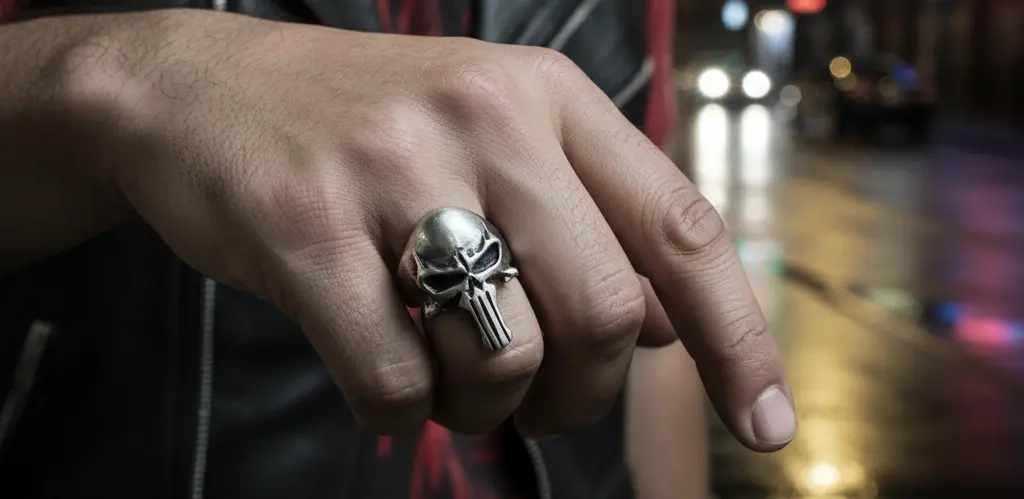
Quick answer: Choose a skull ring by comparing verified alloy, dimensions, size, profile, construction, finish, care and return terms. Sterling silver, stainless steel and titanium have different characteristics, but no material is universally best. Recycled or sustainable claims require traceable product evidence. For the dedicated alloy, hallmark, finish, and care framework, read the 925 sterling silver skull ring guide. For products, compare the broader skull jewelry collection and the focused 925 silver skull rings for men.
Material Comparison Starts With Exact Alloy Disclosure
Sterling silver contains 92.5 percent silver and supports detailed carving and contrasting oxidation. Stainless steel and titanium cover multiple grades and treatments, so the category name alone does not establish composition, hardness, weight, corrosion behavior or sensitivity.
Silver plate and silver-tone descriptions are not sterling silver. A 925 mark can support identification but does not prove every solder, stone, coating or mixed component. Use the FTC jewelry guide for terminology context.
Construction Matters as Much as Metal
Inspect the skull silhouette, transitions into the band, supported projections, interior surface, joins, stone settings and edge finishing. More weight or deeper grooves do not automatically mean stronger construction.
Front, side and underside views answer different questions. A macro front view can hide excessive profile height or hollow sections. Written dimensions and listed weight make comparisons more reliable.
Finish Changes Contrast and Maintenance
Polished metal produces strong highlights, brushing reduces reflection, and oxidation darkens recesses. Plating adds a surface layer that can wear. A dark surface is not proof of age, and a bright surface is not proof of purity.
Aggressive polishing may remove intentional oxidation or plating. Follow product-specific instructions; GIA care guidance supplies general precautions but cannot verify one construction.
“Hypoallergenic” Is Not a Universal Promise
Individual response varies, and a general ring description may not identify solder, coatings, stones or inlays. Buyers with known sensitivities should request component-level information and seek appropriate professional advice where needed.
Do not infer sensitivity safety from silver color, titanium wording or a 925 stamp. Product documentation must support the claim.
Size a Skull Ring for Width and Top Weight
Measure the intended finger more than once and use the seller’s sizing system. Wide bands may feel tighter than narrow bands, while a large face can rotate if the fit is loose. Account for knuckle size and normal swelling.
The skull ring size guide explains band-width and measurement checks. Do not force a size onto another finger to satisfy a symbolic placement rule.
Profile and Daily Activity Decide Wearability
Compare face width, profile height, side contact and projecting details. Teeth, horns, wings or jaws can catch gloves and pockets. Desk work, tools, gym equipment, machinery and protective equipment may require a lower profile or removal.
A ring can be an occasional statement piece, but the intended use should be clear. Styling language cannot compensate for poor comfort.
Recycled Content Is Not the Same as Recyclability
Metal may be technically recyclable, but a finished ring should not be called recycled unless the maker documents recycled content. Broader sustainable, ethical or low-impact claims need evidence about sourcing, production, labor, durability and end of life.
Stones, solder, coatings and mixed components can affect recovery. A recycling symbol or material category alone does not prove that a particular local system will accept the item.
Compare Symbolism Separately From Quality
A skull can suggest mortality, remembrance, gothic style or personal identity. Historical memento mori records support specific contexts, not a universal meaning. The MENSSKULL skull ring meaning guide separates evidence from interpretation.
Quality should still be judged from material, construction, fit and finish. A powerful story cannot verify an alloy or make a projecting ring comfortable.
Create a Consistent Buying Checklist
For each candidate, record exact size, band width, face dimensions, profile, material, finish, listed weight, stones, care and return terms. Compare every ring in the same order.
Use the men’s skull ring guide for additional construction and style checks. Save decisive specifications for delivery comparison.
Care, Repair and Long Use
Use the 925 sterling silver jewelry care guide for cleaning and storage steps. Store rings separately, avoid damaging chemicals and remove them for impact or snagging risks. Ask whether resizing, refinishing, stone repair or replating is possible before relying on future alteration.
Long use can support practical value, but durability claims must match construction and behavior. Inspect condition regularly and address looseness or sharp damage before continued wear.
Ask for an Evidence Chain Behind Environmental Language
A credible recycled-content claim should identify what portion of the relevant metal is recycled and who supplies or verifies that information. A broad brand statement cannot automatically be applied to every ring, component, stone or package.
Environmental comparison also depends on production energy, chemicals, transport, durability, repair and eventual recovery. No single attribute proves that one finished ring has the lowest impact. Where evidence is incomplete, describe the known material facts and state the limitation.
Packaging claims deserve the same care. Recyclable paper, reusable boxes and reduced plastic concern packaging, not the origin of the silver or labor conditions. Keep those claim categories separate.
Delivery Inspection Protects the Comparison
When the ring arrives, compare its selected size, dimensions, material statement, finish, weight when listed and included components with the saved listing. Inspect edges, projections, settings and interior finish before regular wear.
If a specification differs, use the seller’s process before polishing, resizing or modifying the ring. Alteration can affect evidence and return eligibility.
Ask who made each environmental statement and what period or product it covers. A current supplier document is more useful than an undated badge, broad collection page or retailer paraphrase. Preserve that evidence with the purchase record when sustainability materially affects the decision.
FAQ
Which skull ring material is best?
No single material is best for everyone. Compare documented alloy, construction, weight, finish, care and use.
Does oxidation mean a ring is antique?
No. Oxidation can be an intentional modern finish.
Are titanium rings always hypoallergenic?
No universal guarantee is appropriate; verify grade, components and individual sensitivity.
Does recyclable mean recycled?
No. Recycled content requires documentation, while recyclability describes a possible end-of-life pathway.
What is the first fit check?
Measure the intended finger and account for band width, knuckle and face weight.






MENSSKULL Journal Notes
Leave a field note
Share fit notes, styling ideas, care questions, or your experience with MENSSKULL silver jewelry.
Comments are checked before publication so buyers can read useful fit, symbolism, care, and style notes without spam noise.
The simple plus/minus challenge below helps block automated spam while keeping the experience lightweight.
Continue exploring
More MENSSKULL stories
Handcrafted silver
Shop the pieces behind the stories