
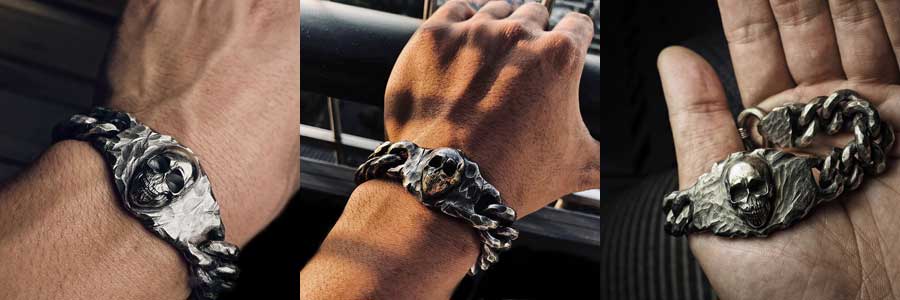
Short answer: choose a silver skull bracelet by measuring the wrist and comparing that measurement with the bracelet’s wearable length or inside circumference. Then evaluate form, width, weight, link articulation, clasp security, material disclosure, finish and comfort. The skull motif matters only after the bracelet works as jewelry.
Identify the Bracelet Form
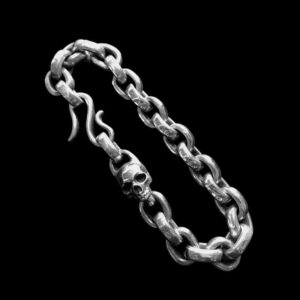
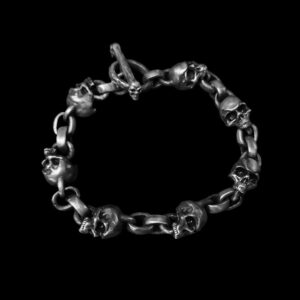
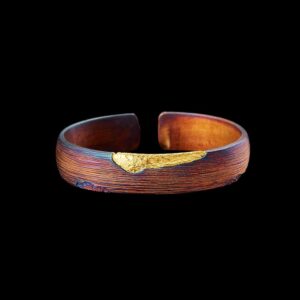
Skull bracelets can be flexible link designs, chain bracelets with a sculpted centerpiece, rigid cuffs or hinged bangles. A flexible bracelet depends on link movement and clasp quality. A cuff depends on inside circumference and opening. A hinged bangle depends on hinge alignment and catch security.
Choose the form according to how often the bracelet will be removed and whether one-handed operation matters. Compare different constructions in the skull bracelet collection before comparing only the skull faces.
Measure the Wrist Correctly
Wrap a flexible tape around the wrist where the bracelet will sit. Keep it snug without compressing the skin. If using paper or cord, mark the overlap and measure it against a ruler. Repeat the measurement to reduce error.
Compare wrist circumference with wearable length, not total component length. Clasps and end fittings may add length that does not become wrist space. Wide or rigid bracelets usually need a different allowance from fine flexible chains.
Check Hand Passage and Cuff Opening
A closed bangle must pass over the widest part of the hand. An open cuff enters through the narrow side of the wrist. A correct wrist measurement does not guarantee either passage. Ask for inside diameter, circumference and opening width as appropriate.
Do not spread a rigid cuff repeatedly unless it is specifically designed for adjustment. Bending metal back and forth can cause fatigue. A suitable cuff should be put on with minimal deformation.
Read Width and Weight Together
A broad bracelet distributes visual mass across the wrist. A narrow bracelet concentrates less surface area but can still be heavy if it is solid. Ask for both dimensions and weight in grams, then compare them with a bracelet you have worn comfortably.
Weight also affects rotation. A heavy skull centerpiece may migrate under the wrist if the bracelet is too loose. A closer fit can stabilize it, but the bracelet must still allow circulation and wrist movement.
Inspect Links, Joins and Skull Elements
Flexible links should articulate without pinching. Connecting rings should be closed securely, and decorative skulls should transition smoothly into the functional structure. Raised teeth, crowns or horns should not create unfinished hooks that catch fabric.
Check whether sculpted elements are solid, hollow or attached. Hollow construction can reduce weight and improve wearability but may need more protection from impact. Solder joins and hinge pins should align cleanly.
Evaluate the Clasp as a Safety Component
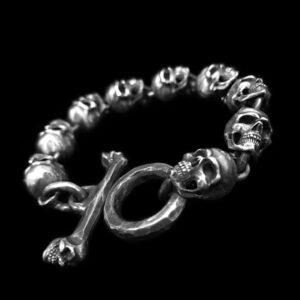
A clasp should close positively and resist sideways movement. Lobster, box, hook, toggle and custom skull clasps have different handling characteristics. Heavy bracelets may benefit from a safety catch or secondary connection when designed for one.
Try to determine whether the clasp can be operated with one hand and whether replacement or repair is possible. A dramatic custom clasp is not useful if it opens unpredictably or traps skin.
Verify the Silver Claim
“Sterling silver,” “silver plated” and “silver tone” are different descriptions. The Federal Trade Commission’s guide to buying precious-metal jewelry explains why sellers’ metal and fineness representations matter. Review the product disclosure and any available marking information.
Clasps, pins or springs may use materials chosen for mechanical performance, so check component details instead of assuming every part is identical. Material accuracy does not replace construction inspection.
Understand Skull Meaning Without Inventing Rules
Skull imagery can relate to remembrance, mortality, resilience, subculture or personal design preference. The Metropolitan Museum of Art discusses memento mori and mortality imagery in its account of life-and-death jewelry. A modern wearer may choose another personal interpretation.
Do not assume every skull bracelet makes the same statement. The skull meaning guide provides context for separating documented history from current individual use.
Style the Bracelet Around Wrist Balance
If the skull bracelet is broad or heavily detailed, wear it away from a watch to prevent abrasion. A narrower bracelet may share a wrist when the surfaces do not strike each other. Keep rings quieter when the bracelet is the main focal piece.
Denim, leather, workwear and plain knits support oxidized sculpture. Cleaner polished forms can contrast with tailored clothing. Other accessories from the skull jewelry collection should support the bracelet through finish or scale rather than duplicate its full visual weight.
Care for Finish and Moving Parts
Wipe the bracelet after wear and store it separately. Inspect clasps, links and joins periodically. Avoid abrasive polishing over intentional oxidation. GIA’s jewelry-care guidance recommends matching cleaning to all materials and treatments present.
Remove the bracelet around machinery, chemicals, impact and activities where it can catch. If a link opens, hinge loosens or clasp stops aligning, discontinue wear until the issue is assessed.
FAQ About Silver Skull Bracelets
How should a skull bracelet fit?
It should allow comfortable movement without sliding over the hand or rotating constantly. Compare wrist circumference with the product’s wearable dimensions and form.
Is a heavier skull bracelet better?
No. Weight should suit the dimensions, construction, clasp and wearer. Excess weight can reduce comfort and increase movement if fit is loose.
Can an open silver cuff be adjusted every day?
Repeated bending can fatigue metal. Select the correct opening and inside size, and make only adjustments allowed by the maker.
Does a 925 mark prove the whole bracelet is sterling silver?
A mark is useful information, but review the full material and component disclosure, especially for clasps, springs, stones or coatings.
How do I protect oxidized skull details?
Use gentle wiping and avoid aggressive polishing over recessed areas. Follow the care instructions for the specific finish and any additional materials.
MENSSKULL Journal Notes
Leave a field note
Share fit notes, styling ideas, care questions, or your experience with MENSSKULL silver jewelry.
Comments are checked before publication so buyers can read useful fit, symbolism, care, and style notes without spam noise.
The simple plus/minus challenge below helps block automated spam while keeping the experience lightweight.
Continue exploring
More MENSSKULL stories
Handcrafted silver
Shop the pieces behind the stories