
Quick answer: coordinate jewelry for a date-night outfit by choosing one focal piece first, repeating one visible cue in a quieter supporting piece, and reducing competition everywhere else. A ring, bracelet, or necklace can lead. The point is not to wear all three categories or to follow a universal dating rule; it is to create a clear visual hierarchy that works with the actual collar, sleeve, watch, colors, and setting of the outfit.
This guide covers observable styling only: position, outline, contrast, repeated shapes, and relative prominence. It does not promise attraction, confidence, romantic success, approval, or a particular impression. It also does not determine fit, comfort, material identity, care, durability, safe wear, or product performance. Those decisions belong to the established specialist and Research owners linked below.
Start with the outfit, not the jewelry tray
Set out the clothes first. Note the neckline, sleeve length, jacket hardware, watch, belt buckle, shoe details, and dominant colors. These features already create a visual structure. Jewelry should answer that structure rather than competing with an imagined version of it.
An open collar creates visible neckline space. A high crew neck reduces that space but may provide a clean background for a chain. Rolled sleeves expose the wrist; long cuffs may make the wrist secondary. A jacket with prominent zips or buttons already contributes concentrated detail. None of those observations dictates what must be worn, but they reveal which jewelry positions are available.
Choose one focal piece
The focal piece is the element you intend the eye to notice first. It can be a sculptural ring, a bracelet with a broad linked outline, or a visible necklace. Choose it before the supporting pieces so every later decision has a reference point.
Focal prominence can come from several visible qualities:
- a larger concentrated face or outline;
- strong contrast against the clothing;
- a recognizable geometric or character motif;
- a broad reflective surface;
- dense detail in one compact area.
The focal piece does not have to be the physically largest item. A ring with a clear angular face may lead even when a chain covers more area. Test the outfit at normal viewing distance rather than judging each piece in isolation.
Repeat one visible cue
A supporting piece can echo one cue from the focal piece without copying it. Repetition may come from an angular edge, a dark recess, a rounded link, a repeated accent color, or a similar level of surface detail. One repeated cue is usually enough to make separate positions feel connected.
Matching every feature can make the combination feel like a set even when that was not the intention. Instead, keep the relationship selective. If the focal ring has a strong rectangular face, a bracelet can repeat a geometric rhythm while remaining quieter. If a necklace supplies the broadest line, a ring can echo a small angular detail rather than matching its full scale.
Control relative scale across positions
Scale is relative. A ring is read against the hand, a bracelet against the wrist and sleeve, and a necklace against the neckline and torso. The listed millimeters of unlike products do not create a direct ranking because each piece occupies a different visual field.
Use a simple three-level hierarchy:
| Level | Job | Visible behavior | Adjustment if crowded |
|---|---|---|---|
| Focal | Leads the composition | Strongest concentrated contrast, detail, or outline | Keep it and quiet the other positions |
| Supporting | Repeats one cue | Visible but less prominent | Reduce scale, contrast, or detail |
| Optional accent | Fills a real visual gap | Smallest or least contrasting contribution | Remove it if the hierarchy becomes unclear |
This hierarchy is a styling tool, not a statement about status, quality, formality, or social value.
Coordinate the neckline
Decide first whether the outfit benefits from a visible necklace. A plain chain, pendant, or no-necklace option creates a different neckline relationship. The plain-chain versus pendant guide owns that specific choice; use it rather than turning date-night coordination into duplicate chain advice.
When a chain is included, check where it appears relative to the collar and jacket opening. Length decisions belong to the men’s necklace chain-length guide. This page does not prescribe an ideal length, body proportion, or neckline placement.
Coordinate the wrist and cuff
The wrist may already contain a watch, exposed cuff, or jacket hardware. A bracelet should therefore be evaluated as part of that local composition. It can repeat one cue from the focal piece, provide a quieter linked outline, or be omitted when the watch and sleeve already fill the space.
For the visual question of where a bracelet sits relative to a sleeve, use the bracelet and shirt-cuff guide. Measurement and fit belong to the men’s bracelet size guide. Styling observations here do not establish comfort, clearance, closure security, or safe wear.
Coordinate the hand without prescribing ring count
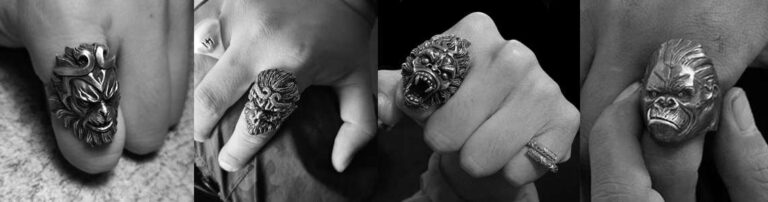
A ring can lead because its detail is concentrated and moves with the hand. If the ring is the focal piece, compare the bracelet and necklace against it at normal distance. A broad bracelet with dense links and a visible chain may compete, even if each item looks balanced alone.
Questions about how many rings to wear belong to the men’s ring-count and balance guide. That owner is link-only here. This page does not prescribe a number, finger arrangement, fit, or physical-work use.
Three straightforward coordination patterns
The following patterns describe visual hierarchy, not rules for a successful date or a universal dress code.
| Pattern | Focal position | Supporting move | Useful when |
|---|---|---|---|
| Ring-led | One clearly detailed ring | Quieter chain or wrist, not both at equal prominence | The hands remain visible and the neckline already has clothing detail |
| Neckline-led | Visible chain or pendant area | Smaller hand or wrist cue | An open collar or simple upper layer creates clear space |
| Wrist-led | Bracelet or watch-and-bracelet composition | Quiet ring or no necklace | Sleeves expose the wrist and the neckline stays visually simple |
If every position appears equally strong, remove one piece and look again. Editing is often more useful than adding.
Current product examples with bounded claims
Current catalog examples can make the visual framework concrete, but they are not evidence of demand, popularity, attractiveness, quality, compatibility, or dating outcomes. Availability and listing details can change.
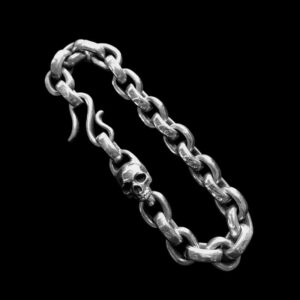
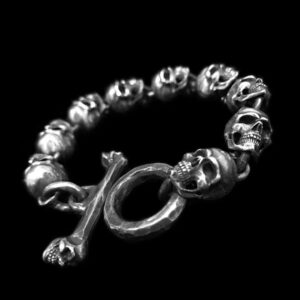
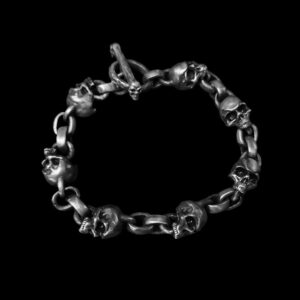
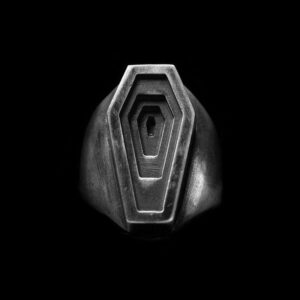
The Coffin Signet Ring provides an angular, concentrated hand-worn face that can be assessed as a possible focal position. The Skull Clasp Chain Bracelet provides a linked wrist outline. The 4mm Crescent and Shield Toggle Chain provides a narrower neckline line. Their records support their current names and item-specific listed dimensions only; they do not prove fit, comfort, durability, material performance, closure security, safe wear, or value.
The exact numbers describe different product dimensions in different positions, not a universal scale formula. The NIST SI length reference can support unit terminology, but it cannot determine styling suitability.
Adjust for the date setting without inventing etiquette
Setting changes what is visually practical, but it does not create a single correct jewelry formula. A quiet restaurant, outdoor walk, gallery visit, concert, or casual coffee may involve different clothing layers and movement. Use those observable conditions to decide which position remains visible and which piece can lead.
A category overview such as the Robbins Brothers men’s-jewelry report can show that rings, bracelets, and chains are discussed together in men’s jewelry. It does not prove MENSSKULL demand, popularity, dating success, or that any category is required.
Keep date-night scope separate from broader styling
The broader men’s jewelry styling guide owns general outfit coordination. The every-outfit decision owner addresses when adding jewelry is useful at all. This page stays event-specific: one chosen outfit, one setting, one focal piece, and controlled supporting accents.
Neither external context nor product records prove that one ring, bracelet, necklace, date-night combination, or arrangement is universally essential, better, safer, more comfortable, more durable, more attractive, more meaningful, more successful, or more appropriate.
A final two-minute check
- Confirm the clothes, collar, sleeves, watch, and existing hardware first.
- Name the single piece that should lead.
- Identify one cue repeated by a quieter supporting piece.
- Check whether the third position adds a distinct role or only more competition.
- View the full outfit at normal distance and remove one item if the hierarchy is unclear.
- Route fit, size, material, care, comfort, safety, and performance questions to their specialist owners.
Good coordination is not a promise about the date. It is simply a clear visual decision: one focal piece, one controlled relationship, and enough restraint for the outfit and the person wearing it to remain the center of the composition.


MENSSKULL Journal Notes
Leave a field note
Share fit notes, styling ideas, care questions, or your experience with MENSSKULL silver jewelry.
Comments are checked before publication so buyers can read useful fit, symbolism, care, and style notes without spam noise.
The simple plus/minus challenge below helps block automated spam while keeping the experience lightweight.
Continue exploring
More MENSSKULL stories
Handcrafted silver
Shop the pieces behind the stories