
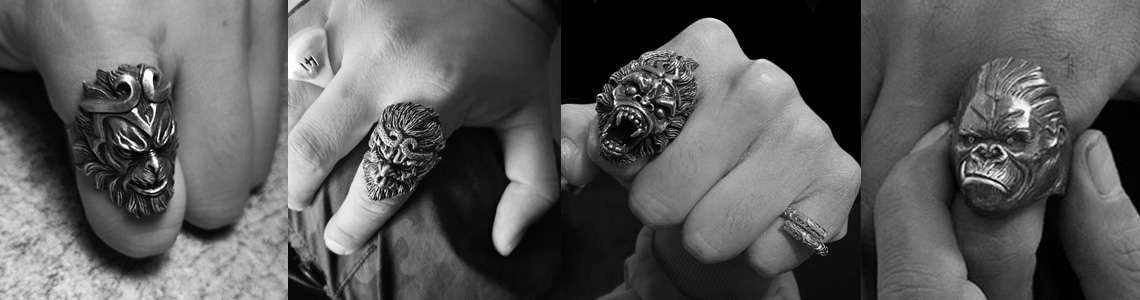
Quick answer: Wear jewelry that already feels natural, suits the venue and does not compete with conversation or comfort. One clear anchor such as a watch, ring, bracelet or pendant is usually enough; add a second piece only when scale, metal and placement remain balanced.
A Date Is Not a Costume Test
Jewelry should support the person rather than perform a manufactured identity. Men do not need an expensive watch, a luxury metal or a stereotypically masculine symbol to appear thoughtful. Clean condition, correct fit, an appropriate outfit and ease of movement matter more than price or quantity.
Start with what the wearer already uses confidently. A first date is rarely the best time to test an oversized ring, unfamiliar piercing, heavy chain or loose bracelet that requires constant adjustment. Familiarity helps the accessory disappear into the interaction instead of becoming a distraction.
Match the Jewelry to the Setting
A coffee date, outdoor walk, dinner, concert and formal event create different practical needs. Outdoor activity favors secure closures and low projections. A restaurant allows more polish but still involves sleeves, table contact and hand movement. A concert may support bolder scale while increasing snagging and loss risk.
For a workplace-to-dinner transition, use pieces that work in both settings rather than adding several accessories at once. A clean watch, compact signet or restrained bracelet can bridge formal and casual clothing. Venue rules and personal safety take priority over style advice.
Choose One Visual Anchor
An anchor is the first accessory the eye notices. It might be a watch at the wrist, a sculptural ring on the hand, a pendant at the neckline or an earring near the face. Once that piece is chosen, supporting jewelry should be quieter or placed in another body zone.
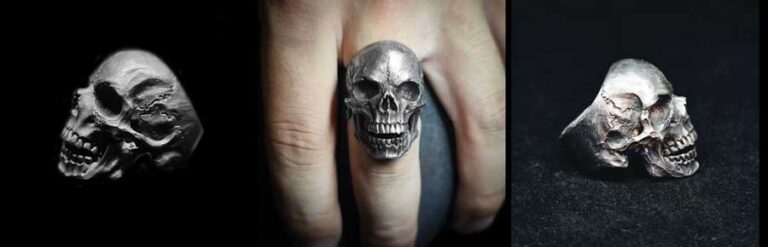
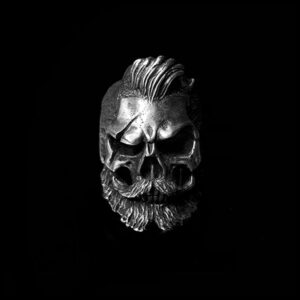
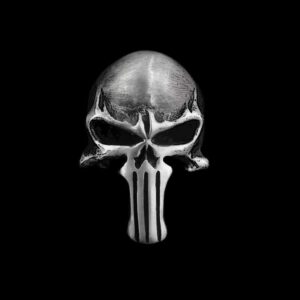
If a broad skull ring leads the hand, keep the adjacent bracelet or watch controlled. If a pendant is the main symbol, choose a lower-profile ring. This hierarchy creates intention without requiring every piece to match exactly. The MENSSKULL men’s jewelry styling guide expands on rings, chains and bracelets.
Rings Need Correct Placement and Fit
A ring should pass the knuckle without excessive force and sit without pressure, spinning or neighboring-finger irritation. Wide bands can feel tighter than narrow ones. Do not buy a different size merely to force the ring onto a finger associated with a particular message.
Some people may interpret a ring on the left ring finger as engagement or marriage, but customs vary. If avoiding ambiguity matters, choose another comfortable finger. The wearer can explain a symbolic ring rather than relying on a universal placement rule. Use the MENSSKULL ring size guide before ordering.
Bracelets and Watches Share Limited Space
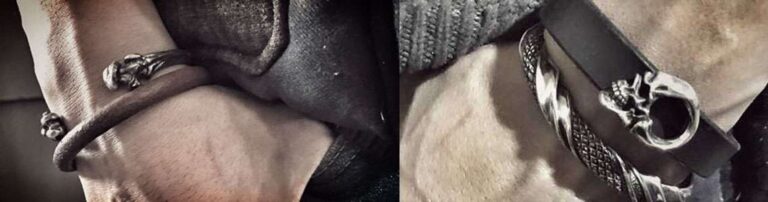
A watch is not evidence that someone is punctual, successful or attentive; it is simply a functional or decorative object. Select it for fit, condition and compatibility with sleeves. A bracelet can sit on the opposite wrist or beside the watch when the combination does not knock, pinch or overwhelm the cuff.
Compare wrist measurement, usable bracelet length, link articulation, clasp security and dominant-hand activity. A heavy bracelet that rotates across the table can be uncomfortable even when it looks balanced in a still photograph. Review the silver bracelet fit and clasp guide for category-specific checks.
Necklaces Should Work With the Neckline
Chain length determines where a pendant meets the shirt. Preview the drop with a flexible tape or an existing necklace, then check chain width, clasp, pendant weight and bail compatibility. A pendant can sit inside an open collar, above a crew neck or over heavier clothing depending on scale and intention.
Crosses, skulls, keys, animals and cultural symbols can invite questions, but they should not be used as a script for impressing someone. Wear a symbol whose meaning the wearer understands and accepts. Religious and cultural forms deserve accurate, respectful language rather than assumptions.
Earrings and Formal Accessories Need Context
Earrings sit close to the face and can provide a compact point of detail. Verify dimensions, closure, listed weight and material for components that contact the body. Large macro photographs often exaggerate size, so on-body scale is especially useful.
Tie bars, cufflinks and lapel pins require compatible garments. A tie bar should support the tie and shirt placket rather than sit as an unrelated decoration. Cufflinks require the appropriate cuff. Sunglasses are useful outdoors but should not be treated as proof of status or personality.
Coordinate Metals and Finishes Without Rigid Rules
Matching every metal is optional. Mixed metals can look deliberate when one tone remains dominant or a finish repeats elsewhere. Polished silver reflects more light, brushed surfaces appear quieter and oxidized recesses increase contrast. Finish does not prove alloy or quality.
The FTC jewelry guide explains precious-metal terminology, while GIA jewelry care guidance supports careful storage and protection from damaging chemicals. Neither source verifies an individual product.
Run a Comfort Check Before Leaving
Sit, reach, put on a jacket, use pockets and move the wrists and fingers. Remove anything that pinches, catches, knocks repeatedly or needs constant correction. Check closures and clean visible surfaces according to the item’s care instructions.
The final question is simple: does the jewelry feel like the wearer, suit the setting and leave attention available for the other person? If so, it is appropriate. If not, reducing the number of pieces is usually more effective than adding another accessory.
FAQ
How many jewelry pieces should a man wear on a date?
There is no fixed number. Start with one anchor and add another only if the combination remains comfortable and balanced.
Is a skull ring appropriate for a date?
Yes when it reflects the wearer’s style, fits correctly and suits the venue. It should not be presented as proof of courage or rebellion.
Should all metals match?
No. Mixed metals can work when one tone leads or a finish repeats deliberately.
Can a necklace be worn with formal clothing?
Yes, but consider neckline, chain length, pendant scale and dress code. A discreet chain may sit inside the shirt.
What matters more than price?
Correct fit, clean condition, personal relevance, secure construction and comfort matter more than an unsupported luxury claim.


MENSSKULL Journal Notes
Leave a field note
Share fit notes, styling ideas, care questions, or your experience with MENSSKULL silver jewelry.
Comments are checked before publication so buyers can read useful fit, symbolism, care, and style notes without spam noise.
The simple plus/minus challenge below helps block automated spam while keeping the experience lightweight.
Continue exploring
More MENSSKULL stories
Handcrafted silver
Shop the pieces behind the stories