
Quick answer: Store each sterling silver piece in its own protected space, keep chains fastened and laid flat or hanging separately, and use a lined box or soft pouch that prevents pieces from rubbing together. Build the system around the shape of the jewelry and how often you wear it. The best setup is not the most complicated one; it is the one that lets you return every ring, chain, bracelet, or earring to a predictable place after wear.
This guide is about practical storage decisions: separation, organization, retrieval, and travel. For the material science behind sterling silver and detailed care methods, use MENSSKULL’s sterling silver jewelry care research and 925 sterling silver research guide. Those Research Library pages own the technical evidence; this page turns the evidence into a storage workflow you can use.
Build a storage system in four decisions
- Separate: give every piece its own compartment, slot, hook, or pouch.
- Support: match the holder to the jewelry’s shape so chains do not knot and raised details do not press against other pieces.
- Locate: keep frequently worn pieces easy to reach and occasional pieces labeled or grouped by type.
- Return: create one temporary landing area for jewelry you have just removed, then move it to long-term storage before the area becomes a mixed pile.
This four-part system solves the most common storage problem: jewelry is often damaged or lost not because the owner lacks a premium box, but because several pieces share one loose space. A simple divided tray can work better than a decorative container with no compartments.
Choose storage by jewelry shape
The word “jewelry” covers objects that behave very differently in storage. A broad sculptural ring needs clearance around its face. A fine chain needs a straight, untangled path. A hinged bracelet needs room for its clasp. Start with shape rather than price or appearance.
Rings
Use a ring roll, divided tray, or individual pouch. Large signet, skull, animal, and sculptural rings need more side-to-side room than slim bands. Do not force a wide ring into a narrow roll where a raised face can press against the divider or a neighboring ring. If a ring has a tall profile, place it in a compartment deep enough that the lid does not touch the design when closed.
Arrange rings with the face visible. That makes selection faster and reduces unnecessary handling. If several rings look similar from above, label the compartment by size or intended finger. A small removable card is more useful than repeatedly trying on every ring.
Chains and necklaces
Fasten the clasp before storage. Place each chain on its own hook, in its own channel, or flat inside an individual pouch. Leave enough distance between hanging chains that pendants cannot strike one another when the cabinet or door moves. If a chain must be coiled, make a loose, broad loop rather than a tight knot-sized bundle.
Store detachable pendants separately when the pendant is heavy enough to pull or twist the chain in the container. If you prefer to keep a pendant and chain together, give the pair a full compartment and lay the pendant flat below the chain. For help matching chain proportions to a pendant, see the pendant and chain compatibility guide.
Bracelets
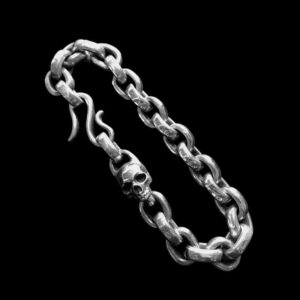
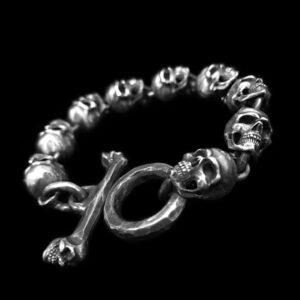
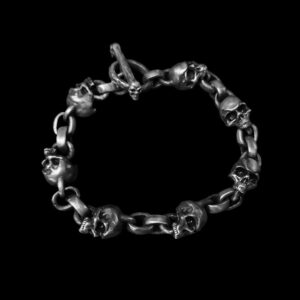
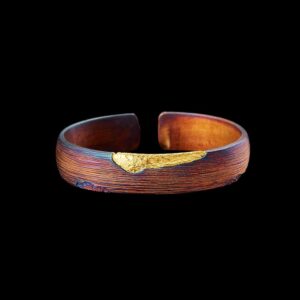
Lay bracelets flat in a divided drawer or use a stand that supports the natural curve without stretching the piece. Close clasps so they do not catch on neighboring jewelry. Keep rigid cuffs and flexible chains in separate spaces; a heavy cuff can press against a lighter bracelet when a drawer opens or a travel case shifts.
Earrings
Keep each pair together on a card, in paired holes, or in a small divided compartment. Replace backs before storage. For single earrings, use a clearly marked recovery compartment rather than dropping the piece into a general tray. That prevents an unmatched earring from becoming invisible among rings and chains.
What kind of container works best?
A suitable jewelry box has a soft interior, stable dividers, enough depth for the tallest piece, and a lid that closes without pressure. It does not need to be oversized. The interior layout matters more than the exterior finish.
Divided jewelry box
This is the strongest all-purpose choice for a home collection. Look for compartments in more than one size. Small cells suit bands and earrings; wider cells suit statement rings and pendants. A drawer or lid should move smoothly so the contents do not jump between compartments.
Individual soft pouches
Pouches are useful when drawer space is limited or when shapes vary widely. Choose a pouch that lets the jewelry rest without folding or forcing it into a tight corner. Place only one piece, or one matched pair, in each pouch. Add a plain label outside so you do not need to open every pouch to find one item.
Ring rolls and display trays
Ring rolls are efficient for slim and medium rings. For wide statement rings, test the spacing before committing the whole collection. Open display trays are convenient for daily pieces but should sit in a stable, low-traffic location where they will not be brushed by clothing, bags, or pets.
Hooks and necklace boards
Hooks make chains visible and easy to retrieve. Use one chain per hook whenever possible. The board should be fixed firmly, with enough vertical clearance that pendants do not rest on a shelf edge. A closed cabinet combines the visibility of hooks with protection from accidental contact.
One piece per protected space
Individual separation is the central rule because silver jewelry often combines polished areas, recessed details, edges, clasps, and raised motifs. When several pieces share a loose pouch, every movement makes those surfaces contact one another. Separate storage also prevents a chain from threading through a ring or wrapping around a pendant.
“One piece” can mean one ring, one bracelet, one necklace-and-pendant set, or one matched pair of earrings. The goal is not to isolate every component unnecessarily. The goal is to prevent unrelated pieces from moving against each other.
Create a daily landing area
Many storage systems fail because returning jewelry feels inconvenient. Place a small divided tray near the location where you normally remove accessories. Use it only as a short holding area, not as permanent mixed storage. Each compartment should hold one piece until you return it to the main box.
A useful routine is:
- Remove one piece at a time and place it in an empty landing compartment.
- Check that clasps and earring backs are present.
- Before selecting the next day’s jewelry, return the previous pieces to their assigned spaces.
- Leave one compartment empty so a newly removed item never has to sit on another piece.
This routine reduces clutter without turning storage into a lengthy task. It also makes missing components obvious while you can still retrace where the jewelry was worn.
Organize by use, not only by category
Category-based storage is intuitive, but frequency of use can make the system faster. Keep daily rings and chains in the most accessible drawer. Move event pieces, seasonal designs, and backups to labeled secondary compartments. The pieces you reach for most should not require moving several trays.
For a larger collection, use a two-level map:
- Level one: type, such as rings, chains, pendants, bracelets, and earrings.
- Level two: use, such as daily, formal, travel, or occasional.
Record ring sizes in the label or inventory note. For fit decisions rather than storage, use MENSSKULL’s ring size and fit research guide.
Store oxidized designs without confusing the finish
Some sterling silver jewelry uses deliberate dark contrast in recessed details. That design choice is different from an unplanned surface change. Before you decide that a stored piece needs treatment, compare its current appearance with your own purchase photos or product records. Keep a simple reference image in the inventory entry for heavily detailed jewelry.
If you are unsure what you are seeing, read oxidized silver versus tarnish. This storage guide does not prescribe finish restoration or chemical treatment. It helps you preserve a reliable visual reference and keep pieces separated so you can notice changes without guessing.
Plan a travel jewelry kit
A travel case should keep the same separation rules in a smaller space. Use fixed compartments, zipped pockets, ring rolls with appropriate spacing, and individual chain channels. Shake the closed empty case gently before packing; loose dividers or unfastened inserts will not become more secure once jewelry is inside.
Pack in this order:
- Choose only the pieces needed for the trip.
- Fasten chains and bracelet clasps.
- Place large rings and pendants in compartments with clearance around raised details.
- Secure earring backs and keep pairs together.
- Close the case and confirm that nothing shifts when it is turned gently.
Keep the travel inventory on your phone: one photo of the open packed case is usually enough. The photo supports repacking and helps you confirm that every compartment is filled before leaving a hotel or changing location. The Gemological Institute of America’s traveling with jewelry guidance likewise recommends separating items so pieces do not contact one another and using a soft pouch as a practical travel option.
Use a simple jewelry inventory
An inventory does not need specialist software. A note or spreadsheet can list the item name, category, ring size where relevant, storage location, and a current reference photo. Use location names that match the physical system, such as “top drawer, ring row two” or “travel case, zipped pocket.”
Update the record when you permanently move a piece. Avoid location labels such as “safe place” or “bedroom” because they are too broad to help later. If the collection is shared, use the same naming convention for everyone.
Common storage mistakes
- Loose drawer storage: pieces slide, overlap, and become hard to identify.
- Several pieces in one pouch: the pouch prevents contact with the outside but not contact between the pieces inside.
- Unfastened chains: open clasps and loose ends can catch on pendants or other chains.
- Overfilled ring rolls: wide or raised rings press against dividers and neighboring designs.
- No landing area: removed jewelry accumulates wherever it was taken off.
- No visual reference: owners may forget which dark details were intentional parts of an oxidized design.
- Unlabeled pouches: finding one item requires repeated handling of the whole collection.
- Travel cases with loose inserts: compartments appear separate but allow items to move after the case is closed.
A five-minute storage reset
Use this reset once a week or whenever the landing tray begins to fill:
- Return each landing-tray item to its assigned compartment.
- Fasten open clasps and reunite earring pairs.
- Untangle only one chain at a time on a clear surface.
- Move pieces that no longer fit their compartments to a larger space.
- Update any changed location in the inventory.
- Leave one landing compartment empty for the next item removed.
The reset is deliberately short. If the system regularly needs a full reorganization, the problem is usually insufficient separation or storage locations that do not match how often the pieces are worn.
Storage decision checklist
- Does every item or matched pair have its own protected space?
- Can the lid close without touching tall rings or pendants?
- Are chains fastened and separated?
- Are wide rings stored with enough side clearance?
- Can daily pieces be reached without moving several trays?
- Is there a temporary landing area with at least one empty compartment?
- Are travel dividers fixed when the case is closed?
- Can you identify deliberate oxidized details from a reference photo?
- Does the inventory name an exact physical location?
Research boundary and source notes
This page intentionally does not repeat a complete explanation of silver composition, tarnish chemistry, cleaning agents, testing, or restoration. For those evidence-heavy questions, consult the sterling silver jewelry care research and the 925 sterling silver research guide. For a consumer overview of silver quality marks, see the U.S. Federal Trade Commission’s precious-metal jewelry guidance.
The practical travel recommendations above are consistent with GIA’s published rule of thumb to separate items during packing. MENSSKULL applies that separation principle here as an organization system for rings, chains, pendants, bracelets, and earrings.
Frequently asked questions
Can sterling silver rings share one jewelry-box compartment?
It is better to give each ring its own slot or divided space. Large sculptural rings need enough clearance that their raised faces do not press against neighboring pieces or the closed lid.
Should I fasten a necklace before storing it?
Yes. Fastening the clasp gives the chain a defined loop and removes an open end that can catch on another item. Store each chain on a separate hook, in a separate channel, or flat in its own pouch.
Is a soft pouch enough for long-term organization?
A soft pouch can be useful when it contains one piece or one matched pair and is labeled outside. Several unrelated pieces in one pouch are still able to contact and tangle with one another.
How should I store a large skull or animal ring?
Use a wider, deeper compartment with clearance around the raised face. Check that the lid closes without touching the design and that adjacent rings cannot shift into the same space.
How do I keep track of jewelry in separate pouches?
Label each pouch and keep a simple inventory with the item name, category, relevant size, storage location, and a current reference photo.


MENSSKULL Journal Notes
Leave a field note
Share fit notes, styling ideas, care questions, or your experience with MENSSKULL silver jewelry.
Comments are checked before publication so buyers can read useful fit, symbolism, care, and style notes without spam noise.
The simple plus/minus challenge below helps block automated spam while keeping the experience lightweight.
Continue exploring
More MENSSKULL stories
Handcrafted silver
Shop the pieces behind the stories