
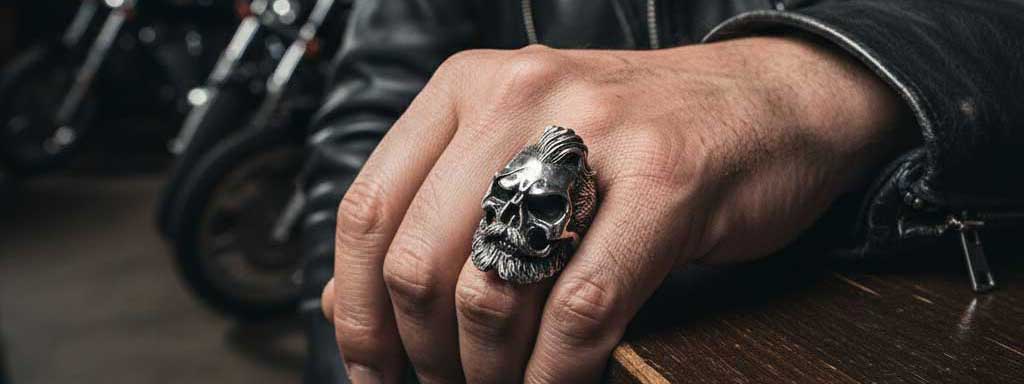
Short answer: choose a men’s ring by measuring the exact finger first, then deciding what role the ring will play. Compare band width, face dimensions, weight, material, construction, finish and daily comfort. A ring that looks impressive but rotates, pinches neighboring fingers or conflicts with work is not the right choice.
Define the Ring’s Job
A daily band, signet, sculptural statement ring and commemorative ring solve different problems. A daily band should remain comfortable through repeated hand movement. A signet needs a face proportion that suits the finger. A sculptural ring needs clearance and controlled weight. A commemorative ring may prioritize engraving or a specific symbol.
Write down the occasions when the ring will be worn. This prevents buying an oversized event piece when the real need is a low-profile office ring. Compare categories in the men’s ring collection only after the intended use is clear.
Measure the Exact Finger
Do not transfer a size from another finger or the opposite hand. Finger and knuckle dimensions differ, and the dominant hand may be slightly larger. Measure when the hands are at a normal temperature and repeat the measurement at more than one time of day.
Use correctly sized gauges that resemble the intended band width. GIA’s benchmark for accurate finger and ring sizing emphasizes consistent technique and proper tools. The ring size guide for sculptural designs adds practical checks for broad faces and heavy rings.
Account for Band Width and Interior Shape
Wide bands contact more skin and often feel tighter than narrow bands at the same nominal size. Rounded comfort-fit interiors can pass over a knuckle differently from flat interiors. Ask how the product’s stated size was measured and whether the band tapers under the finger.
A top-heavy ring can rotate even when its diameter is technically correct. Balance depends on face mass, shoulder design, band width and finger shape. Check whether sizing adjustments are possible before buying, especially when engraving, stones or continuous patterns are present.
Compare Face Dimensions, Not Just Ring Size
Ring size describes the interior fit, not the visual scale. Face height, width and depth determine how much of the finger the design occupies. Draw the listed dimensions on paper or compare them with an existing ring.
Large faces need space between adjacent fingers and may catch on gloves. Compact faces are easier to combine with other rings but can lose very fine detail. The skull ring collection demonstrates why two rings in the same size can have completely different hand presence.
Read the Metal Description Carefully
“Sterling silver,” “silver plated” and “silver tone” are different descriptions. The Federal Trade Commission’s guide to buying precious-metal jewelry explains why metal and fineness representations matter. Review the full disclosure rather than inferring composition from color or price.
If the ring includes stones, enamel, coatings or multipart components, confirm those details separately. A fineness mark can be useful, but it does not describe weight, construction, finish quality or whether every component uses the same material.
Inspect Construction From the Inside Out
The interior should be smooth and free of unfinished edges. Shoulders should transition into the band without abrupt thin points. Open-backed construction can reduce weight, while solid construction may feel more substantial. Neither is automatically better; the structure should suit the design and wear pattern.
On set or multipart rings, inspect prongs, bezels, solder joins and moving parts. Raised elements should not scrape neighboring fingers. Ask for side, back and interior photographs when the product page shows only the front.
Choose a Finish That Fits Your Routine
Polished rings reflect light and reveal fine wear. Brushed rings are quieter. Oxidized recesses increase contrast around engraving or sculpture. Mixed finishes can be expressive, but every surface changes with contact and cleaning.
GIA’s jewelry-care guidance recommends considering all materials and treatments before selecting a cleaning method. Avoid aggressive polishing on intentional dark detail, and store rings separately from harder jewelry.
Match the Ring to the Wardrobe
A plain band works across most clothing. A signet adds a defined geometric point. A skull, animal or Gothic ring creates more narrative and usually needs fewer competing accessories. Coordinate metal tone or finish rather than repeating every motif.
For restrained outfits, one sculptural ring can provide contrast. For heavier denim, leather or workwear, a broader form may feel proportionate. The men’s ring finger guide helps compare placement and visibility without assigning universal rules.
Protect Comfort and Safety
Remove rings around machinery, impact, chemicals, electrical work and tasks where jewelry can catch. Wide or raised rings may change grip and pressure during lifting. Dominant-hand wear increases visibility but also increases contact with tools and surfaces.
Before purchase, review return conditions, resizing options, processing estimates and personalization restrictions. Clear measurements and policies matter more than promotional claims about success, confidence or status.
A Men’s Ring Buying Checklist
- Define daily, event, symbolic or formal use.
- Measure the exact finger with the intended band width in mind.
- Record face height, width, depth, band width and weight.
- Verify metal, finish and any additional materials.
- Inspect the interior, shoulders, back and joins.
- Review care, resizing and return conditions.
FAQ About Choosing a Men’s Ring
Should a wide ring be the same size as a narrow ring?
Not always. Wide bands often feel tighter because they contact more skin. Use gauges similar to the intended width and follow the product’s sizing guidance.
Is a heavier ring better quality?
No. Weight reflects size and construction. Quality also depends on material disclosure, design, joins, interior finish and suitability for the intended use.
Which finger is best for a statement ring?
The index or middle finger often gives a large ring visual space, but the best position depends on exact fit, neighboring-finger clearance, work and personal context.
Can every ring be resized?
No. Stones, continuous patterns, unusual alloys, engraving and complex construction can limit resizing. Confirm options before purchase.
How can I compare ring size from online photos?
Do not rely on photos alone. Use listed millimeter dimensions, weight and band width, and compare them with a ring or paper outline of known size.






MENSSKULL Journal Notes
Leave a field note
Share fit notes, styling ideas, care questions, or your experience with MENSSKULL silver jewelry.
Comments are checked before publication so buyers can read useful fit, symbolism, care, and style notes without spam noise.
The simple plus/minus challenge below helps block automated spam while keeping the experience lightweight.
Continue exploring
More MENSSKULL stories
Handcrafted silver
Shop the pieces behind the stories