
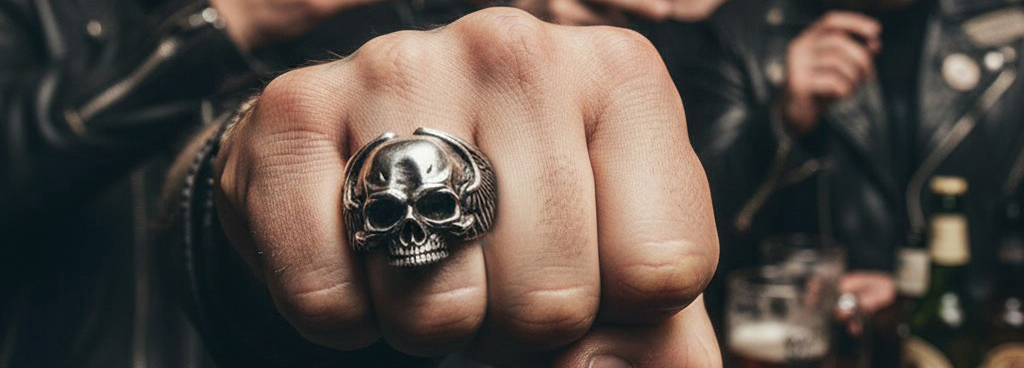
Skull rings can represent mortality, remembrance, equality, rebellion, gothic style, or personal identity. Historical memento mori evidence supports specific contexts, but no meaning is universal. For a focused explanation of symbolism and historical context, see the skull ring meaning guide.
Skull Ring Meaning: Evidence-Based Answer
Skull rings can represent mortality, remembrance, equality, rebellion, gothic style, or personal identity. Historical memento mori evidence supports specific contexts, but no meaning is universal.
From Historical Mortality Symbol to Modern Ring
European memento mori objects used skulls, skeletons, coffins, and hourglasses to encourage reflection on mortality. Mourning rings could overlap with those images while commemorating a named person. Museum records support particular objects and periods; they do not prove one continuous tradition shared by every modern skull ring.
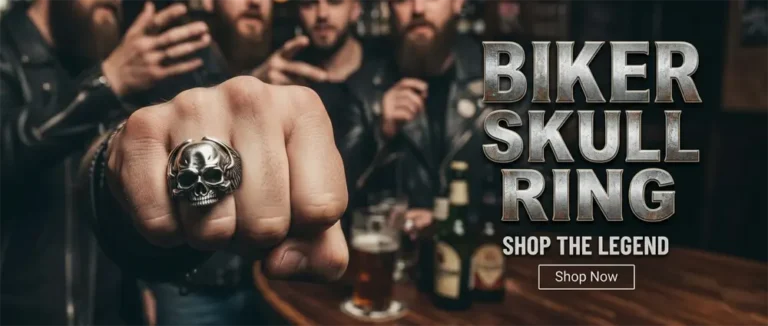
Modern biker, rock, gothic, military-inspired, and fashion contexts reinterpret the skull. A current wearer may choose it for remembrance, acceptance of mortality, independence, or visual form. Those meanings should be presented as contextual possibilities rather than inherited rules.
Read secondary symbols with the skull. Crossbones, crosses, crowns, wings, snakes, inscriptions, and dates can change the interpretation. A credible guide identifies what is documented, what is editorial interpretation, and what belongs to the wearer.
For buying, history does not verify the product. Confirm size, band width, face dimensions, profile, disclosed material, finish, care, and return terms. A macro image can show carving, but normal-distance and side views better predict presence and comfort.
Memento Mori and Mourning Jewelry Are Related but Different
Memento mori imagery asked viewers to remember mortality as a universal condition. Mourning jewelry more often commemorated a particular person through a name, date, inscription, hair, enamel, or funerary symbol. One historical object can perform both roles, but a skull alone does not prove which purpose it served. Museum catalog records, dates, inscriptions, provenance, and construction provide stronger evidence than visual resemblance.
Why Ancient-Origin Claims Need Caution
Skulls appear in art across many places and periods, but that does not establish a direct lineage from ancient soldiers to a modern commercial ring. Claims about Roman armies, medieval knights, secret orders, or universal warrior codes need object-specific evidence. When that evidence is absent, the responsible statement is simply that mortality imagery has a long and varied history.
How Modern Skull Contexts Differ
Biker, rock, gothic, military-inspired, memorial, and fashion uses developed in different social settings. A modern wearer may connect the skull with risk, independence, grief, equality, or aesthetic form. Those contexts can overlap without becoming one official meaning. Product copy should describe the visible design and documented history without assigning club membership, rank, belief, or personality.
Read the Ring as a Complete Composition
The eye sockets, jaw, teeth, crown, crossbones, wings, snakes, crosses, inscriptions, and surrounding band work together. A crown may suggest authority or mortality of power; an hourglass can reinforce time; a name or date can support remembrance. These are interpretive cues, not automatic facts about the owner.
Fit and Proportion Still Decide the Purchase
Compare the intended finger, exact size, band width, face width, profile height, and side contact. Wide bands can feel tighter than narrow rings of the same nominal size, while a top-heavy face can rotate when the fit is loose. Measure more than once and use the sizing system shown on the product page.
Evaluate Material and Finish Separately
Sterling silver terminology concerns alloy content. Oxidation, brushing, polishing, plating, and antiquing describe the surface. Dark recesses can clarify carving but do not prove age or handmade production. Verify each claim independently and use care that preserves the intended finish.
How to Test a Historical Statement
Ask whether the statement names a period, place, object, and source. Museum records, dated inscriptions, archaeological context, and specialist publications are stronger than an unattributed story repeated by retailers. Words such as always, originally, all cultures, and ancient should trigger additional verification rather than automatic acceptance.
A source can support only the claim it documents. A European mourning ring does not establish a Roman military practice, and a modern biker photograph does not establish medieval meaning. Keeping those boundaries visible makes the history more useful, not less interesting.
How to Compare Skull Carving Quality
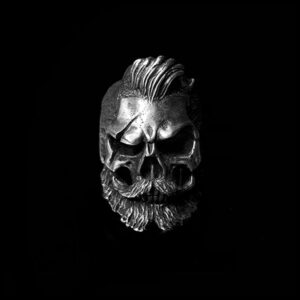
Inspect the outer silhouette at normal distance, then use close views for eye sockets, nasal opening, jaw, teeth, and transitions into the band. More lines do not automatically create better anatomy or stronger construction. Deep recesses should separate planes without turning the face into undifferentiated darkness.
Side and underside views can reveal profile height, hollowing, supported projections, and interior finishing. Those details help predict comfort and care more reliably than dramatic front lighting.
Continue the MENSSKULL Buying Path
Compare skull rings, men’s skull ring guide, men’s ring size guide, men’s silver rings for related fit, material, and style decisions. Use the individual product page for exact specifications.
Historical and Material Sources
The Metropolitan Museum of Art mourning ring record and the V&A discussion of memento mori support specific historical uses of mortality imagery. They do not assign one meaning to every modern skull design.
FAQ
What should a buyer verify first?
Verify material, dimensions, selectable size or intended use, construction, finish, care, included components, and return terms on the exact product page.
Can photographs confirm material and scale?
No. Photographs illustrate form, but written specifications are needed for alloy and measurements.
Is the symbolic meaning universal?
No. Historical sources support particular contexts, while modern meaning depends on the design and wearer.
Does 925 prove overall quality?
No. It describes sterling alloy content, not craftsmanship, origin, fit, or finish.
How should the final choice be made?
Use this guide to narrow the category, then decide from the exact specifications and intended use.




MENSSKULL Journal Notes
Leave a field note
Share fit notes, styling ideas, care questions, or your experience with MENSSKULL silver jewelry.
Comments are checked before publication so buyers can read useful fit, symbolism, care, and style notes without spam noise.
The simple plus/minus challenge below helps block automated spam while keeping the experience lightweight.
Continue exploring
More MENSSKULL stories
Handcrafted silver
Shop the pieces behind the stories