
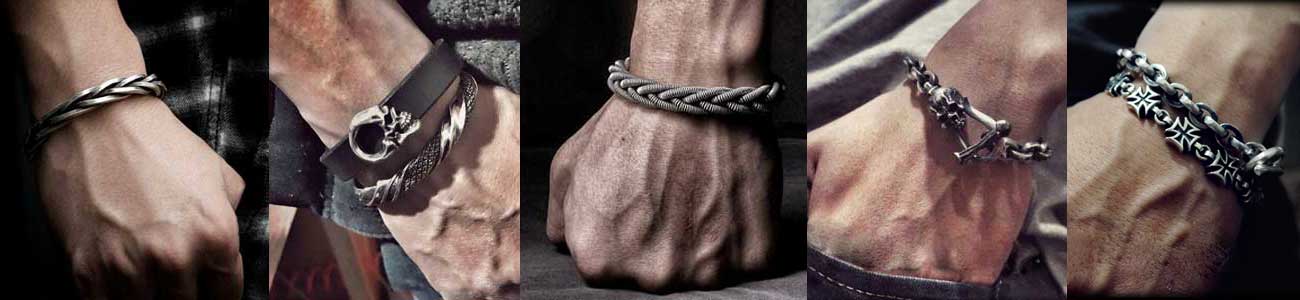
Direct answer: A men’s jewelry style is a repeatable relationship between shape, finish, motif and visual weight. Minimal, gothic, biker, heritage and modern profiles are useful starting points, not identities a wearer must perform. Select the profile that matches existing clothes and comfort, then adapt it rather than copying a complete costume.
This framework replaces year-based trend lists. The goal is consistency with room for one deliberate contrast.
Minimal: Clear Lines and Low Visual Noise
Minimal jewelry uses restrained scale, limited motifs and clean geometry. A slim chain, plain band, compact stud or smooth cuff can add structure without becoming the outfit’s subject. Finish may be polished or brushed, but detail remains controlled.
Minimal does not mean fragile or inexpensive. Check thickness, clasp, interior finish and material. One precise object often reveals poor proportion more quickly than a highly decorated piece.
Gothic: Contrast, Architecture and Symbol
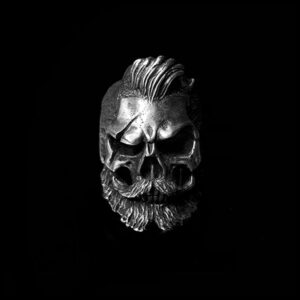
Gothic jewelry often uses pointed arches, crosses, skulls, creatures, script and deep oxidized relief. Strong shadows and vertical forms create drama. Meanings can include mortality, faith, literature, music or visual preference, depending on the wearer.
Explore gothic jewelry for men, then choose one motif as the focal point. Avoid combining every dark symbol at once unless maximalism is a deliberate choice.
Biker: Weight, Hardware and Road-Wear Practicality
Biker-influenced jewelry uses substantial rings, chain links, leather, wallet chains and mechanical hardware. The style can reference motorcycle communities, but owning a heavy chain does not establish membership. Use the language respectfully and avoid invented claims about brotherhood or courage.
The men’s biker jewelry collection provides format examples. Weight, snagging, glove clearance and closure security are essential practical checks.
Heritage: Signets, Heraldry and Documented References
Heritage style draws from signets, family marks, historical ornament, craft traditions and archival forms. A documented source is more meaningful than a vague “ancient” label. Modern reinterpretation should be described honestly rather than presented as an artifact.
The V&A’s history of jewelry shows how materials and styles changed across periods. Use museum evidence to understand context, not to invent ancestry for a new product.
Modern Sculptural: Form Before Symbol
Modern sculptural jewelry may use asymmetry, negative space, geometric volume and unexpected surface treatments. The object can function as wearable art without a traditional emblem. Scale and body interaction become especially important.
Compare unusual forms in unique rings for men. Side and underside views reveal whether the sculpture remains practical on the body.
Nature and Animal: Recognizable Motifs With Variable Meaning
Snakes, lions, wolves, eagles and plants create immediate imagery. A wearer may connect an animal with a personal event, culture or visual characteristic, but no animal automatically transfers strength, wisdom or luck.
Review animal pendants for men to compare motif scale. Treat symbolism as contextual and verify projections that may catch clothing.
Personalized: Meaning Through Specific Evidence
Initials, dates, coordinates and selected motifs can make a piece personal. Confirm spelling, placement, character limits and proof approval. Privacy matters; do not engrave sensitive information or a declaration the recipient has not welcomed.
Use custom jewelry options as a starting point, then verify what each product actually permits and how personalization affects returns.
Combine Profiles With One Dominant Direction
A minimal chain can support a gothic pendant. A heritage signet can pair with modern tailoring. A biker bracelet may contrast with a plain knit. Keep one profile dominant and use the second as an accent so the outfit remains readable.
Repeat one cue such as finish, line angle or metal temperature. Do not rely on labels when the actual scale and construction conflict.
Verify Material and Wearability
The FTC explains that sterling silver contains 92.5 percent pure silver; silver tone and plating are different terms. Use the FTC’s precious-metal guide before comparing value.
Test fit, movement and contact with clothing. Remove jewelry around machinery and high-impact activity. Store hard pieces separately and follow material-specific care.
Build a Personal Style Record
Photograph combinations that work and record useful measurements: ring width, chain length, pendant height and bracelet fit. This evidence makes future purchases more accurate than following a trend forecast.
Audit the Wardrobe Before Naming a Style
Review the clothing worn most often, not the clothing saved for ideal occasions. Note dominant colors, fabric texture, collar shape, sleeve length and existing metal hardware. A dark sculptural ring may connect naturally with heavy denim and boots, while a compact polished signet can repeat cleaner tailoring. These are composition choices, not rules about identity.
Choose three representative outfits and test the same piece with each. If the jewelry only works with one highly specific look, treat it as an occasion piece. If its scale and finish remain coherent across all three, it can serve as an anchor. This small test is more reliable than assigning the entire wardrobe to a trend label.
Adapt the Profile to Place and Purpose
Personal style still operates within practical settings. Consider workplace safety, dress expectations, travel, ceremonial customs and the risk of snagging or impact. Remove rings, chains and bracelets where machinery or physical tasks make them unsafe. For formal settings, reducing quantity often preserves character better than replacing every distinctive object with a generic one.
Historic or spiritual symbols deserve specific research. A motif can carry different meanings across communities and periods, so avoid claiming a universal interpretation. When the meaning is personal, state it as personal. When it is documented, use an appropriate museum or scholarly source rather than repeating a sales description.
FAQ
Must a man choose only one jewelry style?
No. Use one dominant profile and combine a second deliberately.
Is gothic jewelry always connected to a subculture?
No. It may relate to art, history, music, faith or personal aesthetics.
Does biker-style jewelry make someone a biker?
No. Community identity comes from participation and context, not an accessory alone.
How can two different styles look cohesive?
Repeat one finish, shape or level of visual weight and keep one piece dominant.
Which style is most timeless?
The style that fits the wearer’s routine and existing wardrobe will usually outlast a generic trend label.




MENSSKULL Journal Notes
Leave a field note
Share fit notes, styling ideas, care questions, or your experience with MENSSKULL silver jewelry.
Comments are checked before publication so buyers can read useful fit, symbolism, care, and style notes without spam noise.
The simple plus/minus challenge below helps block automated spam while keeping the experience lightweight.
Continue exploring
More MENSSKULL stories
Handcrafted silver
Shop the pieces behind the stories