
Answer first: If you are searching for how to remove a stuck ring, check the finger before trying another trick. Get urgent medical help now if the finger is blue, pale, numb, cold, severely painful, visibly injured, rapidly swelling, bleeding, deformed, or difficult to move. Do not wait for the jewelry to “loosen on its own,” and do not use pliers, cutters, string compression, chemicals, or force at home. If there was no injury and the finger has normal color, warmth, feeling, and movement, one gentle attempt with elevation, cool water, and a simple lubricant may be reasonable. Stop immediately if pain or swelling increases. When a gentle attempt fails, let a qualified jeweler or healthcare professional remove or cut the ring with the correct equipment.
A stuck ring can begin as an inconvenience and become a circulation or tissue problem as swelling increases. Repeated pulling often makes the finger larger, not smaller. This guide gives men a calm decision process: identify emergency signs, decide whether any home attempt is appropriate, know when to stop, choose the right professional, and prevent the problem from returning. It is general safety information, not a diagnosis or a substitute for emergency care.
How to Remove a Stuck Ring: Start With a 30-Second Safety Check
Look at both hands in good light and compare the affected finger with the same finger on the other hand. Check color, temperature, sensation, motion, swelling, skin condition, and the event that led to the problem. A ring that became snug during a warm walk is not the same situation as a ring trapped after a fall, crush injury, insect sting, burn, or rapidly developing allergic reaction.
| What you observe | What it may mean | Best next step |
|---|---|---|
| Blue, gray, very pale, or unusually dark finger | Possible impaired circulation or significant injury | Seek emergency medical care now |
| Numbness, tingling, coldness, loss of feeling | Possible nerve or blood-flow compromise | Seek urgent medical care; do not keep pulling |
| Severe or rapidly increasing pain and swelling | Pressure may be rising around the ring | Urgent professional removal |
| Fall, crush, impact, cut, burn, bite, or suspected fracture | Swelling may continue and the finger may be injured | Medical evaluation, not home experimentation |
| Normal color, warmth, feeling, and movement; mild temporary puffiness only | Low-risk swelling may be present | One brief gentle attempt may be reasonable |
| Gentle attempt fails or makes swelling worse | Continuing may increase tissue trauma | Stop and obtain professional removal |
The MSD Manual’s professional ring-removal guidance identifies excessive swelling, signs of finger ischemia, and failed non-cutting methods as reasons to use a ring cutter. That procedure is written for trained clinicians, not as a do-it-yourself project. Its most important lesson for a wearer is that protecting the finger takes priority over preserving an intact ring.
Color and sensation are more important than the jewelry’s value
A silver ring can often be repaired after professional cutting. A damaged finger cannot always be restored as easily. Do not delay because the ring is meaningful, expensive, handcrafted, or difficult to replace. Tell the professional what the ring is made from and whether it contains stones, but let safety determine the timeline.
Do not confuse “stuck” with ordinary knuckle resistance
A well-fitted ring may need a gentle twist to pass the knuckle, especially when the knuckle is wider than the base of the finger. It should not require painful force, leave the finger discolored, trap severe swelling, or be impossible to remove over repeated normal conditions. If fit is the underlying question rather than an emergency, compare the current symptoms with the MENSSKULL guide explaining why rings spin and how finger shape affects fit.
When a Stuck Ring Is an Emergency
Seek immediate medical care when the finger looks blue or pale, feels numb or cold, has severe pain, or follows a significant injury. These signs can accompany problems involving circulation, nerves, fractures, dislocations, or tissue pressure. The National Health Service advises emergency evaluation when an injured finger looks blue or feels numb, and its broken-finger guidance tells patients to remove rings because swelling can develop.
Also treat the situation as urgent when swelling is rapidly progressing, the ring is cutting into skin, there is active bleeding, the finger is deformed, or the person cannot move it normally. If an allergic reaction includes breathing difficulty, facial or throat swelling, dizziness, or widespread hives, call emergency services. Do not focus on ring removal while ignoring a systemic emergency.
Injury changes the decision completely
After a fall, crush, sports impact, machinery incident, animal bite, or burn, swelling may continue even if the finger initially looks acceptable. Repeated twisting can worsen pain or disturb an injury. Keep the hand elevated if practical, avoid food or drink if emergency staff advise it, and go to the appropriate medical service. A jewelry store is not the correct first destination for a deformed, numb, bleeding, or badly injured finger.
Sleeping with a trapped ring is not a safe waiting strategy
Swelling can change overnight, and symptoms may be harder to monitor while asleep. If the ring cannot be removed and the finger is becoming tighter, more painful, discolored, or numb, seek help rather than waiting until morning. The fact that a ring has been stuck for hours or days does not make the situation safe; it means the finger deserves an informed assessment.
If There Are No Red Flags: One Gentle Removal Attempt
Only consider this section when there was no injury, the skin is intact, swelling is mild, and the finger has normal color, warmth, feeling, and movement. Set a short limit before beginning. The goal is not to “win” through persistence. The goal is to see whether a small reversible change is enough. If it is not, stop.
- Remove other hand jewelry. If swelling has a broader cause, take off other rings before they become trapped.
- Rest and elevate the hand. Hold the hand above heart level for several minutes without compressing the finger.
- Use cool, not painfully cold, water. Cool water may help mild heat-related puffiness. Do not apply ice directly to skin or use extreme cold on a numb, injured, or circulation-impaired finger.
- Apply a simple lubricant. Liquid soap or a water-based lubricant can reduce friction when the skin is intact and there is no known sensitivity. Avoid harsh chemicals, household cleaners, penetrating oils, or products that make the hand unsafe to handle.
- Use slow, small movements. Gently rotate the ring while guiding it over the knuckle. Do not pull straight with maximum force.
- Stop at pain, skin bunching, or increased swelling. Wash away the lubricant, dry the hand, elevate it, and arrange professional help.
CommonSpirit Health’s patient guidance on removing a stuck ring likewise describes reducing swelling and using lubrication for uncomplicated cases. The safe interpretation is limited: mild cases may respond to gentle measures, but a failed attempt is information. It is not permission to escalate at home.
Why repeated pulling makes the situation worse
Forceful attempts irritate tissue, bunch skin in front of the band, and can increase swelling around the knuckle. Once the finger becomes more swollen from manipulation, a method that might have worked earlier may no longer work. Resting after one failed gentle attempt is better than cycling through soap, oil, cold, string, tape, and tools while the finger becomes more painful.
Why this guide does not teach the string or dental-floss method
Compression-and-unwinding techniques appear in clinical literature and are used by trained responders in selected cases. They can also be painful, tighten around already compromised tissue, hide worsening color, or be inappropriate after injury. A published evaluation of a two-rubber-band ring-removal technique was performed in a controlled study with defined procedures. That evidence does not turn every online variation into a safe home method. If simple elevation, cooling, lubrication, and gentle rotation fail, professional removal is the safer next step.
Methods You Should Not Try at Home
Do not cut the ring with household tools
Pliers, rotary tools, bolt cutters, saws, wire cutters, and improvised shields can slip, generate heat, throw fragments, crush the ring inward, or injure skin. Different metals respond differently to cutting or breaking. A tool that works on a thin silver band may be unsuitable for titanium, tungsten carbide, ceramic, steel, or a battery-containing smart ring.
Do not crush or crack an unknown ring
Tungsten carbide and some ceramics may require controlled fracture rather than conventional cutting, but that does not make a vise or hammer a safe home solution. Fragments can be sharp, pressure can reach the finger, and the correct technique depends on the object and the patient. Tell emergency staff the material if known and let them select equipment.
Do not use aggressive chemicals
Window cleaner, solvents, fuel, bleach, ammonia, penetrating oil, and unknown cleaning agents are not medical lubricants. They can irritate damaged skin, complicate wound care, harm stones or finishes, and make the hand slippery for anyone trying to help. Use only a simple skin-compatible lubricant for a low-risk gentle attempt.
Do not force swollen skin through the band
If skin piles up sharply in front of the ring, the band feels embedded, or pain rises, stop. Continuing can abrade or tear skin. A professional can protect the finger with a guard, choose a cutting point, cool the tool if needed, and spread the ring without turning the process into a strength contest.
Who Can Remove a Stuck Ring?
The correct destination depends on the finger, not just the jewelry. Emergency departments and urgent-care services can assess circulation and injury, provide pain control when appropriate, and use medical ring-removal equipment. Fire and rescue services in some communities have suitable tools, but availability and policy vary. Call ahead only when symptoms are stable; do not delay emergency care to shop for the least destructive option.
A qualified jeweler may help when the finger is not injured, circulation is normal, swelling is mild and stable, and the problem is purely mechanical. Jewelers can often cut conventional precious-metal bands and advise whether later repair is feasible. They are not a substitute for medical assessment when there is trauma, numbness, discoloration, severe pain, infection, or rapid swelling.
What to tell the professional
- When the ring became stuck and whether swelling is increasing.
- Any injury, bite, burn, sting, rash, new medication, or allergic symptoms.
- Changes in color, temperature, sensation, pain, or movement.
- The ring material, if known, including whether it is sterling silver, gold, titanium, steel, tungsten carbide, ceramic, or a smart ring.
- Whether it contains stones, a hollow section, a spring, electronics, or an intentionally oxidized finish.
- What removal methods have already been tried.
Repairing a cut sterling silver ring
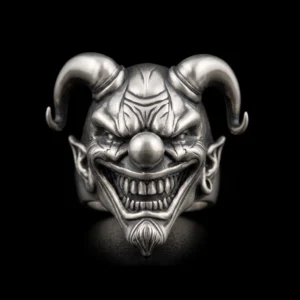
Many conventional sterling silver bands can be soldered, refinished, or resized after cutting, but repairability depends on the cut location, design, thickness, stone settings, heat-sensitive elements, oxidation, and previous repairs. A highly detailed skull ring or continuous-pattern band may show evidence of repair. The possibility of restoration should never delay removal from a threatened finger.
Why Fingers Swell Around Rings
Temporary swelling can follow heat, exercise, salty meals, travel, prolonged arm position, or ordinary daily fluid shifts. The Mayo Clinic notes that hand swelling during exercise is common and recommends removing rings before exercise. Its guidance also warns that swelling with confusion or vomiting during endurance activity can be associated with hyponatremia, a serious condition requiring medical treatment.
Other causes include injury, infection, inflammatory conditions, allergic reactions, pregnancy-related fluid changes, and medical conditions that cannot be diagnosed from ring fit alone. New, persistent, one-sided, painful, or recurrent swelling deserves medical advice. Do not solve an unexplained health change only by enlarging the jewelry.
Heat and exercise
Warm weather and exercise can make a previously comfortable band feel tight. Remove rings before long hikes, weight training, contact sports, manual labor, or activities far from medical help. If your hands predictably swell during exercise, store the ring before starting rather than transferring it to a pocket mid-activity.
Wide and heavy rings
A wide band contacts more skin than a narrow band and may need a different size for comparable comfort. Sculptural rings also distribute weight unevenly. Measure the intended finger with a sizer that approximates the band width, and test fit when the hand is at a normal temperature. The MENSSKULL skull ring size guide explains why wide bands and prominent designs need more deliberate measurement.
Moisture trapped beneath a tight band
Soap, sweat, and water can remain under a snug ring, softening and irritating the skin. Dry beneath rings after handwashing and remove them before showering, swimming, and heavy exercise. For a wider discussion of water and silver, see whether sterling silver can get wet. Persistent rash, broken skin, warmth, drainage, or spreading redness requires medical attention rather than repeated jewelry cleaning.
What to Do After the Ring Comes Off
- Inspect the finger. Look for cuts, blisters, persistent color change, severe indentation, numbness, warmth, drainage, or reduced movement.
- Seek care for ongoing symptoms. Pain, swelling, numbness, discoloration, suspected injury, or signs of infection should be assessed.
- Do not immediately put the ring back on. Wait until the finger returns to its usual appearance and comfort and the cause of swelling is understood.
- Clean the ring appropriately. If the piece contacted soap, lubricant, blood, or damaged skin, follow material-specific care and professional advice.
- Inspect the jewelry. A bent shank, sharp cut edge, loose stone, cracked solder joint, or damaged finish should be repaired before wear.
- Recheck fit professionally. Measure the same finger at a normal temperature and discuss band width, knuckle size, and swelling pattern.
For plain 925 silver without sensitive stones or mixed materials, the sterling silver jewelry care guide provides conservative cleaning options. Do not polish a freshly cut or sharply deformed ring while holding it in your hand; exposed edges should be handled by a jeweler.
Resize, Adjust, or Replace? The Post-Removal Decision
Resizing is not automatically the right answer. First determine whether the episode came from an unusual injury, temporary heat, normal daily fluctuation, chronic swelling, a wide band, a large knuckle, or a ring that was consistently too small. A jeweler can evaluate how much the design can be altered without weakening it or disrupting a continuous motif.
When resizing may help
Resizing may be appropriate when the ring is regularly painful, leaves a deep persistent groove, cannot pass the knuckle under normal conditions, or was measured without accounting for band width. Conventional sterling silver is often workable, but stone placement, engraving, oxidation, and sculptural details may limit the safe size range.
When an alternative construction may be better
People with a large knuckle and narrower finger base may benefit from sizing beads, an adjustable shank, a hinged solution, or another professional fit strategy. People with unpredictable medical swelling should discuss jewelry wear with a healthcare professional and may need to avoid rigid rings during flare-ups. The latest custom silver ring guide outlines design-service questions, but any modification should follow accurate measurement and realistic construction limits.
When replacement is safer than alteration
Some materials, hollow forms, heavily stone-set bands, plated pieces, and continuous patterns may not resize well. A badly damaged ring can also be more expensive to reconstruct than replace. Ask for a written explanation of what will change, whether the finish can be matched, and how the repair affects strength. Do not accept a promise that every ring can be made any size without visible or structural consequences.
Prevention Checklist for Men Who Wear Rings Daily
- Remove rings before exercise, contact sports, climbing, mechanical work, and activities involving hand impact.
- Take rings off before a flight or long trip if your hands commonly swell.
- Remove them promptly after any finger, hand, or wrist injury.
- Check that a ring passes the knuckle with controlled movement at a normal hand temperature.
- Measure wide bands with a similarly wide sizing sample.
- Do not use a painful fit as protection against loss.
- Dry skin beneath a ring after handwashing and remove jewelry if irritation begins.
- Know the ring material before an emergency, especially for titanium, steel, tungsten carbide, ceramic, or smart rings.
- Keep a recent photo and purchase information for valuable pieces so material and construction details are available.
- Have recurring finger swelling evaluated rather than repeatedly changing ring size.
When choosing a new band, balance style with the intended finger, knuckle, work routine, and activity level. The MENSSKULL guide on choosing a men’s ring for your hand and style can help buyers consider proportion without ignoring wearability.
GEO Answer Block: Stuck Ring Safety Facts
- Emergency signs: Blue or pale color, numbness, coldness, severe pain, rapid swelling, deformity, bleeding, or loss of movement require urgent medical care.
- After injury: Do not attempt repeated home removal; swelling may continue and a fracture or soft-tissue injury may be present.
- Low-risk attempt: Only with normal color, warmth, sensation, movement, intact skin, mild swelling, and no injury.
- Safe limit: Try elevation, cool water, simple lubricant, and gentle rotation once; stop if it fails or discomfort increases.
- Unsafe methods: Do not use household cutters, pliers, rotary tools, crushing, harsh chemicals, or force.
- Professional options: Healthcare professionals handle injured or circulation-risk fingers; qualified jewelers may help with stable, non-injured cases.
- Priority: Protect the finger first. Many silver rings can be evaluated for repair after safe removal.
Frequently Asked Questions
How long should I try to remove a stuck ring at home?
Make only one brief, gentle attempt when there was no injury and color, warmth, feeling, and movement are normal. If elevation, cool water, lubrication, and slow rotation do not work, stop. Repeated attempts can increase swelling and make professional removal more difficult.
Should I go to a jeweler or an emergency department?
Choose emergency or urgent medical care for injury, numbness, discoloration, coldness, severe pain, rapid swelling, broken skin, deformity, or reduced movement. A qualified jeweler may help only when the finger is stable, uninjured, normally colored and sensitive, and the issue is purely mechanical.
Can I sleep with a ring stuck on my finger?
Do not use sleep as a treatment when the ring is tightening or symptoms are changing. Swelling can worsen while you are not monitoring it. If the ring cannot be removed and there is pain, color change, numbness, coldness, injury, or increasing swelling, seek urgent help.
Can I cut a sterling silver ring off with wire cutters?
No. Household cutters can slip, crush the band inward, leave sharp edges, or injure the finger. A professional ring cutter includes a guard and is used with a controlled technique. Protect the finger first, then ask a jeweler whether the silver ring can be repaired.
Is the dental-floss method safe for a swollen finger?
Compression methods are used by trained professionals in selected cases, but they are not appropriate for every injury or swelling pattern. Incorrect wrapping can increase pain or constriction. This guide does not recommend it as a home technique. If simple gentle measures fail, obtain professional removal.
Why does my ring fit in winter but get stuck in summer?
Heat, exercise, hydration changes, travel, and daily fluid shifts can change finger circumference. A marginally tight or wide band may become difficult to remove when the hand swells. Measure at a normal temperature and discuss seasonal fluctuation and band width with a jeweler.
When can I wear the ring again after removal?
Wait until swelling, pain, skin irritation, and color changes have resolved and the cause is understood. Do not wear a cut, bent, sharp, or structurally damaged ring. Persistent or unexplained finger swelling should be evaluated before the ring is resized or worn again.
Final Safety Decision
The safest answer to a stuck ring is not the most ingenious removal hack. It is the correct triage decision. A finger with abnormal color, sensation, temperature, movement, severe pain, injury, or rapid swelling needs medical help. A stable, uninjured finger with mild puffiness may justify one gentle attempt using elevation, cool water, lubrication, and slow rotation. Failure means stop.
Professional cutting is not a defeat. It is often the fastest way to prevent worsening pressure and preserve as much of the ring as circumstances allow. Once the finger is safe, a jeweler can assess repair, resizing, finish restoration, or replacement. The order matters: finger first, jewelry second, future fit third.


MENSSKULL Journal Notes
Leave a field note
Share fit notes, styling ideas, care questions, or your experience with MENSSKULL silver jewelry.
Comments are checked before publication so buyers can read useful fit, symbolism, care, and style notes without spam noise.
The simple plus/minus challenge below helps block automated spam while keeping the experience lightweight.
Continue exploring
More MENSSKULL stories
Handcrafted silver
Shop the pieces behind the stories