
Yes, men can wear silver jewelry with brown clothes. The combination works when the silver has a clear visual role: a small cool highlight, a repeated accent, or one deliberate focal point. Start with the brown itself, because dark chocolate, tobacco, camel, tan, rust, and taupe create different amounts of contrast against silver-colored jewelry.
You do not need a rule that says warm clothes require warm-colored metal. Instead, compare what is visible in the mirror: the depth of the brown, the brightness of the jewelry, the number of competing details, and the distance between each silver accent. This guide keeps that decision visual and practical.
Quick answer: silver and brown can share the same outfit
Brown provides a warm, grounded field. Silver introduces a cooler highlight. That difference can make a ring, bracelet, or necklace easier to see without requiring the jewelry to dominate the outfit. The result depends less on a fixed color rule than on contrast, scale, and repetition.
Choose one of three contrast routes: subtle, balanced, or strong. A slim silver ring against dark brown knitwear is subtle. A necklace and watch-color detail repeated across a medium-brown outfit is balanced. One larger silver piece against a plain chocolate shirt creates stronger contrast. Pick the route before adding more pieces.
Start with the shade of brown
Brown is a family rather than a single color. Dark chocolate and espresso create a deep background, so polished or bright silver details may appear more distinct. Camel and tan are lighter, which can make a large bright piece feel more prominent. Rust and reddish brown already carry visual energy, so a quieter silver form may keep the outfit from becoming busy.
| Brown family | What the eye notices | Simple silver direction |
|---|---|---|
| Chocolate or espresso | Deep field with a clear light-dark difference | Use one visible highlight or two restrained accents |
| Tobacco or cognac | Warm mid-tone with noticeable texture | Keep the jewelry shape clean if the fabric is detailed |
| Camel or tan | Lighter field with less tonal distance | Let shape and placement create definition |
| Rust or reddish brown | Color is already expressive | Choose a simpler jewelry silhouette |
| Taupe or grey-brown | Muted bridge between warm and cool | Repeat silver once for a composed look |
The table is a comparison tool, not a dress code. Use it to predict where contrast may appear, then confirm the result under the light in which you will actually see the outfit.
Choose a contrast level before choosing pieces
A common styling problem is adding jewelry one item at a time without deciding the intended visual strength. Begin by choosing how noticeable you want the metal to be. For a subtle result, use a small ring, narrow bracelet, or chain that appears only at the collar. For a balanced result, repeat the silver color in two separated areas, such as neck and hand. For a strong result, select one larger focal piece and keep the rest quieter.
This is the same visual hierarchy used in the broader men’s silver jewelry styling system: one element leads, supporting elements repeat, and empty space prevents every detail from competing.
Match visual weight, not just metal color
A fine chain and a large sculptural ring may both be silver-colored, but they do not carry the same visual weight. Brown workwear, heavy knitwear, suede-like textures, and broad jacket shapes can support a more visible jewelry silhouette. A smooth tan shirt or minimal brown tee may look more coherent with cleaner, narrower forms.
For a ring-first outfit, compare the face shape and band width in the men’s silver rings collection. For a neck-first outfit, compare link scale and pendant presence in the silver pendant necklace collection. The point is not to select the largest item; it is to make the jewelry’s apparent scale intentional beside the garment.
Use texture to decide whether silver should be quiet or crisp
Texture changes how much information an outfit already contains. A brushed brown overshirt, ribbed sweater, or visibly grained jacket creates many small shadows. Against that field, a highly detailed piece can become another competing texture. A simpler outline may read more clearly.
With a smooth chocolate shirt or plain camel knit, a carved or oxidized-looking form has more visual room. The decision is observable: step back, soften your focus, and check whether you can still identify one focal area. If the eye jumps equally between fabric, hardware, and several jewelry pieces, remove or reduce one element.
Coordinate silver with brown belts, watches, and hardware
Brown clothing often appears beside a brown belt, leather-color watch strap, dark buttons, or warm shoe tones. Those items do not force the jewelry to match them exactly. They establish a warm base. Silver can sit above that base as a separate accent, especially when its color appears again in a watch case, buckle, zipper, or small garment detail.
If you are deciding how closely those accessories should relate, use the dedicated guide to whether men’s jewelry should match a watch and belt buckle. That page owns the metal-matching question; this page focuses only on the brown-and-silver color relationship.
Build the outfit from one anchor piece
Choose the item that should be noticed first. It might be a ring, a chain at the neckline, or a bracelet visible beside a cuff. Once the anchor is clear, any additional silver should be smaller, farther away, or less detailed. This keeps the combination from turning into an inventory of separate objects.
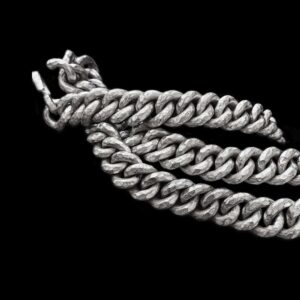
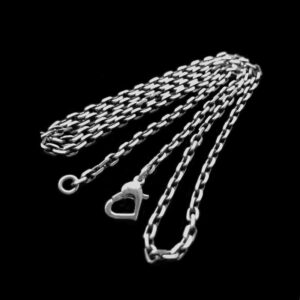
A necklace anchor can be as straightforward as a link form such as the oxidized silver link chain or the cleaner profile shown on the men’s silver necklace page. These are current catalog examples of different visible forms, not proof that one form suits every brown outfit.
Decide where the silver appears
Placement controls how the cool highlight moves around the body. A necklace places silver near the face and collar. A bracelet sits beside a sleeve or watch. Rings distribute smaller accents across the hands. Earrings create a compact highlight above the neckline. You can make the outfit feel calmer by limiting the silver to one zone, or more connected by repeating it in two zones.
If a bracelet is part of the outfit, the guide to wearing a bracelet above or below a shirt cuff handles the specific cuff-placement decision. If a ring and bracelet share one side, compare the visual spacing in the guide to wearing a ring and bracelet on the same hand.
Use a simple two-pass mirror check
First, look at the outfit from several steps away. Identify the first area your eye reaches. If it is the intended jewelry anchor, the hierarchy is working. If it is a bright buckle, busy fabric patch, or unrelated hardware detail, decide whether that competition is useful.
Second, look closer and compare finish, edge shape, and spacing. The pieces do not need identical surfaces, but they should look deliberately chosen. This two-pass check is more dependable than trying to follow a universal claim about warm and cool colors because it evaluates the actual clothes and jewelry in front of you.
Brown outfit formulas with silver jewelry
| Outfit base | Anchor | Optional repeat | What to check |
|---|---|---|---|
| Chocolate tee and dark denim | One visible chain | Single ring | Keep the neckline and hand from competing equally |
| Camel knit and black trousers | Medium ring | Watch-case color | Let the light garment remain the broad field |
| Tobacco overshirt and plain tee | Bracelet at cuff | Small neck detail | Compare jewelry scale with buttons and fabric texture |
| Rust shirt and neutral trousers | Simple necklace | None | Avoid adding several equally expressive shapes |
| Taupe jacket and brown knit | Statement ring | Narrow bracelet | Keep one piece visibly dominant |
These formulas are starting layouts. They describe where visual weight can sit, not what a person must wear.
How to keep brown and silver from looking disconnected
If the silver looks isolated, repeat either its color or its shape once. A silver ring can echo a watch case. A rounded pendant can relate to a rounded buckle without copying it. A darkened silver surface can visually bridge a deep brown garment and black footwear. One repeated cue is often enough.
A broad workwear look may benefit from the shape-and-scale comparisons in the workwear jewelry guide. A darker outfit can use the focal-point approach in the guide to styling men’s skull jewelry with dark elegance. Those adjacent pages retain their own outfit intents.
What to avoid when combining silver and brown
Avoid making every visible accessory equally bright, large, or detailed. Avoid adding another silver piece only because the first one is silver. Avoid treating all browns as interchangeable; camel and espresso do not create the same contrast. Avoid judging the combination only in a close-up photo, where jewelry may appear more dominant than it does at normal viewing distance.
Also avoid turning personal preference into a universal rule. Silver with brown is a visual option, not a promise of attractiveness, formality, status, or social approval.
Final decision checklist
- Name the brown family: dark, medium, light, reddish, or greyed.
- Choose subtle, balanced, or strong contrast.
- Select one anchor piece before adding supporting jewelry.
- Compare jewelry scale with the garment’s texture and hardware.
- Repeat silver once only if the first accent looks isolated.
- Check the outfit from a distance and then at conversational range.
- Remove one detail if several elements compete for the same attention.
Can men wear silver jewelry with brown clothes?
Yes. Treat brown as the warm base and silver as a chosen highlight. Dark brown can support a crisp light-dark contrast, while camel, tan, rust, and taupe call for different amounts of scale and repetition. The most reliable approach is to choose one anchor, decide the intended contrast level, and judge the complete outfit rather than matching colors in isolation.






MENSSKULL Journal Notes
Leave a field note
Share fit notes, styling ideas, care questions, or your experience with MENSSKULL silver jewelry.
Comments are checked before publication so buyers can read useful fit, symbolism, care, and style notes without spam noise.
The simple plus/minus challenge below helps block automated spam while keeping the experience lightweight.
Continue exploring
More MENSSKULL stories
Handcrafted silver
Shop the pieces behind the stories