
Quick answer: choose a wallet chain when you want the design to connect visually with a wallet and belt-loop attachment. Choose a pants chain when the chain is mainly a hip-level accent between garment attachment points. The names can overlap in stores, so compare the listed length, end hardware, attachment layout and visible drop rather than relying on the product label alone.
This guide stays with observable styling and current listing facts. It does not treat either chain as safety equipment, an anti-theft device, load-bearing hardware or a performance guarantee. Always read the individual listing for the exact material, selectable length and included fittings.
Wallet chain vs pants chain: the decision in one minute
A wallet chain usually presents a two-part idea: one end visually relates to a wallet or pocket area, and the other relates to a belt loop or nearby garment point. A pants chain can use similar clips and links, but its main role is the shape it draws across the hip. It may run between two loops, hang from one side or form a layered accent.
The practical buying question is therefore not “Which name is correct?” It is “What visible line and attachment layout do I want?” Start with the garment, locate the points you intend to use, and then compare the listed chain lengths. MENSSKULL’s wallet chain length guide owns the deeper length discussion; this page focuses on choosing between the two chain roles.
| Decision point | Wallet-chain direction | Pants-chain direction |
|---|---|---|
| Primary visual role | Links the wallet or pocket zone to a garment attachment point | Creates a decorative line across one side of the pants |
| Typical layout | One wallet-side fitting and one loop-side fitting | Two garment-side fittings or a decorative one-sided arrangement |
| Length priority | Enough visible drop for the chosen wallet and pocket position | A drop that suits the pants rise and intended outfit emphasis |
| Hardware priority | Confirm that each listed fitting matches the planned attachment role | Compare fitting shape, symmetry and how much hardware remains visible |
| Best starting question | Where will each end be placed? | What line should the chain draw across the outfit? |
Product labels are clues, not complete specifications
Retail names often use “wallet chain,” “pants chain,” “trouser chain” and “key chain” for related designs. The title can help you find the category, but it cannot tell you the complete layout. Two products with the same label may have different end pieces, selectable lengths or decorative elements.
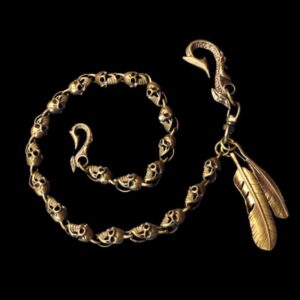
Open the product page and record four facts: listed overall length, each end fitting, link shape and listed material. Then compare those facts with the role you want. For example, the current Octopus and Cross Pants Chain listing offers 60, 70 and 80 cm selections and names titanium steel as the material. The current Skull and Feather Wallet Chain listing names brass and a 20-inch length. Those are item-specific listing facts, not evidence that one metal or length performs better.
Map the attachment points before comparing designs
Lay out the pants and wallet you intend to use. Identify the exact starting and ending points without attaching anything yet. A wallet-chain layout often begins near the wallet opening and ends at a belt loop. A pants-chain layout may use two belt loops or another garment-defined arrangement. What matters visually is the distance between those points and the direction of the line they create.
Attachment hardware also changes the design language. A rounded key ring reads differently from a sculpted hook, swivel-style clasp or shackle-shaped fitting. A product with large end pieces can create two visible focal points even when the center chain is simple. A cleaner fitting leaves the link pattern and overall curve as the main feature.
Do not assume a fitting suits every loop, wallet or garment. Compare the product photos and listed dimensions with the actual points you plan to use. This is a compatibility check, not a claim about strength or safety.
Use length to control the visible drop
Chain length changes the depth and width of the curve. A shorter chain usually keeps the line closer to the upper hip. A medium length creates a more visible arc. A longer chain can extend the visual line toward the thigh and make the chain a dominant accessory. None is automatically better; the right choice depends on the garment rise, spacing of the selected attachment points and the amount of emphasis you want.
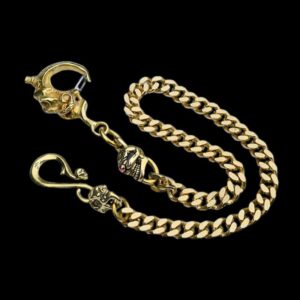
Current MENSSKULL examples show why the listing matters. The Leather Shackle Brass Wallet Chain currently offers approximately 11.8- and 15.7-inch choices. The Double Skull Clasp Brass Wallet Chain currently offers approximately 15.7 and 19.7 inches. The Brass Curb Wallet Chain currently offers approximately 17 and 21 inches. These options create different visible drops even before link shape and hardware are considered.
If two products use different units, convert them before comparing. Do not judge scale from cropped product photos alone. A photo can show link detail clearly while making the total chain appear shorter or longer than it will look against a real garment.
Let pants rise and loop spacing shape the choice
The same chain can appear different on two pairs of pants. A higher rise places the top edge and loops higher on the torso. A lower rise changes the starting point and may make the visible curve appear deeper. Wide spacing between loops stretches the chain horizontally; closer spacing creates a rounder drop.
This is why fixed labels such as “short,” “medium” and “long” are only useful after you know the intended attachment distance. Measure the straight-line space between the two planned points, then compare that distance with the listed chain length. The difference helps you anticipate whether the chain will read as a compact line or a pronounced arc.
Choose hardware visibility deliberately
Some buyers want the fittings to disappear into the outfit. Others want sculpted hooks, skulls, feathers, crosses or shackle forms to remain visible. Decide which part should lead before comparing products.
For a quieter result, select a chain where the end fittings are visually smaller than the link pattern. For a stronger focal point, use hardware with a readable outline and leave enough visual space around it. The current Bearded Skull Hook Brass Wallet Chain places the motif at the fitting, while the Skull and Feather design adds repeated detail along the chain. Those two layouts produce different visual rhythms even when their listed lengths overlap.
Check whether both ends use the same visual language. Symmetrical fittings create a balanced frame. Different end pieces create a directional design, which can make one end feel like the intended front or lead attachment.
Compare link pattern and motif density
Link shape controls the chain’s baseline texture. Broad curb links create a continuous metal line. Open oval links create more space between repeated elements. Added motifs increase detail density and can make a chain read as the leading accessory even at a shorter length.
Motif density should be compared with the garment. Plain denim provides a relatively open field for sculpted details. Cargo pockets, contrast stitching, patches and layered hems already add visual activity. In that setting, a simpler link pattern may be easier to read. This is an outfit-balance judgment, not a statement about quality.
If skull motifs are part of the wider outfit, the gothic biker skull ring guide can help separate dark-style design choices from universal symbolism claims. A motif can be selected because its outline suits the outfit without assigning a fixed identity to the wearer.
Match the chain role to the outfit
A wallet-chain direction is often easiest to read with denim, workwear-style trousers or other outfits where pocket and belt-loop details remain visible. The chain looks integrated because its two endpoints relate to those garment features. A pants-chain direction is more flexible when the goal is simply to add a metal line to black denim, wide-leg pants or a layered streetwear outfit.
Do not force the chain to match every metal object. Instead, decide whether it is the lead accessory or a supporting accent. If the chain is long, sculpted or highly detailed, keep the nearby belt hardware and hand jewelry quieter. If the chain is compact and simple, another accessory can carry more emphasis.
The workwear chain-or-cuff guide owns the separate question of choosing between a hip-level chain and wrist-level cuff. Use that page when the issue is accessory location rather than wallet-chain versus pants-chain role.
Build one clear metal line
At hip level, the eye follows the chain from one visible fitting to the other. Keep that line clear. A wallet chain can lead toward the wallet pocket. A pants chain can echo a pocket opening, side seam or the angle of an outer layer. The effect is stronger when the line looks connected to the garment rather than added at random.
Take a front, side and three-quarter photo. The front view shows whether the chain competes with the belt buckle. The side view shows the actual drop. The three-quarter view reveals whether the end hardware and motifs remain readable. Use normal standing posture; pulling the chain into position for a close-up can hide the way it naturally sits.
Compare one variable at a time
When several chains look appealing, reduce the comparison to one variable at a time. First compare two lengths with a similar link style. Next compare two hardware designs at a similar length. Finally compare motif density while keeping the planned garment and attachment points unchanged. This method shows which difference actually changes the outfit instead of mixing length, material name, clasp shape and motif into one vague impression.
A useful first comparison is compact versus medium drop. If the compact chain leaves the outfit too quiet, move to the next listed length before choosing a more elaborate motif. If the medium chain already creates enough emphasis, a cleaner curb or oval link may provide all the detail needed. The same logic works in reverse: if the chain should be the lead accessory, compare sculpted hardware only after confirming the drop.
Record the exact product and selected option when taking screenshots or notes. A product with two length choices can look like two different accessories on the same pants. Keeping the option visible prevents a later comparison from attributing the difference to the wrong design feature.
Read material names item by item
Do not call every silver-colored or dark-metal chain sterling silver. Current MENSSKULL examples in this comparison include product records that list titanium steel and records that list brass. Those names should remain attached to the individual item rather than generalized across the category.
For terminology about 925 sterling silver, use the dedicated 925 sterling silver Research guide. That owner explains composition and marking boundaries. This comparison page does not claim that one listed material is more durable, safer, easier to maintain or better for every buyer.
Use current examples as a comparison set
The following examples are useful because their current listings span different length ranges, motif densities and hardware shapes. Availability, prices and selectable options can change, so verify the live listing before ordering.
| Current example | Listed length options | Observable comparison role |
|---|---|---|
| Octopus and Cross Pants Chain | 60, 70 or 80 cm | Longer pants-chain route with large sculpted end motifs |
| Skull and Feather Wallet Chain | 20 inches / 50 cm | Repeated motifs plus feather details |
| Brass Curb Wallet Chain | 17 or 21 inches | Cleaner curb-link comparison with two listed drops |
| Bearded Skull Hook Wallet Chain | Approximately 17.7 or 21.7 inches | Focal hook motif with medium-to-long choices |
| Double Skull Clasp Wallet Chain | Approximately 15.7 or 19.7 inches | Shorter and medium comparison with motif hardware |
| Leather Shackle Brass Wallet Chain | Approximately 11.8 or 15.7 inches | Compact comparison with mixed fitting materials |
Browse the current wallet chains and pants chains category to compare available product records in one place. The category is a commercial navigation route, not evidence that a design is popular or suitable for every use.
A six-step buying workflow
- Name the role. Decide whether the chain should visually relate to a wallet or function mainly as a pants accent.
- Mark the endpoints. Identify the exact garment and wallet positions you plan to use.
- Measure the spacing. Compare the attachment distance with each listed overall length.
- Choose the visual drop. Decide whether you want a compact line, medium arc or dominant lower curve.
- Compare the fittings. Check the shape, orientation and visibility of both end pieces in the listing photos.
- Verify the live record. Confirm the selected length, listed material, current price and availability immediately before ordering.
This sequence prevents a common mistake: choosing the most detailed chain first and only later discovering that its length or attachment layout does not create the intended outfit line.
If you are comparing a chain against another accessory rather than another chain, keep the decision equally specific. Ask whether the outfit needs a hip-level line, wrist-level mass or neckline detail. Do not use a broad “more jewelry” question. Placement changes the visual result more than the number of products in the cart.
Common comparison mistakes
Assuming every wallet chain has the same layout. Product names do not replace a close look at both end fittings.
Comparing length from photos. Cropping, camera angle and styling can change apparent scale. Use the listed measurement.
Calling every gray metal silver. Read the material field for each product and keep the wording exact.
Choosing a motif without considering density. A chain with repeated skulls, feathers or crosses creates more visual activity than a plain curb link.
Matching every accessory. Repetition can help, but identical motifs are not required. Shared finish temperature, geometric rhythm or one repeated shape may be enough.
Treating style guidance as performance evidence. A visually suitable chain is not automatically stronger, safer, more secure or more durable. This guide makes no such promise.
Quick answer by buyer type
Choose the wallet-chain direction if you want the chain to connect the visual story of a wallet, pocket and belt-loop point. Choose the pants-chain direction if you want the chain to operate mainly as a decorative hip line. If you are undecided, start with a medium-length listing and simpler hardware because it makes the role easier to judge against more than one pair of pants. Then compare shorter, longer or more sculpted options after you know where the endpoints sit.
Final checklist
- The intended role is wallet-related or decorative, not assumed from the title alone.
- The garment attachment points and wallet position have been identified.
- The listed overall length has been compared in the same unit.
- Both end fittings are visible and understood from the listing.
- The link and motif density fit the garment’s existing visual detail.
- The exact material wording remains item-specific.
- The current selectable option, price and stock status have been checked on the live product page.
A clear wallet-chain versus pants-chain decision comes from role, endpoints, length and visible hardware. Start there, then use motif and finish to refine the outfit rather than asking the product name to make the whole decision.
MENSSKULL Journal Notes
Leave a field note
Share fit notes, styling ideas, care questions, or your experience with MENSSKULL silver jewelry.
Comments are checked before publication so buyers can read useful fit, symbolism, care, and style notes without spam noise.
The simple plus/minus challenge below helps block automated spam while keeping the experience lightweight.
Continue exploring
More MENSSKULL stories
Handcrafted silver
Shop the pieces behind the stories